Quick Fit Check
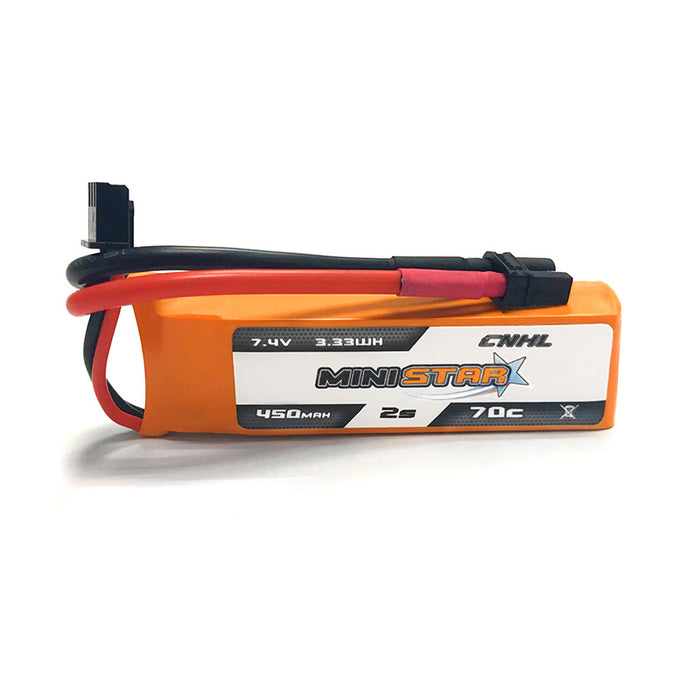
The CNHL MiniStar 450mAh 7.4V 2S 70C LiPo Battery with XT30U is a lightweight standard-voltage 2S battery for micro EDF jets, FPV drones, small CineWhoops and other compact RC models where low installed mass and responsive handling are priorities.
At approximately 35g and 65 × 18 × 16mm, it stays within the lightweight battery class commonly used by small 2S aircraft. The 450mAh capacity also makes it particularly relevant to compact models designed around 400–550mAh battery sizes.
Before ordering, confirm that your model supports standard 2S LiPo voltage, accepts the battery dimensions and weight, and uses an XT30U-compatible power connection.
| Check Item |
Your Model Should Match |
This Battery |
| Cell Count |
Standard 2S LiPo system |
7.4V nominal / 2S |
| Maximum Voltage |
Electronics support a fully charged standard 2S LiPo |
8.40V fully charged |
| Battery Space |
Frame or bay accepts a compact 450mAh battery |
65 × 18 × 16mm |
| Installed Weight |
Aircraft remains within its intended weight range |
Approx. 35g |
| Connector |
XT30U-compatible device-side lead |
XT30U |
| Power Demand |
Battery output matches the motor and ESC load |
70C continuous / 140C burst |
Product Specifications
| Capacity |
450mAh |
| Nominal Voltage |
7.4V |
| Battery Chemistry |
Standard Lithium Polymer |
| Cell Configuration |
2S1P |
| Nominal Energy |
3.33Wh |
| Fully Charged Voltage |
8.40V / 4.20V per Cell |
| Discharge Rate |
70C Continuous / 140C Burst |
| Maximum Charge Rate |
5C |
| Output Connector |
XT30U |
| Balance Connector |
JST / XH |
| Dimensions (L × W × H) |
65 × 18 × 16mm |
| Approx. Weight |
35g |
| Stock Number |
45702G |
Battery dimensions may vary by approximately 1–5mm, and weight tolerance is approximately ±5g.
Lightweight 450mAh 2S Power for Micro RC Models
The CNHL MiniStar 450mAh 2S 70C is designed for aircraft where keeping battery size and weight low is especially important.
At approximately 35g, this pack keeps installed mass conservative while still providing 450mAh of usable capacity. That makes it particularly relevant to micro EDF jets, CineWhoops and FPV aircraft where a larger battery can noticeably change handling.
The 70C continuous and 140C burst ratings provide useful stated current capability for small brushless power systems when the motor and ESC are correctly matched.
Why Choose This Battery?
-
450mAh capacity: A useful lightweight capacity for micro aircraft.
-
Approx. 35g weight: Helps preserve low takeoff weight and responsive handling.
-
65mm length: Compact enough for tight battery bays and small frames.
-
70C continuous output: Suitable for responsive 2S brushless systems.
-
XT30U connector: Compact power connection suited to micro RC applications.
-
Standard 2S LiPo: Charges to 8.40V and does not require LiHV mode.
A 2S 450mAh Battery for the FMS & Arrows Hobby Viper 30mm
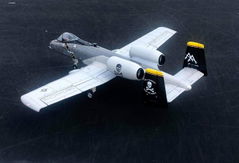
The CNHL MiniStar 450mAh 7.4V 2S 70C LiPo Battery with XT30U is a particularly strong battery choice for the FMS & Arrows Hobby Viper 30mm EDF jet.
The key advantage is that the 450mAh 2S format closely follows the original battery direction of this micro EDF. Rather than increasing capacity and adding unnecessary battery mass, this pack keeps the aircraft close to the lightweight setup the Viper 30mm is designed around.
At approximately 65 × 18 × 16mm and 35g, the MiniStar keeps the battery package compact while providing a 70C discharge rating for the small brushless EDF power system.
For a micro jet, battery mass matters because additional weight affects hand-launch behavior, acceleration, low-speed handling and landing energy. A 450mAh pack therefore represents a more natural stock-style direction than simply installing the largest 2S battery that physically fits.
Before flight, confirm the actual battery compartment, XT30U connector orientation, polarity, wire routing and final center of gravity.
Compare additional 450mAh and 550mAh options in the FMS & Arrows Hobby Viper 30mm Battery Collection.
Lightweight 2S Battery for the iFlight Defender 20 Lite X
The CNHL MiniStar 450mAh 2S 70C is also a lightweight option to consider for the iFlight Defender 20 Lite X.
Its 450mAh capacity sits below the approximately 520mAh reference battery class, so this pack is best positioned for pilots who prioritize lower installed capacity and responsive handling rather than maximum cruising time.
The tradeoff is straightforward: a smaller 450mAh battery carries less stored energy than a 520–550mAh pack, so flight duration will generally be shorter when flying style and conditions are otherwise similar.
Before installation, confirm battery dimensions, XT30U connector polarity, wire clearance, strap security and final takeoff weight.
Compare this lightweight option with higher-capacity choices in the iFlight Defender 20 Lite X Battery Collection.
Micro FPV and CineWhoop Applications
60–130mm Brushless FPV Drones
The combination of 450mAh capacity and approximately 35g weight makes this pack relevant to lightweight brushless FPV aircraft that become noticeably heavier or less responsive with larger batteries.
2-Inch CineWhoops
For compatible 2-inch CineWhoops, a 450mAh pack favors lower takeoff weight and quicker direction changes compared with a larger battery. It is especially useful when handling is more important than maximum cruising duration.
Micro Freestyle Builds
The 70C discharge rating provides stated current capability for compatible 2S freestyle power systems while the compact battery body keeps the overall aircraft relatively light.
Other Compatible 2S FPV Platforms
This battery may also suit compatible versions of GEPRC TinyGo, iFlight CineBee, TurboBee, Happymodel Crux3 and similar micro FPV aircraft when the specific model supports 2S operation and accepts the battery dimensions, weight and XT30U connection.
Micro FPV models are often sold in several motor, ESC and connector configurations, so the aircraft name alone does not prove compatibility.
The same applies to DJI O4-equipped micro builds. The video system itself does not determine battery compatibility; the frame, motors, ESC, voltage range and complete takeoff weight must all support the selected battery.
450mAh Standard LiPo vs. 450mAh LiHV vs. 550mAh LiHV
| Priority |
450mAh Standard LiPo |
450mAh LiHV |
550mAh LiHV |
| Nominal Voltage |
7.4V |
7.6V |
7.6V |
| Maximum Voltage |
8.40V |
8.70V |
8.70V |
| Capacity |
450mAh |
450mAh |
550mAh |
| CNHL Listed Weight |
Approx. 35g |
Approx. 32g |
Approx. 35g |
| Main Priority |
Standard-voltage simplicity |
Low mass + LiHV capability |
More energy reserve |
| Best Direction |
Conventional 2S electronics |
Weight-sensitive LiHV setups |
Longer cruising and near-520mAh setups |
The standard 450mAh LiPo is the simplest option when the aircraft is designed around conventional 2S voltage. The 450mAh LiHV version offers a slightly lighter CNHL-listed weight and higher maximum voltage, while the 550mAh LiHV version provides more stored energy.
XT30U Connector
This battery uses an XT30U output connector. XT30U belongs to the XT30 connector family and carries the main positive and negative power connection.
Always confirm connector gender, polarity and physical fit before use.
Models using PH2.0, BT2.0, XT60, EC2, IC2, EC3, IC3 or another connector require a suitable adapter or professional connector conversion.
Standard 2S LiPo Charging
This is a standard 2S LiPo battery. Maximum balanced charge voltage is 4.20V per cell, or 8.40V total.
Do not charge this battery using a 4.35V-per-cell LiHV mode.
For routine charging, a balanced 1C rate is preferred. 5C is the stated maximum, not the everyday target.
FAQ
Is this a standard LiPo or LiHV battery?
This is a standard 2S LiPo battery with a nominal voltage of 7.4V and a maximum fully charged voltage of 8.40V.
Is this suitable for the FMS & Arrows Hobby Viper 30mm?
It is a strong 450mAh 2S option because its capacity closely follows the lightweight battery direction used by this micro EDF. Confirm battery dimensions, connector orientation and final CG before flight.
Is 450mAh suitable for the iFlight Defender 20 Lite X?
It is a lightweight option to consider when lower installed capacity and responsive handling are more important than maximizing flight time. The 450mAh capacity sits below the approximately 520mAh reference class.
Why choose 450mAh instead of 550mAh?
A 450mAh pack carries less energy and is better suited to lightweight setups, while a 550mAh pack provides more energy reserve. The correct choice depends on the aircraft's weight and capacity requirements.
Can this battery be charged to 8.70V?
No. This is a standard LiPo battery. Maximum balanced charge voltage is 8.40V total, or 4.20V per cell.
Is XT30U compatible with XT30?
XT30U belongs to the XT30 connector family and uses the same main positive and negative power-interface direction. Always confirm connector gender, polarity and physical fit.
Can this battery be used with DJI O4 micro FPV builds?
Yes, when the complete aircraft is designed for standard 2S power and can accommodate the battery dimensions, weight and XT30U connection. The DJI O4 video system alone does not determine battery compatibility.
Should this battery always be charged at 5C?
No. For routine charging, a balanced 1C rate is preferred. The 5C specification is the stated maximum charge rate, not the everyday target.
Notice
- This is a standard 2S LiPo battery with a maximum charge voltage of 4.20V per cell.
- Use a compatible LiPo balance charger and select the correct standard 2S LiPo mode.
- Do not charge this battery using a 4.35V-per-cell LiHV setting.
- Confirm the 65 × 18 × 16mm dimensions, approximately 35g weight and XT30U connection before use.
- Voltage and connector alone do not confirm compatibility; battery size, weight and power-system requirements must also match.
- For aircraft use, check final center of gravity after changing battery capacity or position.
- Secure the battery firmly and keep the main and balance wires clear of propellers, EDF units, ducts and moving parts.
- Never charge unattended, and do not use a swollen, punctured, damaged or overheated battery.
- Allow the battery to cool before recharging and use storage mode when it will not be used for an extended period.
- Inspect the battery, wires and connector after any crash or hard impact.