
CNHL Lipo akut
CNHL pyrkii tarjoamaan korkealaatuisia Li-Po-akkuja ja RC-tuotteita kaikille harrastajille erinomaisella asiakaspalvelulla ja kilpailukykyisillä hinnoilla
The Proboat Blackjack 42 is one of those RC boats where the specifications only tell half the story. On paper, it is a 42-inch 8S brushless catamaran with a large water-cooled power system and serious straight-line performance. On the water, battery position, installed weight, wind, propeller load and hull attitude quickly become just as important as the motor and ESC.
That is also why choosing a Blackjack 42 battery is not simply a matter of finding two 4S packs that fit. A lightweight 5000mAh pair, a 7800mAh high-capacity setup and a heavier 8200mAh hardcase pair can all produce different handling characteristics even before any other tuning changes are made.
This guide looks at the Proboat Blackjack 42 as a complete system: its 8S drivetrain, battery requirements, runtime, high-speed behavior, weight distribution, EC5/IC5 power connection, Smart functionality and the tuning decisions that matter once you begin exploring its performance.
Answer first: for most Blackjack 42 owners, two matched 4S batteries are the correct starting point. A 5000mAh pair stays close to the factory baseline, while approximately 7500–8200mAh becomes especially interesting when longer runtime and battery weight distribution matter. Start with both packs toward the bow, secure them firmly, and tune position gradually rather than assuming the largest battery or most rearward position will automatically be faster.

The Blackjack 42 is a large ready-to-run electric catamaran measuring approximately 42.75 inches long and 15.25 inches wide. Its size is immediately noticeable, but the power system is what gives the boat its character.
| Length | 42.75 in / 1086mm |
| Width | 15.25 in / 387mm |
| Hull | Polycarbonate catamaran |
| Motor | Spektrum 4685 4-Pole Brushless Marine Motor, 1350Kv |
| ESC | Spektrum Firma 160A Smart Brushless Marine ESC |
| Normal 8S Setup | 2 × matched 4S LiPo batteries in series |
The wide tunnel hull, large brushless motor and 8S power system give the Blackjack 42 the acceleration and sound expected from a much more serious marine platform than a small entry-level RTR boat. That performance also means setup changes become noticeable quickly.
The stock power system combines a 4685 1350Kv water-cooled marine motor with a 160A water-cooled Smart ESC. That is already a substantial setup for a ready-to-run boat, and there is little reason to approach the Blackjack 42 as though it needs more power immediately.
A first-run speed reference of approximately 51 mph has been achieved without ideal water conditions or long full-throttle passes. That matters because the advertised performance is not dependent on immediately fitting a larger propeller or replacing the electronics.
The more useful question is therefore not simply, “How can I add power?” It is, “How can I make the existing power work with the hull?” Battery placement, propeller load and drivetrain condition should be sorted before chasing additional speed.

For the normal full-power setup, the Blackjack 42 uses two matching 4S batteries connected in series. Two standard 14.8V 4S LiPo packs create a 29.6V nominal 8S system. The voltage doubles, but battery capacity does not.
So two 5000mAh 4S batteries do not create a 10000mAh 8S battery. They create an 8S 5000mAh system. Two 7800mAh packs create 8S 7800mAh, and two 8200mAh packs create 8S 8200mAh.
The official manual gives the Blackjack 42 unusually generous battery flexibility, specifying two 4S batteries from 5000 to 9000mAh and recommending 100C or greater for optimal performance. That capacity range is important because the battery trays are not just storage space; they are part of the boat's weight-tuning system.
For CNHL options selected around this platform, see the Proboat Blackjack 42 battery collection.
Rather than choosing the largest pack available, it makes more sense to divide Blackjack 42 batteries into different setup philosophies.
| Setup | Battery | Weight | Why Choose It? |
|---|---|---|---|
| Stock-Like | CNHL G+Plus 5000mAh 4S 100C EC5 | Approx. 560g | Closest to the standard 5000mAh performance baseline, with lower installed mass. |
| Best Overall | CNHL Lightning LiHV 7800mAh 4S 120C EC5 | Approx. 598g | A major capacity increase with surprisingly little extra weight. |
| High-Capacity Hardcase | CNHL Racing LiHV 8200mAh 4S 120C Hardcase EC5 | Approx. 643g | More capacity, hardcase protection and more physical battery mass for weight tuning. |
The 7800mAh Lightning stands out because its capacity increase is much larger than its weight increase.
The G+Plus 5000mAh 100C weighs approximately 560g, while the 7800mAh Lightning is approximately 598g. That means each Lightning pack adds only about 38g while increasing nominal capacity by 2800mAh. Across two packs, the boat gains only about 76g in battery mass compared with the 5000mAh pair.
That makes the 7800 particularly attractive for drivers who want more energy without using battery weight as heavy ballast. By contrast, the 8200mAh hardcase at approximately 643g per pack is more suitable when both high capacity and additional installed mass are desirable.
This is one of the most important setup lessons on the Proboat Blackjack 42.
The factory battery trays allow meaningful fore-aft movement. Moving both packs toward the bow puts more weight on the front of the hull and generally increases stability. Moving them rearward allows the bow to ride higher and can reduce wetted area, but the boat also becomes more sensitive at speed.
This is not just theoretical. With the same battery pair, moving the packs rearward has produced a visibly freer but more nervous hull attitude, while moving them forward has calmed the bow. That is why battery placement should be tuned before automatically adding ballast or changing major hardware.
Good starting point: install both packs toward the front of the trays, keep left and right placement symmetrical, run the boat, observe the bow attitude, and only move the batteries rearward in small steps when conditions are calm.
Sometimes it can help, but that answer needs context.
Higher-capacity batteries are often heavier. If that added weight is positioned forward, the extra bow loading can calm a flighty setup. This helps explain why 7500–8000mAh-class batteries have become popular with some Blackjack 42 owners.
But battery weight is not a substitute for correct hull setup. A 6000mAh or 8000mAh pack cannot by itself solve every blowover, porpoising or instability issue. Prop angle, strut position, trim hardware, wind, water surface and driving style remain important.
Think of battery mass as one tuning tool rather than a universal cure.
There is no single runtime number because throttle use changes everything on a boat this powerful.
A real-world 5000mAh 4S × 2 setup has produced roughly seven minutes in mixed high-performance running, with approximately six minutes being realistic when driven aggressively and closer to eight minutes possible with more restrained throttle use.
6000mAh setups have also produced roughly the high-single-digit to around ten-minute range in individual use cases. Larger-capacity packs naturally provide more stored energy, but runtime should not be treated as a simple mathematical guarantee because propeller load, hull drag, battery condition and driving style all change current consumption.
The practical takeaway is simple: choose larger capacity when you actually want longer sessions, not because a bigger mAh number automatically improves performance.
If you research the Blackjack 42, you may notice two different battery recommendations.
Current product information lists two 3S–4S 5000mAh 50C batteries with EC5 or IC5 connectors as the basic battery requirement. The owner manual, however, recommends two 4S 5000–9000mAh batteries rated at 100C or greater for optimal performance.
Those statements do not mean a suitable 50C battery cannot operate the boat. A 50C setup has clearly demonstrated usable performance. The 100C+ guidance is better understood as the more performance-oriented recommendation for this large, high-load 8S system.
A higher C-rated battery also does not automatically make the boat faster. It provides additional current headroom and may reduce voltage sag under load, but actual speed depends on voltage under load, motor demand, propeller, ESC, hull setup and water conditions.
The Blackjack 42 power system sits in the IC5 / EC5 ecosystem. This is good news for owners who already use high-current EC5 batteries.
CNHL EC5 batteries can provide the positive and negative power connection required by the boat when physical fit, polarity and wire routing are correct. EC5 and IC5 share the compatible main power interface.
What an EC5 CNHL battery does not provide is Spektrum Smart battery communication. When compatible Smart batteries are used, the DX3 system can provide battery-level information. A standard CNHL EC5 pack powers the boat but does not add that Smart data function.
The CNHL Lightning 7800mAh and Racing 8200mAh recommendations are LiHV batteries with a nominal voltage of 15.2V per 4S pack.
LiHV chemistry can be charged to 4.35V per cell when the complete system is designed for that voltage. Two fully charged 4S LiHV packs would therefore present a higher maximum voltage than two standard 4S LiPo packs.
An “8S” ESC label by itself is not enough to prove full-charge LiHV compatibility. Unless the maximum input voltage of your particular Blackjack 42 ESC setup has been confirmed for 8S LiHV at full charge, use the LiHV pack at the standard LiPo charging ceiling of 4.20V per cell.
One of the easiest mistakes with a powerful boat is to assume that a stronger battery means the rest of the drivetrain can accept unlimited load.
A larger-diameter or higher-pitch propeller can increase current demand, motor load, ESC load, flex-shaft stress and temperature. The stock cooling system may be perfectly adequate for the stock prop while a much more aggressive prop pushes the same electronics into a very different operating range.
That is why a 120C battery should be viewed as additional electrical headroom—not permission to keep increasing propeller load without measuring temperatures and inspecting the drivetrain.
At high speed, the Blackjack 42 begins to ride on less hull area. That is where small setup changes become much more noticeable.
A rearward battery position can lift the bow and release more hull from the water. Raising the prop strut can also support speed, but it reduces steering response and can increase cavitation. Moving too far in the “free the hull” direction increases the chance of instability.
For most owners, the smartest tuning sequence is therefore to begin conservatively: batteries forward, stock propeller, verified cooling flow and a mechanically smooth drivetrain. Only then should speed-oriented changes be introduced one at a time.

High-speed marine drivetrains deserve more attention than many new RC boat owners expect. Flex-shaft alignment, lubrication, drive-dog position and unusual vibration should all be checked rather than ignored until something fails.
The Blackjack 42 manual specifically treats flex-shaft lubrication as routine maintenance and recommends removing, cleaning and lubricating the shaft after boating sessions. That is not optional “race tuning”; it is normal high-performance boat maintenance.
If the rear drivetrain becomes unusually hot, develops vibration or stops turning smoothly, investigate the cause before continuing repeated full-throttle runs. Do not try to solve a mechanical alignment problem by simply installing a larger battery or more powerful ESC.

A 500–650g battery becomes a significant moving mass when a large catamaran accelerates hard, hooks in a turn or flips at speed.
Both packs should be secured firmly enough that they cannot slide fore-aft or lift from the tray. This matters even more when moving into 7500–8500mAh batteries because a loose heavy battery can instantly change hull balance and place extra load on wiring and connectors.
If battery position is part of your tuning strategy, the battery must remain exactly where you placed it.
It can be an exciting first large boat, but it is not a platform that rewards careless driving.
The combination of speed, size and a hull that can become light at high speed means new owners should resist the temptation to hold full throttle immediately. Use the transmitter's throttle limit if necessary, begin with forward battery placement, choose open water and learn how the boat reacts before making setup changes.
A recovery plan is also sensible whenever running a fast RC boat far from shore. High-performance boating becomes much less enjoyable when a disabled or overturned boat is sitting in the middle of a lake with no safe way to retrieve it.
For a stock-style setup: the CNHL G+Plus 5000mAh 4S 100C EC5 stays closest to the factory battery concept and keeps installed weight relatively low.
For the best capacity-to-weight balance: the CNHL Lightning LiHV 7800mAh 4S 120C EC5 is our standout choice because it provides substantially more capacity while remaining approximately 598g.
For high capacity with a hardcase: the CNHL Racing LiHV 8200mAh 4S 120C Hardcase EC5 adds capacity, protective casing and more physical battery mass.
The normal setup uses two matched 4S batteries in series to create 8S.
5000mAh is the stock-style baseline. Around 6000–7000mAh is a useful middle ground, while approximately 7500–8200mAh is especially interesting when longer runtime and battery weight distribution are priorities.
Forward is the more conservative starting position and generally provides greater stability. Moving them rearward can raise the bow and support speed but increases the risk of instability.
No. Use a matched pair with the same chemistry, voltage, capacity, discharge rating and similar age and condition.
Yes, suitable EC5 batteries can supply the main power connection in the IC5-style system when polarity, physical fit and wiring are correct. Standard CNHL EC5 packs do not provide Spektrum Smart battery data.
For this high-load platform, 100C or greater provides more discharge headroom and matches the performance-oriented recommendation in the manual. That does not mean every suitable 50C battery is unusable, nor does a higher C rating automatically create more speed.
Only if the specific ESC and complete power system are confirmed to support the resulting maximum voltage. Otherwise charge the LiHV pack only to the standard LiPo ceiling of 4.20V per cell.
The Proboat Blackjack 42 does not need to be treated as a flawed boat simply because owners tune it. The opposite is closer to the truth: it has enough performance that relatively small setup changes become visible on the water.
Its stock 4685/160A power system is already capable of serious speed. The key is learning how battery mass, battery position, propeller load, cooling and hull attitude interact rather than changing everything at once.
For many drivers, the smartest upgrade is not a motor or ESC at all. It is simply choosing the right pair of batteries and positioning them correctly for the water conditions and the way you want the boat to run.
Compare our dedicated Proboat Blackjack 42 battery options, browse more batteries in the CNHL RC boat battery collection, or explore additional 4S LiPo batteries for other high-performance RC applications.
CNHL pyrkii tarjoamaan korkealaatuisia Li-Po-akkuja ja RC-tuotteita kaikille harrastajille erinomaisella asiakaspalvelulla ja kilpailukykyisillä hinnoilla
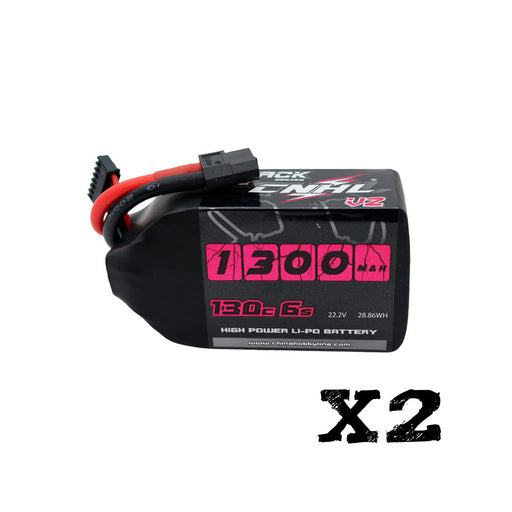
Nopea sovitustarkistus 2 Packs CNHL Black Series V2.0 1300mAh 22.2V 6S 130C LiPo-akku XT60-liittimellä sopii erinomaisesti FPV-lentäjille, jotka ha...
Näytä täydet tiedotVaraosat ja pitkäaikainen tuki Tiedämme, että RC-piloteille luotettava varaosatuki on tärkeä osa sitä, että lentokone pysyy lentokunnossa vuo...
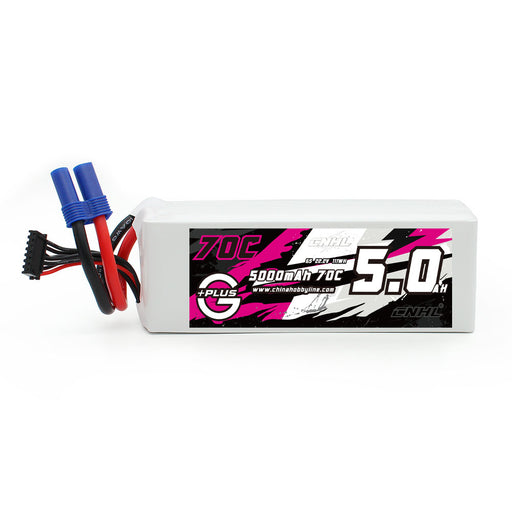
Näytä täydet tiedotTekniset tiedot: Varastonumero: 500706EC5 Kapasiteetti: 5000mAh Jännite: 22,2V / 6-kennoa / 6S1P Purkunopeus: 70C jatkuva / 140C hetkellinen Lata...
Näytä täydet tiedot
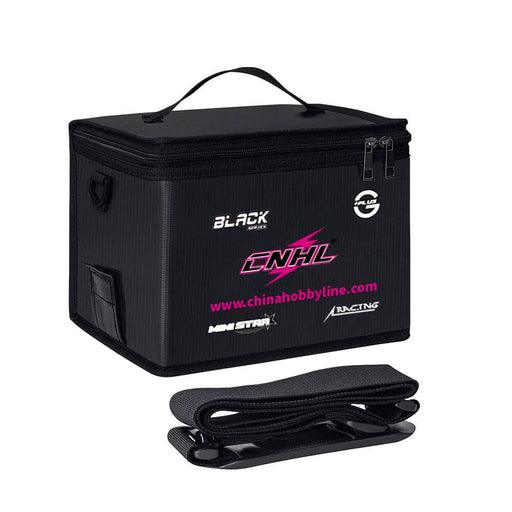
CNHL LiPo Battery Bag on suunniteltu turvallisempaan LiPo-lataukseen, kuljetukseen ja säilytykseen kotona tai kentällä. Se lisää käytännöllisen suo...
Näytä täydet tiedot

Nopea sovitustarkistus 2 paketin CNHL Speedy Pizza Series Pro 1350mAh 6S 150C LiPo -akku XT60-liittimellä on suunniteltu 5-tuuman FPV-piloteill...
Näytä täydet tiedot

Quick Fit Check The CNHL Speedy Pizza Series 2200mAh 22.2V 6S 120C LiPo Battery with XT60 Plug combines the familiar 2200mAh 6S format with a ligh...
Näytä täydet tiedot

Quick Fit Check The CNHL Speedy Pizza Series 2200mAh 14.8V 4S 120C LiPo Battery with XT60 Plug combines a widely used 2200mAh 4S format with a sli...
Näytä täydet tiedot

Quick Fit Check The CNHL Speedy Pizza Series 2200mAh 11.1V 3S 120C LiPo Battery with XT60 Plug takes the familiar 3S 2200mAh aircraft battery form...
Näytä täydet tiedot

The CNHL Long Range Series BAK 65E 6350mAh 21700 Li-ion battery cell is built around one clear priority: maximum stored energy from a lightweight c...
Näytä täydet tiedot

The CNHL Long Range Series BAK 50D 5000mAh 21700 Li-ion battery cell is designed for custom high-energy battery packs that need a strong balance be...
Näytä täydet tiedot


Jätä kommentti