
סוללות CNHL ליפו
CNHL שואפת לספק סוללות Li-Po באיכות גבוהה ומוצרי RC לכל חובבי התחביב עם שירות לקוחות מצוין ומחירים תחרותיים
What are the best RC cars of 2026? That question has become surprisingly difficult to answer, and for all the right reasons.
This year has delivered everything from $120 micro drift cars that can turn a kitchen floor into a miniature drift circuit to enormous 12S electric desert trucks that weigh more than 50 pounds. Between those extremes, manufacturers have introduced more accessible brushless platforms, improved drivetrain designs, sophisticated stability control systems and increasingly realistic scale vehicles.
But the most interesting development in 2026 is not simply that RC cars have become faster. It is that manufacturers are finding more ways to make serious hobby-grade RC performance accessible to different types of drivers.
At CNHL, we believe the best RC car is not necessarily the fastest, largest or most expensive model. It is the vehicle that delivers the right balance of driving enjoyment, performance, reliability, affordability and long-term ownership experience.
2026 Quick Picks
This guide focuses on standout new and refreshed hobby-grade RC vehicles of 2026. Our selections are editorial recommendations based on vehicle design, specifications, intended driving experience, ownership considerations and community feedback, rather than a sales ranking or a controlled head-to-head durability test.
| RC Car | Scale | Category | Power | Approx. Price | Battery Included |
|---|---|---|---|---|---|
| ARRMA Mini KRATON | 1/16 | Mini Basher | 3S | $340 | Yes |
| ARRMA MOJAVE V3 | 1/7 | Desert Truck | 6S | $720 | No |
| Losi 5IVE TE 3.0 | 1/5 | Desert Truck | 12S | $1,500 | No |
| Traxxas Stampede VX3 | 1/10 | Monster Truck | 2S–3S | $320–400 | No |
| HPI Stage D24 | 1/24 | Micro Drift | 2S | $120 | Yes |
| ARRMA QUAKE 4S | 1/8 | Monster Truck | 4S | $550 | No |
| Redcat Vertex 10 / 10W | 1/10 | Crawler | Up to 4S | $500–530 | No |
| ARRMA INFRACTION GROM | 1/12 | Street Basher | 3S | Under $300 | Yes* |
| ARRMA INFRACTION 223S | 1/8 | Street Basher | 2S–3S | $450 | No |
| HPI Stage D10 FLUX | 1/10 | RWD Drift | 2S | $400 | No |
| MST RMX 4.0 Brushless | 1/10 | RWD Drift | 2S | $450 | No |
| Redcat SixtyFour-18 | 1/18 | Hopping Lowrider | 2S | $300 | Yes |
Prices are approximate US reference prices for the configurations discussed in late 2026, not live retailer quotations. Pricing, availability and package contents may vary by region. *Battery and charger inclusion applies to the corresponding bundled INFRACTION GROM RTR configuration.

If we had to recommend just one new RC vehicle to the widest range of hobbyists in 2026, the ARRMA Mini KRATON 3S BLX would be extremely difficult to ignore.
The Mini KRATON addresses a problem that has existed for years. Large-scale bashers are incredibly entertaining, but their size, weight, battery requirements and need for open driving space often limit how frequently owners actually use them.
The Mini KRATON delivers a meaningful portion of that big-truck experience without demanding the same commitment.
Its 4WD drivetrain, sealed center differential, aluminum shocks, clipless body and 3S brushless power system give it a surprisingly serious mechanical package for a compact RC truck. With the appropriate configuration, it is capable of approximately 50 mph, which is more than enough performance for most everyday bashing sessions.
Enthusiast feedback has been particularly positive about its jumping ability, acceleration and overall versatility. Several experienced collectors place the Mini KRATON among the vehicles they would keep even if they had to dramatically reduce their RC collections.
That does not mean it is indestructible. Some owners have specifically identified shock shafts as an area they would like to see improved. Drivers who frequently use concrete skateparks or perform repeated high-impact jumps should inspect the suspension regularly.
Nevertheless, its combination of accessibility and performance makes the Mini KRATON our strongest all-round recommendation among the 2026 releases.
Best for: Everyday bashers, experienced hobbyists looking for a portable truck, and supervised newer drivers using reduced-power settings.
Read more: ARRMA Mini KRATON 3S Review and Comparison with the Traxxas Mini XRT.
The ARRMA MOJAVE represents a completely different approach to RC performance. Where a conventional monster truck focuses on wheelies, flips and aggressive jumps, the MOJAVE delivers its entertainment through speed across rough terrain, suspension movement and realistic desert-truck handling.
The refreshed MOJAVE 6S V3 improves an already successful 1/7-scale platform through revised chassis hardware, improved debris protection, updated electronics and a more sophisticated body mounting system.

The long wheelbase and substantial suspension travel allow the MOJAVE to carry speed across terrain that would make many shorter trucks feel nervous. Its body movement is part of the experience, rather than something that needs to be eliminated through excessively stiff suspension settings.
On a large dirt field or rough off-road course, the MOJAVE can deliver a remarkably convincing miniature desert-racing experience.
The biggest debate surrounding the latest MOJAVE is not whether it performs well. It is whether its increased purchase price still represents good value.
Some long-time ARRMA owners remember when the MOJAVE 6S occupied a considerably lower price bracket. Regional pricing makes this issue even more noticeable, particularly in markets where import costs and currency differences increase the final purchase price.
At approximately $720 before batteries and a charger, the new MOJAVE is a substantial investment. Existing MOJAVE 6S owners may also find that their current trucks already deliver much of the driving experience they enjoy.
The MOJAVE 4S therefore remains relevant. It may not offer the same presence or ultimate power potential, but it can be the more sensible purchase for drivers who want desert-truck handling without the full cost and logistics of the 6S platform.
Best for: Large off-road areas, high-speed dirt driving and enthusiasts who appreciate realistic suspension movement.
Read more: ARRMA MOJAVE 6S V3 Review: What Changed, RTR vs EXB and Real-World Performance.

Few RC vehicles introduced in 2026 can match the physical presence of the Losi 5IVE TE 3.0.
At approximately four feet long and weighing more than 50 pounds, this is not simply a larger version of a conventional RC basher. It belongs to an entirely different category of hobby experience.
The factory electric 5IVE TE 3.0 brings 12S brushless power to one of the most recognizable large-scale desert truck families in RC. Massive tires, substantial shock absorbers, a multi-panel body and large-scale drivetrain components create a vehicle that looks and behaves very differently from a typical 1/8-scale truck.
The availability of a gasoline-powered 5IVE T 3.0 alongside the electric version also gives large-scale enthusiasts a meaningful choice between traditional engine character and electric torque.
The electric model offers immediate throttle response, substantial acceleration and freedom from conventional gasoline-engine starting and tuning routines.
The gasoline version appeals to enthusiasts who enjoy mechanical tuning, engine sound and the traditional large-scale RC experience.
Neither option is universally superior. They represent different reasons for enjoying the same type of vehicle.
The approximately $1,500 purchase price is only the starting point for the electric model. A properly matched pair of 6S LiPo batteries, suitable charging equipment, replacement tires and transportation arrangements all need to be considered.
A truck of this size also demands a dedicated, open driving area away from pedestrians, traffic and fragile property. Its weight and performance leave very little room for careless operation.
For enthusiasts who have the budget and suitable terrain, however, the 5IVE TE 3.0 offers an experience that smaller RC cars cannot reproduce.
Best for: Experienced large-scale enthusiasts with substantial driving space and a dedicated RC budget.
Read more: Losi 5IVE TE 3.0 Review: From Gas Legend to 12S Electric Desert Truck.
Traxxas took a different approach in 2026 by modernizing one of the most familiar names in hobby-grade RC rather than introducing an entirely unfamiliar vehicle family.
The updated Stampede VX3 retains the traditional monster truck formula: large tires, generous ground clearance, aggressive acceleration and a chassis designed for recreational driving.
The new brushless power system brings both 2S and 3S LiPo operation to a familiar platform, while factory-installed heavy-duty drivetrain and suspension components reduce the need for some immediate upgrades.

| Feature | Stampede 2WD VX3 | Stampede 4X4 VX3 |
|---|---|---|
| Approx. Price | $320 | $400 |
| Drivetrain | Rear-wheel drive | Four-wheel drive |
| Driving Character | Playful and lively | More traction and control |
| Mechanical Complexity | Lower | Higher |
| Best Use | Wheelies, casual bashing | Grass and mixed terrain |
The Stampede 2WD deserves recognition as a vehicle in its own right. Its simpler drivetrain, lower purchase price and traditional rear-wheel-drive personality can make it an attractive option for drivers who enjoy developing throttle control rather than relying on maximum traction.
Some enthusiasts who purchased several of the year's new releases even prefer the Stampede 2WD over larger and more sophisticated monster trucks.
Traxxas also benefits from an established replacement-parts ecosystem and widespread familiarity among hobby shops. Those advantages are difficult to quantify in a speed comparison, but they become increasingly important after months or years of ownership.
Best for: Traditional monster truck enthusiasts and hobbyists who value straightforward long-term ownership.
Read more: The New Traxxas VX3 Brushless Lineup Explained: Slash, Rustler and Stampede.

The HPI Stage D24 may be one of the most important RC releases of 2026, despite being one of the smallest.
At 1/24 scale and approximately $120, it removes two of the biggest barriers to RC drifting: the cost of a dedicated drift platform and the space required to enjoy it.
Unlike inexpensive toy-grade drift cars, the Stage D24 incorporates a purpose-built rear-wheel-drive layout, a spool differential, adjustable gyro assistance, independent front suspension and substantial steering angle.
The officially licensed Toyota GR Supra hardbody, magnetic mounting system and LED lighting also give it the visual character of a much larger scale RC car.
A conventional 1/10 drift car needs a sufficiently large and smooth driving area to perform properly. The Stage D24 can be enjoyed on a suitably smooth indoor floor or compact drift layout, making spontaneous driving sessions much easier.
It can also be transported almost anywhere without requiring a dedicated RC equipment bag.
For experienced RC enthusiasts, this makes it an excellent secondary vehicle. For newcomers, it offers an affordable way to explore the techniques involved in rear-wheel-drive drifting.
Positive reactions from owners of both the Stage D24 and its larger Stage D10 sibling suggest that HPI's return to dedicated drift platforms is resonating with enthusiasts.
Best for: Indoor RC driving, small-space drifting, travel and affordable entry into RWD drift cars.
Read more: HPI Stage D24 Review: Is This $120 Micro RWD Drift Car Worth Buying?.

The QUAKE 4S expands ARRMA's monster truck family into a more substantial 1/8-scale platform, combining 4S brushless power with a high-riding chassis, oversized chevron-pattern tires, three gear differentials and aggressive monster truck styling.
It is designed to deliver a different type of entertainment from the MOJAVE. Instead of prioritizing high-speed composure and desert-truck handling, the QUAKE embraces wheelies, body movement and exaggerated monster truck behavior.
That distinction is important. An RC monster truck does not necessarily need to be the most stable vehicle in every corner to be entertaining.
This is one of the more debated questions surrounding the 2026 QUAKE 4S.
While some enthusiasts enjoy its aggressive performance without encountering major problems, others have reported repeated axle failures and damaged steering components during bashing sessions.
One owner described multiple drivetrain failures even after landings that appeared relatively controlled. Other owners have reported satisfactory experiences, illustrating why individual accounts should not automatically be treated as representative of every vehicle.
The QUAKE's substantial weight, large tires and high-traction drivetrain can place significant loads on axle components and suspension assemblies during hard impacts.
For drivers on a smaller budget, the QUAKE 223S and GORGON platforms also deserve consideration. They deliver a different size and performance experience with potentially lower initial ownership costs.
Best for: Monster truck enthusiasts who enjoy wheelies, aggressive acceleration and off-road bashing.
Read more: ARRMA QUAKE 4S Platform and Setup Guide and ARRMA QUAKE 223S vs GORGON.
Redcat's Vertex family demonstrates that the RTR crawler market is evolving beyond traditional scale trail trucks.
Both the Vertex 10 and Vertex 10W use a performance-oriented platform with carbon fiber chassis rails, portal axles, servo-on-axle steering, high-clearance suspension links and brushless crawler electronics.
Rather than requiring owners to immediately replace multiple components, these trucks deliver a substantial performance-focused equipment package from the factory.

| Feature | Vertex 10 | Vertex 10W |
|---|---|---|
| Wheelbase | 316mm | 330mm |
| Axle Width | 204mm | 228mm |
| Wheel Size | 1.9 inch | 2.2 inch |
| Overdrive | 20% | 32% |
| Approx. Price | $500 | $530 |
| Best Terrain | Tight technical lines | Steep and open rock terrain |
The standard Vertex 10 is not simply a cheaper Vertex 10W. Its narrower dimensions can be advantageous in technical environments where precise wheel placement and narrow lines matter.
The Vertex 10W offers a wider stance, longer wheelbase and larger tires, making it particularly attractive for open rock formations and challenging sidehill situations.
Drivers who prefer something smaller should also consider the Redcat Ascent-18 APEX. Some experienced collectors favor compact crawlers because they can create challenging courses in much smaller areas.
Best for: Enthusiasts who prioritize technical crawling performance over maximum speed.
Read more: Redcat Vertex 10 vs Vertex 10W: Detailed Platform Comparison and Redcat Ascent-18 and APEX Setup Guide.
ARRMA's INFRACTION family has become increasingly accessible through smaller and more affordable brushless platforms.
The INFRACTION GROM combines the aggressive street-truck appearance of the larger models with a compact 1/12-scale chassis. Its 3S brushless system, 4WD drivetrain and adjustable stability assistance offer serious on-road performance without the size of a conventional 1/7-scale street machine.
Its approximately 50 mph potential is remarkable for a vehicle of this size. More importantly, the smaller chassis can make ordinary driving sessions easier to organize.

The larger 1/8-scale INFRACTION 223S offers a different balance of speed, size and road presence.
The GROM is the more accessible choice for drivers who value portability and lower initial costs. The larger INFRACTION 223S is better suited to enthusiasts with access to substantial, smooth paved areas.
With appropriately configured 3S power, the 223S has a published speed potential of approximately 65 mph, offering a meaningful step up from the smaller GROM.
However, higher speed also increases braking-distance requirements, tire wear and the consequences of poor throttle control.
For drivers who mainly enjoy recreational street bashing, the smaller vehicle may actually receive more driving time throughout the year.
Best for: Smooth paved surfaces, controlled on-road driving and aggressive street-truck enthusiasts.
Read more: ARRMA INFRACTION 223S V2 Review: A Smarter Way Into 1/8 Street Bashing.

The 1/10 rear-wheel-drive drift market has become particularly interesting in 2026, with HPI's Stage D10 challenging established platforms such as the MST RMX.
The MST RMX 4.0 RTR is an appealing option for drivers looking for a relatively approachable factory drift setup. Its driving character and the experience behind the RMX platform make it a compelling entry point for enthusiasts who want to begin practicing rather than immediately modifying their chassis.
The HPI Stage D10 FLUX approaches the market from a different direction. Its extensive adjustment options, licensed Ford Mustang RTR body, magnetic body mounts, lighting system and adjustable gyro make it a particularly feature-rich package.
At the reference prices considered here, the brushless Stage D10 is approximately $50 less expensive than the brushless RMX 4.0.
There is an important distinction between the car that feels easiest during the first driving session and the car that offers the most equipment or tuning possibilities for its price.
A well-sorted factory setup can help a newcomer establish consistent drift lines. A more adjustable chassis can become increasingly valuable once that driver understands steering geometry, weight transfer, gyro behavior and rear traction.
The Stage D10 is especially interesting because its licensed body may attract automotive enthusiasts who previously had little interest in dedicated RC drifting.
The RMX 4.0 and Stage D10 therefore represent two legitimate approaches to the same hobby. The right choice depends on whether the buyer values initial driving confidence, scale presentation, tuning flexibility or overall equipment value.
Best for: Dedicated RWD drift enthusiasts and newcomers who want a platform they can develop over time.
Read more: HPI Stage D10 Review: A 1/10 RWD Drift Car Built to Grow With You.

Not every great RC car needs to be fast.
The Redcat SixtyFour-18 is a particularly convincing example of how radio-controlled vehicles can celebrate automotive culture rather than simply compete on power and speed.
Based on the officially licensed 1964 Chevrolet Impala SS, this compact 1/18-scale lowrider reproduces the distinctive appearance and suspension behavior associated with traditional lowrider culture.
Five servos control steering and the independent suspension movements. A dedicated six-channel transmitter allows the driver to experiment with different body positions, front-end hopping and three-wheel-style maneuvers.
The suspension movements are produced through electric servos and mechanical linkages rather than a miniature hydraulic system, providing a compact way to recreate the appearance of hydraulic lowrider behavior.
If the SixtyFour-18 were evaluated entirely on speed, it would have little chance of appearing alongside vehicles such as the KRATON or MOJAVE.
But that would completely miss the point.
Its entertainment comes from mechanical interaction, visual presentation, customization and the ability to recreate a specific form of automotive expression.
It is also a vehicle that can be enjoyed in very limited spaces, making it attractive to collectors and RC enthusiasts who already own conventional performance cars.
The SixtyFour-18 is a reminder that innovation does not always require a bigger motor or a higher-voltage battery. Sometimes innovation means creating an entirely different reason to pick up the transmitter.
Best for: Scale collectors, lowrider enthusiasts, indoor RC sessions and hobbyists interested in unusual mechanical functions.
Read more: Redcat SixtyFour-18 Lowrider: Features, Hopping System and Buying Guide.
Looking across the year's releases, ARRMA deserves particular recognition for the breadth of its product strategy.
Rather than concentrating exclusively on large, high-voltage vehicles, ARRMA has continued expanding its compact and mid-range brushless platforms while refreshing established premium vehicles.
The ARRMA Performance Ladder
This gives enthusiasts a natural upgrade path without requiring every buyer to immediately purchase the most expensive model.
For families, that flexibility is especially valuable. Buying two accessible RC vehicles and spending time driving together may deliver more enjoyment than spending the same amount on one premium truck.
Community enthusiasm for ARRMA's 2026 releases has been particularly noticeable, although enthusiasm alone should not be confused with verified market-share or sales data.
Traxxas, HPI, Redcat, Losi and other manufacturers continue to bring important strengths to the market. The benefit for enthusiasts is that competition is creating more specialized choices rather than forcing everyone toward a single type of RC vehicle.
One of the most common purchasing dilemmas in hobby-grade RC is whether to buy a smaller vehicle now or continue saving for a more powerful model.
The ARRMA KRATON 6S remains an attractive option for serious bashers. For some enthusiasts, however, the desire to own an 8S vehicle makes the 6S model feel like an intermediate purchase rather than the ultimate goal.
The problem with this reasoning is that it assumes additional voltage and vehicle size will automatically produce more enjoyment.
| Power Class | Typical Ownership Experience | Relative Cost |
|---|---|---|
| 2S | Accessible driving, drifting and compact platforms | Low |
| 3S | Strong everyday brushless performance | Low–Medium |
| 4S | Larger bashers and substantial off-road capability | Medium |
| 6S | High-performance enthusiast vehicles | Medium–High |
| 8S | Large-scale premium bashing | High |
| 12S | Specialized large-scale electric vehicles | Very High |
These are broad ownership comparisons, not universal vehicle performance categories. Actual speed, power and running costs depend on the specific platform.
A 3S Mini KRATON may be used several times a week, while a much larger 8S truck may only be used when the owner has enough time to travel to a suitable driving area.
That does not make the 8S truck a poor purchase. It simply means that the two vehicles serve different purposes.
If you are considering an established full-size basher, our ARRMA KRATON 6S V6 vs V5 and EXB comparison provides additional insight into the differences between these platforms.
The Mini KRATON, INFRACTION GROM and HPI Stage D24 demonstrate that compact RC cars no longer need to be treated as compromises.
Advanced electronics, dedicated chassis designs and improved drivetrain components allow smaller vehicles to deliver specialized driving experiences that were previously associated with larger platforms.
This trend extends well beyond high-speed bashing and drifting. Micro-scale RC crawlers are also opening up new possibilities for enthusiasts who appreciate realistic vehicle designs, technical driving and miniature off-road adventures.
A great example is the 1/43 Land Rover Defender 110 Pick-Up RC Crawler, which brings the distinctive appearance of an iconic off-road vehicle into an exceptionally compact RC platform.
Rather than requiring a dedicated outdoor crawling course, micro RC vehicles allow enthusiasts to transform everyday environments into miniature off-road adventures. Desktop obstacles, small rock formations and custom-built scale trails can all become part of the driving experience.
The growing appeal of compact RC vehicles highlights an important shift in the hobby: driving enjoyment is increasingly defined by creativity, accessibility and driving frequency, rather than vehicle size or maximum speed alone.
Modern RTR vehicles are increasingly designed around a specific driving discipline. Dedicated drift chassis, performance crawlers and realistic desert trucks are becoming more accessible without requiring extensive initial assembly.
Not every enthusiast welcomes this development. Experienced builders still value kits for their mechanical involvement, customization possibilities and ability to choose electronics from the beginning.
Ideally, manufacturers will continue offering both accessible RTR vehicles and meaningful kit options rather than treating the two markets as mutually exclusive.
Electronic steering assistance can help drivers manage high-powered RC vehicles, particularly when accelerating on loose or uneven surfaces.
However, stability control cannot replace appropriate driving space, good throttle control or suitable tires. Nor can it prevent drivetrain damage caused by every hard landing.
As RC vehicles become more powerful, enthusiasts are increasingly discussing shock shafts, axle strength, drivetrain materials and replacement-parts availability.
A minor mechanical weakness can become a major ownership frustration if it repeatedly interrupts driving sessions.
That is why the quality of the ownership ecosystem deserves as much attention as headline performance specifications.
The Redcat SixtyFour-18, HPI drift cars and ARRMA MOJAVE demonstrate how realistic movement and scale appearance can be just as important as outright speed.
For these vehicles, realistic suspension movement, steering behavior and body presentation are not merely decorative features. They are fundamental parts of the driving experience.
Before buying a new RC vehicle, consider the complete cost of getting it running and keeping it running.
An RTR label does not always mean the drive battery and charger are included. Some vehicles are supplied as nearly complete packages, while others require a significant additional investment in power equipment.
| Vehicle Budget | Suggested Models |
|---|---|
| Under $150 | HPI Stage D24 |
| $150–300 | INFRACTION GROM bundled configurations, Redcat SixtyFour-18 |
| $300–400 | Mini KRATON 3S, Stampede 2WD, HPI Stage D10 FLUX |
| $400–600 | Stampede 4X4, MST RMX 4.0, INFRACTION 223S, Vertex 10, QUAKE 4S |
| $600–800 | ARRMA MOJAVE 6S V3 |
| $1,000+ | Losi 5IVE TE 3.0 and premium large-scale platforms |
These brackets refer to approximate vehicle or RTR package prices. Additional batteries, chargers, transmitter batteries, taxes and replacement parts may increase the total cost.
For drivers introducing friends or family members to the hobby, purchasing two manageable RC cars can be a particularly rewarding approach.
Shared driving sessions provide opportunities for friendly competition, learning throttle control and exploring new terrain together. A pair of smaller RC vehicles may provide more flexibility than a single expensive flagship truck.
For a younger driver, use an age-appropriate model, suitable speed-limiting settings and adult supervision. High-performance brushless vehicles are not automatically suitable for children simply because they are physically small.
Whether you are purchasing your first hobby-grade RC vehicle, expanding your existing collection or introducing your family to radio-controlled driving, choosing the right vehicle category is more important than simply chasing higher speeds. Explore our growing selection of RC cars and trucks to discover different scales, driving styles and platforms suited to your interests and budget.
Battery selection should follow the choice of vehicle, not the other way around.
A lightweight drift car, a technical crawler and a heavy desert truck place very different demands on their power systems. Choosing the largest available battery is therefore not necessarily the best approach.
| RC Platform | Battery Direction | Main Priority |
|---|---|---|
| Mini KRATON 3S | Compact 3S LiPo | Tray fit and weight |
| MOJAVE 6S | 6S LiPo | Runtime and current delivery |
| Losi 5IVE TE 3.0 | Matched dual 6S packs for 12S | Consistent high-load performance |
| Stampede VX3 | 2S or 3S LiPo | Driving style and compatibility |
| HPI Stage D24 | Micro 2S LiPo | Compact dimensions |
| QUAKE 4S | 4S LiPo | Battery retention and protection |
| Redcat Vertex 10 / 10W | Compact 3S or compatible 4S | Weight distribution |
| INFRACTION 223S | 2S or 3S LiPo | Voltage stability under acceleration |
| HPI Stage D10 | 2S shorty LiPo | Chassis balance and fit |
| Redcat SixtyFour-18 | Compact 2S LiPo | Suspension balance and connector fit |
Always confirm the manufacturer's supported cell count, battery dimensions, connector type, case requirements and charging specifications before purchasing an aftermarket battery.
For vehicles using two batteries in series, such as the Losi 5IVE TE 3.0, the packs should have matching specifications, similar condition and closely matched states of charge.
CNHL offers vehicle-specific battery collections to help simplify this process, including options for ARRMA RC cars, Traxxas brushless trucks and Losi 12S large-scale vehicles.
The ARRMA Mini KRATON 3S BLX is our overall pick among the standout 2026 releases because it combines strong brushless performance, compact dimensions, versatile driving characteristics and a relatively accessible RTR package.
For beginners interested in outdoor bashing, a suitable smaller RC platform with reduced-power settings can be a good starting point. The Mini KRATON offers power-management features, although its full 3S performance is better reserved for experienced drivers. The HPI Stage D24 is an attractive alternative for newcomers interested in indoor drifting.
The HPI Stage D24 is one of the most interesting choices among the new releases. At approximately $120, it offers a dedicated rear-wheel-drive drift chassis, adjustable gyro assistance, licensed bodywork and an included drive battery and charger.
The Traxxas Stampede VX3 is a strong traditional monster truck choice, while the ARRMA QUAKE 4S appeals to drivers looking for a larger and more aggressive 4S monster truck experience.
ARRMA offers an impressive range of new and refreshed brushless platforms, while Traxxas benefits from established vehicle families and a mature parts ecosystem. The better choice depends on the specific vehicle, driving environment, local parts availability and personal ownership priorities.
The HPI Stage D24 stands out in the affordable micro drift category. For conventional 1/10 rear-wheel-drive drifting, the HPI Stage D10 and MST RMX 4.0 offer two particularly compelling approaches.
The Losi 5IVE TE 3.0 is one of the most distinctive large-scale electric releases of 2026, combining a substantial 1/5-scale platform with 12S brushless power.
Not always. RTR generally means that the main vehicle is assembled and equipped with its primary electronics and radio system. Some packages include a drive battery and charger, while others require these items separately. Always check the exact package contents before purchasing.
There is no universal answer without comparable long-term durability testing. Driving surface, vehicle weight, landing technique, throttle input and maintenance practices all influence component life. Replacement-parts availability and ease of repair should also be considered.
Choose according to your driving space, experience and total ownership budget. A 3S platform is often easier to enjoy regularly, while 6S and 8S vehicles offer larger-scale performance for drivers with suitable open areas and the necessary supporting equipment.
Micro RC drift cars and micro RC crawlers are excellent choices for indoor driving. The HPI Stage D24 is ideal for rear-wheel-drive drifting on smooth surfaces, while the 1/43 Land Rover Defender 110 RC Crawler offers a more relaxed, scale-focused driving experience on miniature obstacles and custom indoor crawling courses.
Both categories demonstrate that enjoyable RC driving does not necessarily require a large outdoor area or an expensive high-power brushless system.
The most successful idea behind many of this year's new RC vehicles is not simply increased speed.
It is accessibility.
The ARRMA Mini KRATON brings serious brushless bashing into a portable package. The HPI Stage D24 turns small indoor spaces into drift circuits. The Redcat SixtyFour-18 creates an entirely different form of RC entertainment. The Vertex family brings sophisticated crawler hardware into the RTR market.
At the other end of the spectrum, the MOJAVE 6S V3 and Losi 5IVE TE 3.0 show that there is still room for ambitious, high-performance flagship vehicles.
That diversity is what makes 2026 such an interesting year for the RC hobby.
There has rarely been a better range of choices for enthusiasts who want to explore different driving styles, introduce family members to radio control or simply find a vehicle that fits their everyday life.
Our overall pick is the ARRMA Mini KRATON 3S BLX, but the most rewarding RC car for you might be a $120 micro drifter, a technical crawler or a 12S desert truck.
The best RC car is ultimately the one that makes you want to charge another battery and head out for another driving session.
Would you choose the Mini KRATON, the MOJAVE 6S V3, the Stampede VX3 or the massive Losi 5IVE TE 3.0? Did your favorite vehicle miss our list entirely?
Share your favorite RC release, your ownership experience and the vehicle you would like to see manufacturers develop next in the comments below.
CNHL שואפת לספק סוללות Li-Po באיכות גבוהה ומוצרי RC לכל חובבי התחביב עם שירות לקוחות מצוין ומחירים תחרותיים
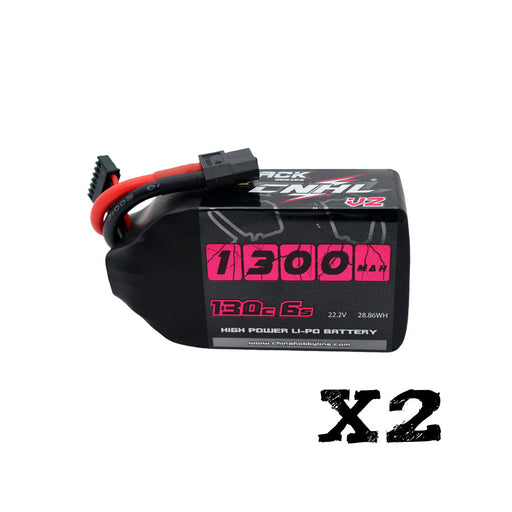
בדיקת התאמה מהירה ה2 Packs CNHL Black Series V2.0 1300mAh 22.2V 6S 130C LiPo Battery with XT60 Plug מתאים היטב למטיסי FPV שרוצים סוללת 6S 1300mAh X...
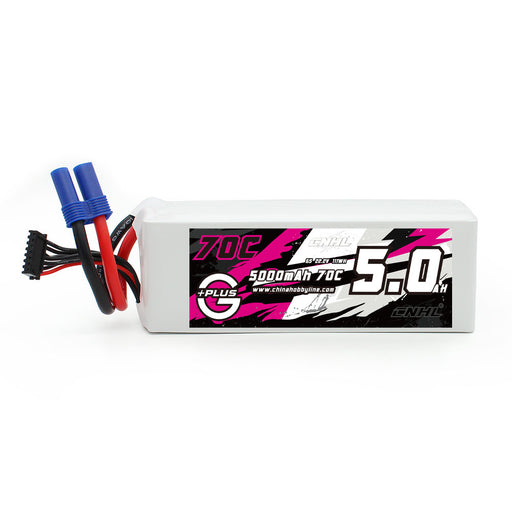
הצג פרטים מלאיםמפרטים: מספר מלאי: 500706EC5 קיבולת: 5000mAh מתח: 22.2V / 6 תאים / 6S1P קצב פריקה: 70C רציף / 140C פיצוץ קצב טעינה: 5C מקסימום גודל (הבדל של 1-5 ...
הצג פרטים מלאים
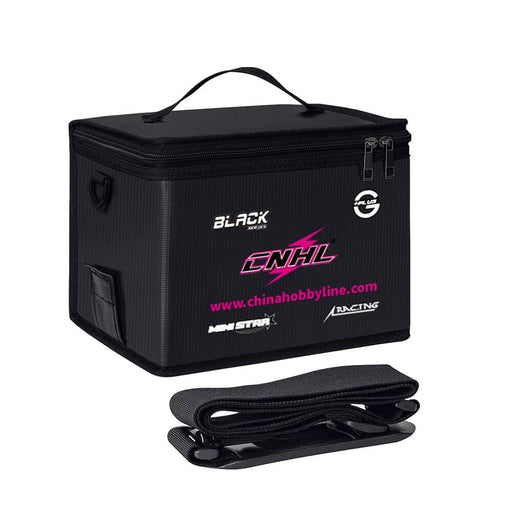
תיק סוללות LiPo של CNHL מיועד לטעינה, הובלה ואחסון בטוחים יותר של סוללות LiPo בבית או בשדה. הוא מוסיף שכבת הגנה פרקטית על ידי סיוע במניעת התפשטות ח...
הצג פרטים מלאיםבדיקת התאמה מהירה חבילת 2 CNHL Speedy Pizza Series Pro 1350mAh 6S 150C LiPo עם תקע XT60 מיועדת לטייסי FPV בגודל 5 אינץ' שרוצים מערכת 6S חופשית ...
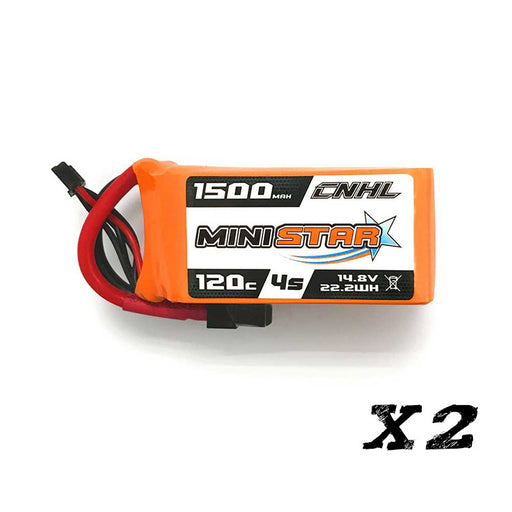
הצג פרטים מלאיםמפרטים: מספר מלאי: 1501204 קיבולת: 1500mAh מתח: 14.8V / 4-תאים / 4S1P קצב פריקה: 120C רציף / 240C פיצוץ קצב טעינה: 5C מקסימום גודל (הבדל 1-5 מ"מ):...
הצג פרטים מלאים

The CNHL 2 Packs XT60 to IC2 Battery Adapter Cable provides a convenient way to connect compatible XT60 LiPo batteries to IC2-equipped RC model...
הצג פרטים מלאים

The ISDT X16 is a professional high-power dual-channel AC LiPo charger built for large RC battery systems that go well beyond the capability of a ...
הצג פרטים מלאים

The ISDT PD60 is a compact 60W USB-C LiPo balance charger designed for RC users who want a simple, portable charging solution without carr...
הצג פרטים מלאים

Quick Fit Check The CNHL Speedy Pizza Series 2200mAh 22.2V 6S 120C LiPo Battery with XT60 Plug is a lightweight, low-profile battery for compatibl...
הצג פרטים מלאים

Quick Fit Check The CNHL Speedy Pizza Series 2200mAh 14.8V 4S 120C LiPo Battery with XT60 Plug combines a widely used 2200mAh 4S format with a sli...
הצג פרטים מלאים



Leave a comment