
סוללות CNHL ליפו
CNHL שואפת לספק סוללות Li-Po באיכות גבוהה ומוצרי RC לכל חובבי התחביב עם שירות לקוחות מצוין ומחירים תחרותיים
A 3S LiPo battery contains three lithium-polymer cells connected in series. A standard 3S LiPo is rated at 11.1V nominal and reaches approximately 12.6V when fully charged. It is one of the most common battery voltage classes in RC airplanes and is also widely used in 1/10 RC cars, crawlers, boats and selected FPV setups.
Compared with 2S, 3S provides substantially higher voltage and therefore more potential motor speed and power when the ESC, motor and drivetrain are designed to handle it. But the label “3S” only identifies the battery voltage class. Capacity, dimensions, weight, case style, connector and discharge capability still need to match the actual RC model.

| Cell Count | 3 cells connected in series |
| Standard Nominal Voltage | 11.1V |
| Approx. Full Voltage | 12.6V total / 4.20V per cell |
| Typical Storage Range | About 11.4–11.55V total, depending on charger target |
| Common Applications | RC airplanes, 1/10 RC cars, crawlers, boats and selected FPV models |
| Common Capacities | Small flight packs through large 5000mAh+ surface and boat packs |
| Typical Charging Mode | LiPo Balance Charge |
The letter S means the cells are connected in series. A 3S LiPo therefore contains three series-connected cell groups.
In a series connection, voltage adds together:
3.7V + 3.7V + 3.7V = 11.1V nominal
At full charge, each standard LiPo cell approaches approximately 4.20V:
4.20V × 3 = approximately 12.60V fully charged
This is why the terms 3S LiPo and 11.1V LiPo battery normally describe the same standard voltage class.
For the complete relationship between 1S and 8S, read the LiPo Battery Voltage Guide: 1S to 8S Explained for RC Models.
| Battery State | Approx. Per Cell | Approx. 3S Pack Voltage |
|---|---|---|
| Fully charged | 4.20V | 12.60V |
| Nominal rating | 3.70V | 11.10V |
| Typical storage target | About 3.80–3.85V | About 11.40–11.55V |
Battery voltage changes during use and can temporarily sag under load. For that reason, pack voltage alone should not be interpreted without considering current load, battery condition and ESC low-voltage protection.

3S occupies an important middle ground in RC. It delivers considerably more voltage than 2S while remaining practical for a large number of medium-power systems.
3S is one of the most familiar battery formats in electric fixed-wing RC flying. Many park flyers, trainers, sport aircraft, warbirds, gliders and scale models are designed around 3S power systems.
A particularly common class is the 3S 2200mAh softcase battery because it offers a useful balance between energy, weight and physical size for many medium-size aircraft.
Aircraft battery selection should still consider:
3S is widely used in performance-oriented RC cars and trucks that support both 2S and 3S. Moving from 2S to 3S can significantly increase available motor speed and power potential.
Common 3S surface applications include:
The power system must explicitly support 3S. A connector that physically fits does not prove the ESC or motor can tolerate 12.6V at full charge.
Many crawler users choose 3S because the additional voltage gives the ESC and motor more available power while gearing and throttle control can still keep low-speed operation smooth.
Whether 2S or 3S is better depends on the motor, ESC, gearing and desired driving style. Higher battery voltage does not automatically mean the crawler must be driven faster.
3S is also used in smaller and medium-size RC boats where the motor and ESC are designed for the voltage. Higher-performance boats often move to 4S, 6S or paired-battery systems.
3S has been used in FPV and multirotor systems, particularly in smaller, lighter or older designs. Modern high-performance FPV platforms often use 4S or 6S, but 3S remains relevant where motor KV, propeller choice and overall weight are designed around the lower voltage.
If you already know your RC model requires a 3S pack, you can browse the 3S LiPo battery collection to compare capacities, sizes, discharge ratings and connector options.
The 3S 2200mAh LiPo became a very common fixed-wing battery size because it sits in a useful middle range of voltage, capacity and weight.
At nominal voltage, its approximate stored energy is:
11.1V × 2.2Ah ≈ 24.4Wh
This capacity is large enough for many park-flyer and sport-aircraft applications without the mass of larger 4000–6000mAh packs.
However, “3S 2200mAh” does not guarantee compatibility. Two batteries with the same electrical specification can have different:
For aircraft in particular, battery weight and placement can change the center of gravity, so physical fit must be checked as carefully as voltage.
| Feature | 3S Hardcase | 3S Softcase |
|---|---|---|
| External Protection | Higher | Lower |
| Typical Weight | Generally higher | Generally lower |
| Common Applications | RC cars and protected battery trays | Airplanes, FPV, boats and weight-sensitive models |
| Physical Flexibility | Rigid dimensions | More packaging flexibility |
Case style does not determine voltage or automatically determine electrical performance. It primarily changes mechanical protection, weight and installation suitability.
All standard 3S LiPo batteries share the same basic voltage class, but capacity can vary dramatically.
Examples:
A larger capacity can provide more available energy, but the pack normally becomes larger and heavier.
Approximate nominal energy:
| 3S Capacity | Approx. Nominal Energy |
|---|---|
| 1300mAh | About 14.4Wh |
| 2200mAh | About 24.4Wh |
| 5000mAh | About 55.5Wh |
| 6000mAh | About 66.6Wh |
Runtime cannot be calculated from capacity alone because motor efficiency, throttle use, propeller or gearing, vehicle weight and operating load also matter.
The discharge C rating and 3S voltage rating describe different battery characteristics.
For example, two batteries may both be 3S 2200mAh but have different discharge ratings, weights, connectors and internal resistance.
Increasing the C rating does not turn an 11.1V 3S battery into a higher-voltage battery.
Both batteries contain three series cell groups, but their intended voltage profiles differ.
| Specification | Standard 3S LiPo | 3S LiHV |
|---|---|---|
| Typical Nominal Voltage | 11.1V | About 11.4V |
| Typical Full Voltage | 12.6V | Up to approximately 13.05V when specified |
| Charger Mode | LiPo | LiHV |
Do not charge a standard 3S LiPo to 13.05V. Use the chemistry mode specified by the battery manufacturer.
A conventional 3S LiPo normally uses both its main power connector and balance lead during Balance Charge.
| 3S Battery | Approx. 1C Current |
|---|---|
| 1300mAh | 1.3A |
| 1500mAh | 1.5A |
| 2200mAh | 2.2A |
| 5000mAh | 5.0A |
Approximately 1C is a conservative general starting point unless the battery specifies another permitted charging rate.
For the complete charging process, read the LiPo Battery Charging Guide.
Charger power depends on both battery voltage and charging current.
A common 3S 2200mAh battery at approximately 1C requires:
12.6V × 2.2A ≈ 28W
A 3S 5000mAh battery at approximately 1C requires:
12.6V × 5A = approximately 63W
This is why a basic 50W charger may be perfectly adequate for many 3S airplane packs but can become a power limitation when charging larger 3S car or boat batteries.
For detailed calculations, read How Many Watts Does My LiPo Charger Need?.
There is no universal 3S connector. Common examples include:
Smaller airplane and FPV packs often use lighter connectors, while larger surface and boat packs may use connectors designed for higher current.
Connector choice should match:
For more detail, read the RC Battery Connector Guide.
Moving from 2S to 3S increases standard nominal voltage from 7.4V to 11.1V.
| Specification | 2S | 3S |
|---|---|---|
| Nominal voltage | 7.4V | 11.1V |
| Full voltage | 8.4V | 12.6V |
| Performance potential | Moderate | Higher where electronics support it |
| Electrical stress | Lower | Higher potential system load |
Changing from 2S to 3S is not simply a battery upgrade. The ESC, motor, gearing, drivetrain and cooling must all be compatible.
Read the dedicated 2S vs 3S LiPo Battery guide for the complete comparison.
A standard 4S LiPo increases nominal voltage from 11.1V to 14.8V and full voltage from 12.6V to 16.8V.
That extra voltage can increase performance potential, but it also increases:
Some airplanes, boats and FPV systems are available in both 3S and 4S configurations, but the correct battery depends on the motor KV, propeller, ESC, cooling and model design.
Read 3S or 4S? A Guide to Choosing the Right Battery Without Frying Your Gear before changing voltage classes.
Only when the ESC, motor and complete power system explicitly support 3S.
A fully charged 2S battery reaches approximately 8.4V, while a fully charged 3S reaches approximately 12.6V. That is a substantial voltage increase.
If the electronics are rated only for 2S, using 3S can exceed their voltage limits.
Sometimes, when the ESC and model support both voltages. A 3S battery generally provides lower motor speed and less maximum power potential than 4S in the same compatible system.
However, the model may also have requirements related to:
Do not judge compatibility from connector type alone.
A battery marked 3S1P uses:
The series count determines the voltage. The parallel configuration relates more closely to how capacity and current capability are built internally.
A 3S2P battery is still a 3S voltage battery because the number of series groups remains three.
The correct 3S battery is therefore not simply the one with the largest capacity or highest C rating. It is the battery whose voltage, size, weight, connector and electrical capability match the actual model.
Once you have confirmed that your model is designed for 3S, browse the CNHL 11.1V 3S LiPo Batteries collection to compare suitable pack sizes, capacities, connectors and discharge options.
3S means the battery contains three lithium-polymer cell groups connected in series.
A standard 3S LiPo is rated at 11.1V nominal and reaches approximately 12.6V when fully charged.
Both are correct. 11.1V is the nominal rating, while approximately 12.6V is the fully charged voltage.
Many chargers target approximately 3.8–3.85V per cell, or roughly 11.4–11.55V total for a standard 3S pack.
Common applications include RC airplanes, 1/10 RC cars and trucks, crawlers, boats and selected FPV models.
It offers a useful combination of voltage, stored energy, size and weight for many medium-size RC airplanes.
Yes. A conventional 3S LiPo has three series cell groups, so Balance Charge allows the charger to monitor all three individual cell voltages.
At approximately 1C, the charging current is 2.2A. Use a higher rate only when the battery explicitly permits it.
At approximately 1C, the charging current is 5A.
Near full voltage, approximately 12.6V × 5A = 63W of ideal battery-side charging power is required.
Only if the ESC, motor and complete model explicitly support 3S voltage.
Sometimes, when the model supports both. Performance will generally be lower than on 4S because the battery voltage is lower.
Not universally. 3S offers higher voltage and performance potential, while 2S can provide smoother power delivery and lower electrical and drivetrain stress. The correct choice depends on the model.
Not automatically. 4S provides higher voltage, but the power system must be designed for it. A properly matched 3S setup can be the better choice for weight, efficiency or component compatibility.
A standard 3S LiPo battery contains three series-connected cell groups, is rated at 11.1V nominal and reaches approximately 12.6V when fully charged. It is especially important in RC airplanes but is also widely used in cars, crawlers, boats and selected FPV systems.
The biggest mistake is treating “3S” as a complete battery specification. After confirming that the model supports 3S voltage, you still need to match capacity, dimensions, weight, connector, case construction and current capability to the actual application.
If you are deciding between lower and higher voltage, continue with 2S vs 3S LiPo Battery or 3S or 4S? A Guide to Choosing the Right Battery Without Frying Your Gear. For the complete voltage system, return to the LiPo Battery Voltage Guide: 1S to 8S Explained for RC Models.
CNHL שואפת לספק סוללות Li-Po באיכות גבוהה ומוצרי RC לכל חובבי התחביב עם שירות לקוחות מצוין ומחירים תחרותיים

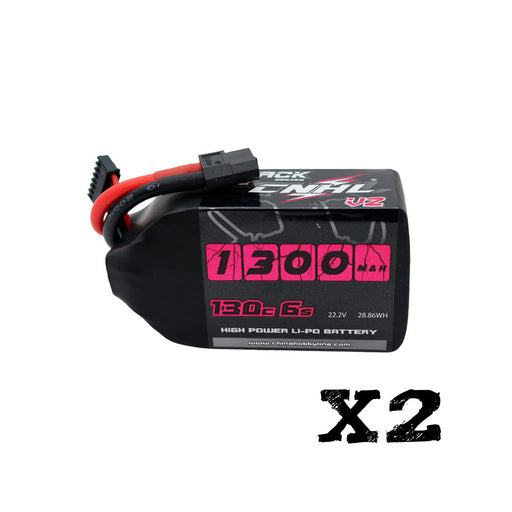
בדיקת התאמה מהירה ה2 Packs CNHL Black Series V2.0 1300mAh 22.2V 6S 130C LiPo Battery with XT60 Plug מתאים היטב למטיסי FPV שרוצים סוללת 6S 1300mAh X...
הצג פרטים מלאיםחלקי חילוף ותמיכה לטווח ארוך אנו יודעים שעבור טייסי RC, תמיכה אמינה בחלקי חילוף היא חלק חשוב בשמירה על מטוס כשיר לטיסה במשך שנים. לכן CNHL מת...
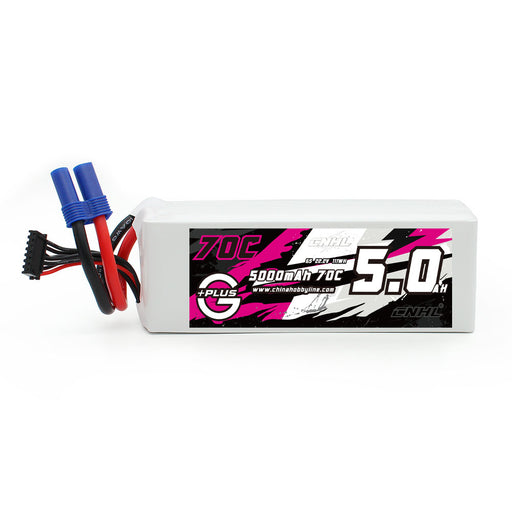
הצג פרטים מלאיםמפרטים: מספר מלאי: 500706EC5 קיבולת: 5000mAh מתח: 22.2V / 6 תאים / 6S1P קצב פריקה: 70C רציף / 140C פיצוץ קצב טעינה: 5C מקסימום גודל (הבדל של 1-5 ...
הצג פרטים מלאים
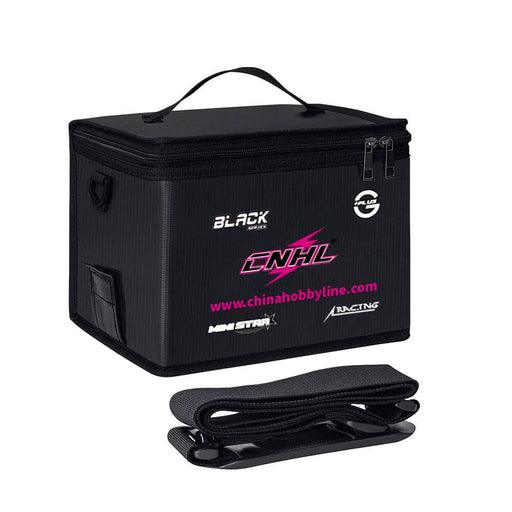
תיק סוללות LiPo של CNHL מיועד לטעינה, הובלה ואחסון בטוחים יותר של סוללות LiPo בבית או בשדה. הוא מוסיף שכבת הגנה פרקטית על ידי סיוע במניעת התפשטות ח...
הצג פרטים מלאים

בדיקת התאמה מהירה חבילת 2 CNHL Speedy Pizza Series Pro 1350mAh 6S 150C LiPo עם תקע XT60 מיועדת לטייסי FPV בגודל 5 אינץ' שרוצים מערכת 6S חופשית ...
הצג פרטים מלאים

Quick Fit Check The CNHL Speedy Pizza Series 2200mAh 22.2V 6S 120C LiPo Battery with XT60 Plug combines the familiar 2200mAh 6S format with a ligh...
הצג פרטים מלאים

Quick Fit Check The CNHL Speedy Pizza Series 2200mAh 14.8V 4S 120C LiPo Battery with XT60 Plug combines a widely used 2200mAh 4S format with a sli...
הצג פרטים מלאים

Quick Fit Check The CNHL Speedy Pizza Series 2200mAh 11.1V 3S 120C LiPo Battery with XT60 Plug takes the familiar 3S 2200mAh aircraft battery form...
הצג פרטים מלאיםThe CNHL Long Range Series BAK 65E 6350mAh 21700 Li-ion battery cell is built around one clear priority: maximum stored energy from a lightweight c...
הצג פרטים מלאים

The CNHL Long Range Series BAK 50D 5000mAh 21700 Li-ion battery cell is designed for custom high-energy battery packs that need a strong balance be...
הצג פרטים מלאים




Leave a comment