
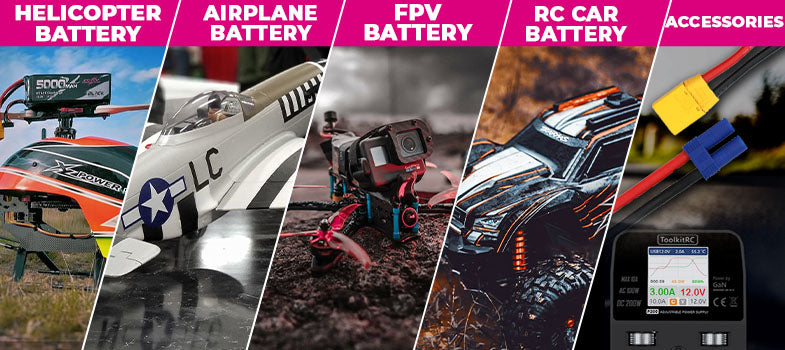
Baterias CNHL Lipo
A CNHL tem como objetivo fornecer baterias Li-Po de alta qualidade e produtos RC a todos os entusiastas de hobbies, com um excelente serviço ao cliente e preços competitivos

O Traxxas Disruptor VXL-4s é um barco Deep-V brushless compacto de 26 polegadas, concebido para mais do que velocidade em linha reta. Uma bateria LiPo 4S alimenta o barco até aos mais de 64 km/h anunciados, enquanto o sistema de endireitamento automático Rapid Right, o casco ágil e a forte aceleração lhe conferem o carácter de um barco RC de acrobacias. Testes independentes registaram passagens a 64 km/h e 68 km/h com uma bateria da classe de 6700 mAh.
O Disruptor é particularmente apelativo para os condutores que pretendem a velocidade de um barco RC brushless sério sem passar para uma plataforma muito maior com duas baterias. O seu casco ABS reforçado moldado por injeção, o tabuleiro de bateria centralizado, os circuitos de arrefecimento separados para o motor e o ESC e a tampa selada sem clips formam um conjunto prático para lagos, lagoas e utilização recreativa geral.
A escolha da bateria tem um efeito notório no comportamento do barco. Um pack 4S de 5200 mAh favorece um comportamento mais leve e reativo, um pack de 6200 mAh oferece um bom equilíbrio para utilização quotidiana e um pack de 6700 mAh proporciona maior capacidade e uma sensação mais estável. As baterias CNHL selecionadas utilizam conectores EC5 e estão configuradas com um adaptador de alta corrente EC5 para TRX, compatível com a ligação Traxxas de origem.

O Traxxas Disruptor, modelo 106064-4, é um barco RC elétrico brushless à escala 1/10, com um casco de 26,22 polegadas e um comprimento total de 29,76 polegadas. Utiliza um casco Deep-V reforçado, um sistema de cabo flexível de transmissão direta e um sistema de propulsão marítimo Velineon VXL-4s.
Ao contrário dos barcos maiores de alta velocidade que requerem dois packs de baterias, o Disruptor atinge o desempenho máximo previsto com uma única LiPo 4S. Isto simplifica a instalação e facilita a transferência de uma bateria entre modelos RC compatíveis.
O barco inclui o controlador de velocidade marítimo VXL-4s, motor brushless outrunner de 14 polos, sistema de rádio TQ de 2,4 GHz, servo de direção à prova de água, ferramentas de manutenção, massa lubrificante marítima e uma hélice compósita sobresselente. A bateria e o carregador têm de ser adquiridos separadamente.
| Modelo | Traxxas Disruptor 106064-4 |
| Tipo de casco | Casco Deep-V ABS reforçado de 26 polegadas |
| Sistema de propulsão | ESC marítimo Velineon VXL-4s e motor brushless outrunner de 14 polos |
| Compatibilidade da bateria | LiPo de 2S a 4S; uma bateria 4S para o máximo desempenho |
| Velocidade anunciada | Mais de 64 km/h com 4S |
| Endireitamento automático | Sistema Rapid Right de endireitamento automático assistido pelo motor |
| Tabuleiro da bateria | Tabuleiro centralizado de 180 mm com correias de velcro |
O valor de referência é superior a 64 km/h, mas a velocidade, por si só, não explica por que razão o Disruptor é divertido. Durante os nossos testes de condução, o barco saltou repetidamente sobre água agitada, lançou grandes rastos de água e mudou rapidamente de direção, sem dar a sensação de ter sido concebido apenas para passagens de GPS em águas calmas.
Descrevemo-lo como o equivalente náutico de um basher da Traxxas. Essa descrição corresponde à forma como o casco acelera até planar, salta sobre pequenas ondas e recupera de comandos agressivos. Pode fazer longas passagens em linha reta, mas a sua personalidade mais marcante revela-se quando o condutor deixa de perseguir um único valor de velocidade máxima e começa a utilizar o barco como uma plataforma compacta para acrobacias.
Isto também explica parte do movimento observado durante os nossos testes a alta velocidade. Um casco Deep-V de 26 polegadas reage mais ativamente a ondulações e água agitada do que um casco de estilo offshore muito maior. A posição das abas de compensação, o ângulo do suporte de transmissão, o comando da direção e a colocação da bateria podem alterar a estabilidade da trajetória do barco.
O resultado não é um barco que deva ser avaliado apenas pela capacidade de seguir uma linha perfeitamente reta. O seu atrativo resulta da combinação de velocidade, agilidade, autoendireitamento e dimensões físicas fáceis de gerir.

A Traxxas anuncia o Disruptor a mais de 40 mph com uma bateria LiPo 4S. O nosso teste de GPS confirmou essa afirmação. A primeira passagem à velocidade máxima atingiu 40 mph e uma passagem posterior registou 42 mph.
O teste foi concluído com uma bateria da classe dos 6700 mAh, em vez de um pack leve mais pequeno. Mesmo com a capacidade adicional da bateria, o barco acelerou vigorosamente e atingiu a faixa de velocidade anunciada.
Isso não significa que todos os proprietários irão registar exatamente 42 mph. A velocidade final pode ser afetada por:
Um resultado de GPS ligeiramente inferior não indica automaticamente um problema. A água agitada pode reduzir o comprimento de uma passagem limpa a todo o gás, enquanto uma configuração agressiva, destinada a curvas e saltos, pode não produzir o melhor valor em linha reta.
O Rapid Right é uma das funcionalidades mais importantes do barco Traxxas Disruptor. Caso contrário, um barco RC virado pode deixar o proprietário à espera do vento, a utilizar um barco de recuperação ou a entrar na água para o recuperar.
O Disruptor utiliza um motor outrunner sem escovas, com uma secção exterior rotativa com peso. Quando o barco está virado ao contrário, um breve comando de marcha-atrás faz o motor rodar e cria força rotacional suficiente para virar o casco novamente para a posição normal.
Os nossos testes revelaram duas situações distintas. Em alguns lançamentos, a geometria do casco colocava o barco na posição correta quase imediatamente. Durante uma viragem posterior, o barco permaneceu invertido até utilizarmos o comando de marcha-atrás, altura em que recuperou rapidamente.
Este sistema permite ao piloto tirar maior partido do desempenho do barco sem encarar cada salto ou curva apertada como uma potencial operação de recuperação. Também contribui para o caráter orientado para acrobacias do Disruptor, uma vez que o barco pode ser conduzido de forma mais agressiva do que um modelo sem autoendireitamento.
O Rapid Right continua a depender da carga disponível na bateria. Os pilotos não devem esperar até que a bateria esteja quase esgotada antes de tentarem ciclos repetidos de autoendireitamento. Trazer o barco de volta à margem antes de a proteção contra baixa tensão reduzir significativamente a potência disponível é a prática mais segura.

O Disruptor não utiliza a construção de casco fino por vezes associada a barcos RC moldados de entrada de gama. O seu casco em ABS moldado por injeção inclui nervuras internas, reforços de suporte e uma estrutura eletrónica compósita separada.
Durante uma inspeção do interior, o casco foi descrito como invulgarmente rígido para plástico moldado, com muito pouca flexão visível. O tabuleiro eletrónico interno suporta o sistema de alimentação e os componentes da direção numa montagem modular, o que deverá facilitar o acesso quando for necessária manutenção.
O design do casco inclui ainda:
As entradas de captação de água alimentam dois sistemas de refrigeração independentes: um para o ESC marítimo VXL-4s e outro para o motor sem escovas. A separação dos circuitos de refrigeração ajuda a evitar que um componente receba a maior parte do fluxo de água enquanto o outro recebe muito pouca.

O variador de velocidade de origem aceita baterias LiPo 2S, 3S e 4S, mas o Disruptor requer um pack 4S para proporcionar o desempenho máximo previsto. A capacidade mais adequada depende de o piloto dar prioridade à agilidade, ao equilíbrio ou a sessões mais longas.
A CNHL selecionou três opções diferentes para a coleção de baterias para o Traxxas Disruptor. Cada uma desempenha uma função claramente diferente, em vez de repetir a mesma capacidade com apenas pequenas alterações.
| Bateria | Utilização recomendada | Comportamento de condução |
|---|---|---|
| CNHL Racing Series 5200mAh 14,8V 4S 90C EC5 | Configuração mais leve e sessões de alta energia mais curtas | Reativa, ágil e bem adequada para lagos pequenos |
| CNHL Racing Series 6200mAh 14,8V 4S 90C EC5 | A melhor opção geral para utilização diária | Capacidade, comportamento e autonomia prática equilibrados |
| CNHL Lightning LiHV 6700mAh 15.2V 4S 120C EC5 | Maior capacidade e utilização sustentada de alta corrente | Sensação de maior estabilidade com capacidade adicional disponível |
A Racing Series 5200mAh 4S 90C é a escolha mais natural para condutores que pretendem preservar a resposta compacta de barco acrobático do Disruptor. Fornece a tensão 4S necessária e uma capacidade de descarga substancial, sem dar prioridade à capacidade máxima.
Esta opção é adequada para pequenos lagos, acelerações repetidas e sessões em que o barco permanece relativamente perto da margem. É também um ponto de partida prático para proprietários que experimentam pela primeira vez barcos RC sem escovas.
A Racing Series 6200mAh 4S 90C é a recomendação intermédia. Acrescenta uma capacidade útil em relação à opção de 5200mAh, sem passar diretamente para a bateria maior da coleção.
Para uma condução variada que inclua passagens em linha reta, curvas apertadas, saltos em água agitada e utilização ocasional do Rapid Right, 6200mAh oferece o ponto de partida mais equilibrado.
A Lightning LiHV 6700mAh 4S 120C é a opção de alto desempenho e grande capacidade. A plataforma Disruptor pode transportar uma bateria da classe dos 6700mAh, mantendo uma aceleração forte e um desempenho superior a 40 mph.
A bateria mais pesada fez com que o barco parecesse mais estável na água. A bateria de 6700mAh também deslizou para o túnel dianteiro da bateria e não foi reportado qualquer aquecimento significativo do motor ou do ESC.
O comportamento exato de qualquer bateria continua a depender das suas dimensões, do peso instalado e da posição no compartimento. A bateria deve ser fixada firmemente e deve verificar-se o espaço livre da escotilha antes do lançamento.
As três baterias CNHL selecionadas utilizam conectores EC5, enquanto o Disruptor de origem utiliza uma ligação de bateria de alta corrente Traxxas. Por isso, necessitam do Adaptador de ficha de bateria EC5 para TRX configurado.
O adaptador permite ligar a bateria selecionada ao ESC de origem sem substituir o cabo da bateria nem modificar o barco. Antes de utilizar:
Um adaptador de alta corrente deve ser tratado como parte da instalação, em vez de ficar solto no interior do casco. Curvas apertadas, saltos e ciclos repetidos de Rapid Right podem deslocar cabos não fixados na direção de componentes rotativos.
Não existe um único valor fiável para o tempo de funcionamento, porque a utilização de barcos RC varia mais do que muitos condutores esperam. Um cruzeiro longo e constante utiliza a bateria de forma diferente de lançamentos repetidos a todo o gás, curvas apertadas, saltos sobre as ondas e autoendireitamentos.
O tempo de funcionamento é afetado por:
Aproximadamente nove minutos antes de atingir a tensão de armazenamento com um pack 4S de 7200 mAh. Isto é útil como referência individual, mas não deve ser tratado como um resultado garantido para todos os barcos ou baterias.
Uma bateria de 5200 mAh proporcionará geralmente o menor tempo de funcionamento das três recomendações da CNHL, a de 6200 mAh ficará a meio e a de 6700 mAh oferecerá a maior capacidade disponível. A diferença real dependerá da forma como cada pack altera o peso do barco e a exigência sobre o acelerador.
Para uma bateria nova, comece com uma sessão cronometrada perto da margem. Pare cedo, verifique a carga restante e meça quanta capacidade é reposta durante o carregamento. Isto é mais fiável do que basear-se apenas no tempo de funcionamento de outro condutor.
O reboque opcional de eixo tandem para o Traxxas Disruptor não é necessário para operar o barco, mas tornou-se um dos acessórios mais discutidos para este modelo. Foi dimensionado para barcos RC de 26 polegadas e inclui uma estrutura de alumínio, suportes ajustáveis e altura do engate ajustável.
Do ponto de vista prático, o reboque serve de suporte de exposição e proporciona uma forma mais organizada de transportar o barco atrás de um crawler RC compatível ou de um camião à escala. Do ponto de vista do hobby, acrescenta toda uma sequência de condução à escala antes de o barco chegar à água.
Vários proprietários apreciaram especificamente a combinação de um barco mais pequeno e fácil de guardar com um reboque dedicado. Os barcos RC maiores podem ser difíceis de transportar juntamente com automóveis e camiões, enquanto o Disruptor continua a ser suficientemente fácil de transportar numa saída RC mista.
O reboque não afeta o desempenho da bateria, mas o interesse nas pesquisas por reboque para o Traxxas Disruptor mostra que muitas vezes vemos o barco como parte de uma configuração completa à escala, e não como um modelo de velocidade autónomo.

As pesquisas por melhorias para o Traxxas Disruptor conduzem frequentemente a motores maiores, ESC com tensão mais elevada, hélices metálicas, melhorias na direção e alterações no sistema de rádio. No entanto, o barco de origem já tem potência suficiente para ultrapassar os 40 mph e executar o autoendireitamento Rapid Right.
Para a maioria dos proprietários, a primeira atualização deverá ser uma configuração de bateria adequada à forma como o barco é realmente conduzido.
Passar de 5200mAh para 6200mAh ou 6700mAh afeta a autonomia e a distribuição do peso sem exigir alterações ao sistema de potência de origem. Normalmente, isto é mais útil do que instalar imediatamente um motor ou ESC diferente.
O barco inclui uma hélice compósita e uma sobresselente. Alguns proprietários preferem hélices metálicas, enquanto outros mantêm deliberadamente uma hélice compósita como ponto fraco mecânico económico.
Uma hélice metálica não é automaticamente necessária. Uma hélice mais resistente pode suportar melhor os danos nas pás, mas também pode transferir mais força de impacto para o cabo flexível, o eixo ou o motor quando embate num objeto submerso. Para utilização geral em lagos, transportar hélices sobresselentes de origem é uma opção razoável.
Se o barco guinar ou oscilar a alta velocidade, não presuma imediatamente que é necessário substituir o servo. Verifique primeiro:
Durante os testes, baixou ligeiramente as abas de compensação ou nivelou o suporte do eixo de transmissão e utilizou as abas de compensação para controlar a altura da proa. Estas são alterações de configuração, não definições universais, porque as condições da água e o estilo de condução variam.
Antes de substituir componentes, teste o barco perto da margem, confirme o encaminhamento da antena e evite deixar água permanecer na caixa do recetor. Nunca deve conduzir o barco para mais longe do que este consegue regressar em segurança com potência reduzida.
O Disruptor utiliza uma escotilha rígida com uma vedação de espuma e quatro fechos de bloqueio rotativos. Os nossos testes revelaram geralmente apenas uma pequena quantidade de água no interior do casco, sobretudo após capotamentos repetidos e condução agressiva.
Num dos casos, entrou alguma água após capotamentos, mas isso não afetou visivelmente o comportamento. Noutro, foram encontradas apenas gotas de água projetada e nenhuma acumulação significativa de água após a sessão.
Estes resultados sugerem que o sistema da escotilha funciona bem, mas não se deve presumir que nenhum barco RC de alto desempenho permanecerá completamente seco em todas as condições. A água pode entrar através de:
Antes de cada utilização, inspecione a vedação de espuma e remova sujidade, cabelos ou relva que possam impedir o fecho uniforme da escotilha. Após a utilização, abra a escotilha, retire o tampão de drenagem e seque o interior antes de guardar o barco.
O Disruptor inclui ferramentas de manutenção e massa lubrificante marítima, porque o cabo flexível é um componente de manutenção. A manutenção de um barco RC não é opcional, ao contrário do que pode parecer acontecer com alguns modelos terrestres.
Uma rotina útil após a utilização inclui:
Recomendamos lubrificar o veio flexível após cada utilização, especialmente se o barco tiver sido utilizado intensamente ou deixado dentro de água. A aplicação de massa lubrificante adequada reduz a fricção, protege o cabo e pode minimizar a entrada de água através do tubo de enchimento.
O Traxxas Disruptor é frequentemente comparado com barcos Traxxas maiores e com o Pro Boat Recoil 2. Estas comparações são compreensíveis, pois os compradores normalmente escolhem entre diferentes combinações de tamanho, velocidade, custo da bateria, equipamento incluído e capacidade de autoendireitamento.
As vantagens mais evidentes do Disruptor são o seu tamanho manejável de 26 polegadas, o sistema de potência 4S com uma única bateria, o desempenho de mais de 40 mph e a funcionalidade Rapid Right. É mais fácil de armazenar e transportar do que um barco muito maior, mas é consideravelmente mais capaz do que um modelo básico de entrada com motor de escovas.
Um barco 6S maior pode proporcionar uma presença física mais imponente, maior estabilidade em águas agitadas ou uma velocidade máxima superior, mas também requer mais espaço de armazenamento e poderá exigir duas baterias. O Disruptor deve ser entendido como a opção compacta, agressiva e conveniente, e não como um substituto direto para todos os barcos offshore maiores.
O Traxxas Disruptor e o Pro Boat Recoil 2 são rivais naturais, pois ambos combinam um casco Deep-V compacto, potência sem escovas e capacidade de autoendireitamento. Em vez de declarar um deles universalmente melhor, faz mais sentido comparar a experiência completa de utilização: compatibilidade de baterias e carregadores, disponibilidade de peças de substituição, equipamento incluído e apoio local. Para os utilizadores atuais da Traxxas, o Disruptor poderá integrar-se mais facilmente numa configuração RC já existente.
O Disruptor é compatível com baterias LiPo de 2S a 4S. É necessária uma bateria 4S para obter o desempenho máximo previsto e a velocidade anunciada de mais de 40 mph.
Sim. As baterias CNHL 4S selecionadas utilizam conectores EC5 e requerem o adaptador EC5-TRX de alta corrente configurado para serem ligadas ao barco de origem.
Escolha 5200mAh para uma configuração mais leve e reativa e sessões mais curtas. Escolha 6700mAh quando uma capacidade adicional e uma sensação mais estável forem mais importantes. A opção de 6200mAh proporciona o melhor equilíbrio geral.
Os nossos testes registaram entre 40 mph e 42 mph com uma bateria 4S da classe de 6700mAh.
O motor brushless outrunner com volante cria força rotacional quando o piloto aplica a necessária ação de marcha-atrás, ajudando a virar o casco Deep-V capotado de volta à posição direita.
Não. A hélice compósita de origem é adequada para o sistema 4S de origem. Uma hélice metálica pode oferecer características de desempenho e durabilidade diferentes, mas também pode transmitir mais força de impacto à transmissão. Transportar hélices de origem sobresselentes é uma alternativa prática.
Não. O atrelado de dois eixos é um acessório opcional vendido separadamente. O barco inclui um suporte de exposição básico.
A água salgada cria um risco de corrosão significativamente maior para o motor, os rolamentos, os fixadores, o veio flexível e os componentes eletrónicos. A água doce é o ambiente mais seguro. Qualquer utilização em água salgada exigiria enxaguamento, secagem, lubrificação e inspeção imediatos e minuciosos.
O ESC marítimo VXL-4s inclui deteção de baixa tensão LiPo. A redução de potência é um sinal para trazer o barco de volta, mas os pilotos não devem esperar por uma redução significativa da potência quando o barco está longe da margem.
O Traxxas Disruptor é bem-sucedido porque não se comporta como uma versão mais pequena de um barco convencional de velocidade em linha reta. O seu casco Deep-V compacto, a aceleração agressiva, a função de segurança Rapid Right e o sistema 4S de uma só bateria incentivam o piloto a saltar sobre as ondas, fazer curvas apertadas e utilizar todo o lago.
A velocidade anunciada de mais de 40 mph é sustentada por testes GPS independentes, enquanto o casco moldado reforçado e os sistemas de refrigeração separados conferem à plataforma mais robustez do que as suas dimensões compactas deixam transparecer. Ainda assim, requer uma manutenção adequada de barcos RC, especialmente no veio flexível, no sistema de refrigeração, na hélice e na remoção da água.
Para escolher a bateria, a CNHL Racing Series 5200mAh 4S 90C é a opção mais leve e fácil de manobrar, a Racing Series 6200mAh 4S 90C é a melhor recomendação geral e a Lightning LiHV 6700mAh 4S 120C é a escolha de maior capacidade e desempenho.
Veja a coleção completa de baterias 4S para o Traxxas Disruptor ou explore mais baterias para barcos RC para barcos Deep-V, catamarãs, hidroplanos, barcos a jato e outros modelos marítimos sem escovas.
A CNHL tem como objetivo fornecer baterias Li-Po de alta qualidade e produtos RC a todos os entusiastas de hobbies, com um excelente serviço ao cliente e preços competitivos

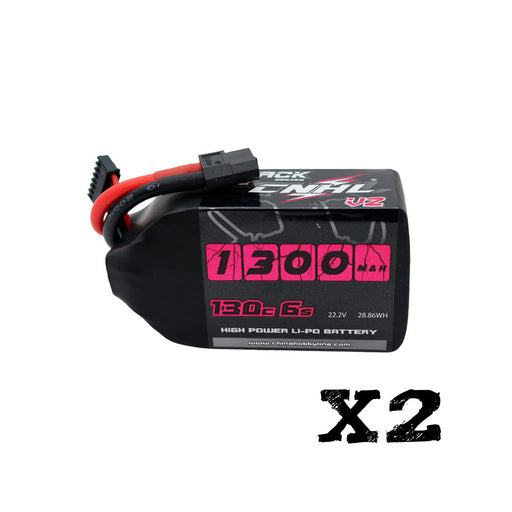
Verificação rápida de compatibilidade As 2 baterias LiPo CNHL Black Series V2.0 de 1300mAh 22,2V 6S 130C com ficha XT60 são uma excelente opção par...
Ver detalhes completosPeças sobresselentes e apoio a longo prazo Sabemos que, para os pilotos de RC, um apoio fiável em matéria de peças sobresselentes é fundament...
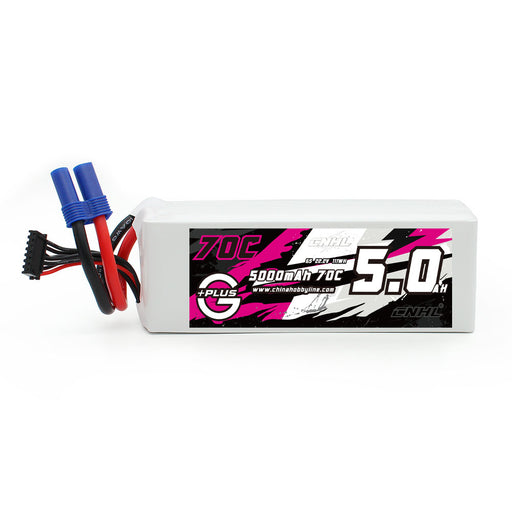
Ver detalhes completosEspecificações: Número de Stock: 500706EC5 Capacidade: 5000mAh Tensão: 22.2V / 6-Células / 6S1P Taxa de Descarga: 70C Contínua / 140C Pico Taxa d...
Ver detalhes completos
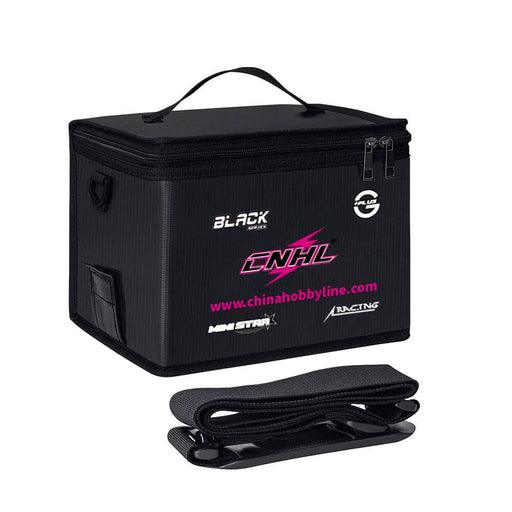
A Bolsa de Bateria LiPo CNHL foi desenhada para um carregamento, transporte e armazenamento mais seguros de LiPo em casa ou no campo. Acrescenta um...
Ver detalhes completos

Verificação Rápida de Ajuste O 2 Packs CNHL Speedy Pizza Series Pro 1350mAh 6S 150C LiPo Battery com ficha XT60 é construído para pilotos FPV d...
Ver detalhes completos

Verificação rápida de compatibilidade A bateria LiPo CNHL Speedy Pizza Series 2200mAh 22.2V 6S 120C com ficha XT60 combina o familiar formato 2200...
Ver detalhes completos

Verificação rápida da compatibilidade A bateria LiPo CNHL Speedy Pizza Series 2200mAh 14.8V 4S 120C com ficha XT60 combina um formato 4S de 2200mA...
Ver detalhes completos

Verificação rápida de compatibilidade A bateria LiPo CNHL Speedy Pizza Series 2200mAh 11.1V 3S 120C com ficha XT60 mantém o formato familiar das b...
Ver detalhes completosA célula de bateria Li-ion cilíndrica CNHL Long Range Series BAK 65E 6350mAh 21700 foi concebida com uma prioridade clara: máxima energia armazenad...
Ver detalhes completos

A célula de bateria de iões de lítio CNHL Long Range Series BAK 50D 5000mAh 21700 foi concebida para packs de baterias personalizados de elevada en...
Ver detalhes completos




Deixe um comentário