

Few RC airplanes have a silhouette as recognizable as the AVIOS PBY Catalina 1900mm. Its high parasol wing, twin engines, boat-shaped fuselage, and distinctive wingtip floats immediately evoke one of aviation's most famous maritime aircraft. It is a model that rewards pilots who appreciate scale appearance as much as flying performance.
The arrival of the 2026 AVIOS PBY Catalina Retractable Landing Gear Edition introduces an interesting twist. The original aircraft was designed around water operations, while the updated version adds a sophisticated all-metal retract system for conventional wheeled takeoffs and landings. The familiar Catalina is still there, but the flying experience has changed.
There is also a significant trade-off: the new retract-equipped model is not amphibious. It cannot operate from water in its supplied configuration. For some pilots, that makes the original Catalina more desirable than ever. For others, the ability to fly from an ordinary club runway is precisely what was missing.
So how different are these two versions? Does the extra landing gear weight affect the aircraft's handling? Can differential thrust replace a steerable nose wheel? And is the new model worth choosing over the original flying boat?
This guide explores the aircraft from a practical RC flying perspective, covering its design, operating characteristics, landing gear, ownership considerations, and the equipment choices that help make either Catalina enjoyable to fly.
What Makes the AVIOS PBY Catalina 1900mm Special?
The full-size Consolidated PBY Catalina was developed for maritime patrol and long-range operations. Its defining characteristics were endurance, versatility, and the ability to operate from water. Speed and aerobatics were never the aircraft's primary mission.
The AVIOS model recreates that unmistakable appearance with a 1900mm wingspan, 1174mm fuselage, lightweight EPO construction, and classic US Coast Guard color scheme. Its twin-engine configuration and high-mounted wing give it a presence very different from that of a conventional RC trainer or sport plane.
The Catalina is especially appealing in the air. The substantial wing area, broad turns, and recognizable fuselage create a scale impression that does not depend on extreme maneuvers. A smooth low pass or a well-executed landing can be more satisfying than a fast roll or an aggressive climb.
Several practical features complement the scale appearance:
- Twin 3748-820KV brushless motors: provide propulsion through counter-rotating 10×6 propellers.
- Two Aerostar 40A G2 RVS ESCs: enable reversing capability and independently controlled thrust when correctly configured.
- Electric retractable wingtip floats: preserve a characteristic element of the original aircraft.
- Removable outer wing panels: reduce the space required for transportation and storage.
- Factory-installed LED lights: add visual detail to the US Coast Guard finish.
- Optional animated nose turret: offers another scale feature with an additional servo.
These details give the Catalina much of its character. Rather than being a simple foam airplane styled to resemble a classic flying boat, it combines recognizable scale elements with a practical modern electric power system.
AVIOS PBY Catalina Water Version vs. 2026 Retractable Landing Gear Edition
At first glance, the two versions appear remarkably similar. Both retain the same general airframe dimensions, US Coast Guard appearance, twin-motor propulsion system, and retractable wingtip floats.
The difference becomes much more obvious when it is time to take off or land.
| Feature | Original Water Version | 2026 Retract Edition |
|---|---|---|
| Wingspan | 1900mm | 1900mm |
| Length | 1174mm | 1174mm |
| Motors | 2 × 3748-820KV | 2 × 3748-820KV |
| ESCs | 2 × 40A RVS | 2 × 40A RVS |
| Water Operations | Yes | No |
| Wheeled Landing Gear | Not installed | All-metal electric retracts |
| Wingtip Floats | Electric retractable | Electric retractable |
| Recommended Battery | 4S 3200–4500mAh LiPo | 4S 3000–4000mAh LiPo |
| Battery Connector | XT60 | XT60 |
The Original Catalina: A Flying Boat First
The original Catalina places water operation at the center of the experience. From taxiing across a lake to accelerating onto the step and lifting free of the surface, the model recreates an aspect of aviation that ordinary land-based RC airplanes cannot provide.

Interestingly, the original model is not necessarily restricted to water. Suitable grass operations are also possible, using the hull rather than conventional wheels. However, the surface must be appropriate, and the model is subject to different ground friction, wear, and landing considerations.
This is where the two versions should not be oversimplified. The original is not merely a water-only airplane, and the new model is not simply an old Catalina that has finally become capable of flying from land.
The Retract Edition: A Different Ground Experience
With the 2026 edition, taxiing, runway alignment, wheeled takeoff, gear retraction, and wheel landings all become part of the flight routine.

For a pilot whose regular flying site is a maintained grass runway or paved RC airfield, that distinction is meaningful. A Catalina can now be flown using familiar runway procedures without relying on a lake, pond, or hull-based grass landing.
The ability to retract the landing gear after takeoff also creates an appealing visual transformation. With the wheels stowed, much of the original flying-boat silhouette returns.
Yet this convenience comes with a clear limitation: the retract-equipped aircraft is intended for land operations, not water use. The right choice therefore depends heavily on where and how the pilot intends to fly.
Inside the New All-Metal Retractable Landing Gear System
The retract mechanism is the defining mechanical upgrade of the 2026 Catalina. Rather than adding fixed wheels beneath the fuselage, AVIOS developed an electrically operated undercarriage designed to fold into the aircraft while retaining a scale-inspired appearance.
The main landing gear uses metal components, a folding and telescoping arrangement, and integrated shock absorption. This combination allows the wheels to be deployed for takeoff and landing while keeping them largely out of sight in flight.

Why Shock Absorption Matters
Even a good landing involves transferring the aircraft's vertical motion into the undercarriage. A sprung gear system helps manage those loads and reduces the sharpness of the impact transmitted into the fuselage.
That does not mean the Catalina is intended for rough-field abuse. Landing gear strength, wheel diameter, ground clearance, and rolling resistance still determine how well an aircraft handles a particular surface.
Maintained grass and paved runways are the sensible operating environments. Deep ruts, uneven ground, or thick grass can produce loads very different from those encountered on a smooth strip.
More Scale Detail Also Means More Maintenance
Retracts introduce additional parts that deserve regular inspection. The mechanism must move freely, the gear doors need adequate clearance, and the wheels should lock into their intended positions without binding.
A useful pre-flight routine includes cycling the gear while the aircraft is safely supported, checking for loose hardware, and ensuring that the retract controller operates consistently. After a hard landing, the gear should be inspected before another flight.
For scale enthusiasts, this additional maintenance is part of the ownership experience. For pilots who prefer maximum simplicity, the original gearless flying boat remains attractive.
Differential Thrust Steering: How Does the Catalina Turn Without a Steerable Nose Wheel?
A twin-engine aircraft offers a directional-control advantage that a single-engine airplane cannot reproduce in the same way: its two motors can generate different amounts of thrust.
The Catalina's detailed launch configuration describes a retractable but non-steering nose wheel. Instead of turning the wheel mechanically, ground steering is achieved through differential thrust, with the left and right motors controlled independently.

When the left motor produces more forward thrust than the right, the airplane develops a turning moment toward the right. Increasing the right motor's thrust relative to the left creates the opposite effect.
The result can be surprisingly effective, particularly at taxi speeds. The widely spaced engines provide useful leverage around the aircraft's vertical axis, and the reversing ESCs add further control possibilities when configured according to the manual.
However, differential thrust is not mechanically identical to a steerable nose wheel. Wheel friction, ground surface, motor response, and available thrust all affect turning behavior. Pilots should also avoid abrupt or excessive throttle differences that could make ground handling unpredictable.
Setup consideration: The retract version calls for at least a six-channel transmitter and receiver when differential thrust is configured. The complete setup may require additional channel planning for the landing gear, wingtip floats, and optional scale functions. Follow the correct manual for the aircraft configuration.
Specification note: Some product-page wording has described the nose wheel as steerable, while the detailed gear information and launch demonstration describe differential-thrust steering without mechanical nose-wheel steering. Confirm the specification of the actual production aircraft before relying on a nose-steering function.
AVIOS Catalina 1900mm Flight Performance: Does the Retract Version Fly Differently?
The Catalina is not an airplane that needs enormous speed to create an exciting flight. Its visual character comes from its wide wing, distinctive hull, and smooth movement through the air.
Both versions share the same basic propulsion arrangement, with twin 820KV brushless motors, counter-rotating propellers, and a 4S electric power system. That gives the retract-equipped Catalina a familiar foundation rather than turning it into a completely different aircraft.

Takeoff: Let the Catalina Build Speed Naturally
The retract version introduces conventional rolling takeoffs, but it still benefits from a smooth, progressive technique. The airplane should be allowed to accelerate along a suitable surface before elevator is applied for rotation.
On grass, wheel resistance is a significant consideration. A firmer and more even surface generally allows the aircraft to accelerate more efficiently. Unusually long grass may increase rolling resistance, requiring more room and making directional control less predictable.
Rather than pulling the Catalina abruptly into the air, a controlled rotation gives the wing time to develop the lift needed for a stable departure.
Cruising: Where the Catalina Looks Its Best
Once airborne, the model's broad wing and conventional four-channel flight controls suit sweeping turns and measured changes in altitude. The additional retract hardware does not fundamentally change the aircraft's scale-oriented character.
Its propulsion system has enough power reserve for energetic climbs and conventional aerobatic maneuvers, including loops and rolls, provided the aircraft is operated appropriately. However, such maneuvers are better viewed as available capability than as the model's primary purpose.
A Catalina flown with smooth throttle management, coordinated turns, and believable scale passes makes a much stronger impression than one constantly pushed around the sky at maximum power.
Landing and Touch-and-Go Performance
Landing is where the retract edition's additional equipment becomes most meaningful.
Instead of touching down on a flying-boat hull, the pilot can use the main wheels and shock-absorbing undercarriage. This also opens the door to repeated touch-and-go practice, an appealing activity for pilots who enjoy refining their approach and flare technique.
With the extra weight of the landing gear, maintaining an appropriate approach speed is important. The aircraft should not be allowed to become excessively slow simply because it has a generous wing area. Nor should it be forced down with excessive speed, which places unnecessary loads on the undercarriage.
Good results come from a stable descent, a smooth flare, and allowing the aircraft to settle onto the wheels while maintaining directional control.
The key distinction is that the new Catalina changes the ground-handling and landing experience much more than it changes the basic personality of the airplane in flight.
Why Does the Land-Based Catalina Still Have Retractable Wingtip Floats?
One of the more unusual details of the 2026 model is that it retains the electric retractable wingtip floats even though the aircraft is not intended for water operations.
On the original Catalina, the floats have an obvious practical role. They help stabilize the aircraft on water by supporting the outer wing area when required. Retracting them improves the aircraft's clean flying-boat outline.
For the land-based version, their value shifts toward scale authenticity and preserving the characteristic appearance of the PBY.

Deployed floats can also increase aerodynamic drag and alter handling. That does not make them equivalent to purpose-designed flaps or an officially specified airbrake system. Their operation should follow the aircraft's instructions, particularly during low-speed flight and landing approaches.
Removing the mechanism could potentially simplify a custom aircraft, but it would also alter the model's appearance, weight distribution, and intended configuration. For most scale pilots, retaining the floats is part of what makes the Catalina a Catalina.
Why Isn't the 2026 AVIOS PBY Catalina Amphibious?
For an aircraft famous for water operations, a retract-equipped version that cannot use water may initially seem contradictory. But adding retractable wheels to a flying-boat fuselage is not the same as engineering a complete amphibious aircraft.
A true amphibious design must manage several competing requirements. Landing gear needs space to retract, wheels and structural openings must coexist with the hull, and the aircraft must withstand splashing, water pressure, and prolonged exposure around mechanical and electrical components.
The challenges extend beyond merely installing waterproof servos. Gear bays, retract motors, hinges, doors, wiring routes, hull joints, and drainage arrangements all become part of the water-resistance problem.
For the 2026 Catalina, the retract-equipped fuselage is designed for land operations. It is not approved for water takeoffs, water landings, or water taxiing.
Could You Convert It into a True Amphibian?
Amphibious conversion is an understandable idea for experienced model builders. However, making a retract-equipped aircraft reliably water-capable requires more than closing visible gaps with sealant.
The complete installation would need to account for water intrusion, mechanical operation, electrical protection, additional material weight, changing balance, and recovery procedures if water entered the hull.
There is no basis for treating a simple waterproofing modification as a proven upgrade for this model. Anyone considering substantial modification would need to evaluate the engineering and operational risks independently.
AVIOS does describe the water and retract-equipped aircraft as part of the same airframe family, with compatible fuselage configurations that can be exchanged. That is different from claiming that a readily available drop-in retract conversion kit exists for every original Catalina.
Is a Dedicated Land Version Actually a Better Choice?
Not every pilot needs amphibious capability.
A club flyer who rarely visits a suitable lake may get much more enjoyment from a Catalina that can taxi, take off, and land on a familiar runway. Meanwhile, a dedicated water-flying enthusiast may see little reason to give up the original model's most distinctive capability.
Neither preference is inherently wrong. The two aircraft serve different flying environments, even though they share the same classic PBY appearance.
Is the 2026 AVIOS PBY Catalina Retract Edition Worth the Extra Money?
The value of the retract edition comes down to more than the cost of its landing gear components. What the pilot is really purchasing is a different operating experience.
The original Catalina already offers an attractive large-scale twin-engine aircraft with water capability and the potential for appropriate grass operations. Adding all-metal electric retracts does not automatically make the newer version superior in every situation.
The main advantages of the retract edition are clear:
- Conventional wheeled taxiing and runway takeoffs.
- Shock-absorbing landings on suitable surfaces.
- Repeated touch-and-go practice without relying on hull landings.
- Scale landing gear retraction during flight.
- Practical operation for pilots without convenient water access.
There are also real compromises. The retract system introduces additional weight, mechanical complexity, more components to maintain, and the loss of approved water operations.
For an existing owner of the original Catalina who enjoys water flying, purchasing another aircraft solely for the landing gear may be difficult to justify. The calculation changes for someone whose main flying location is a paved runway or maintained grass field.
What About Existing Catalina Owners?
The new undercarriage naturally raises the possibility of upgrading an original aircraft instead of buying a second complete model.
Because the gear installation affects the fuselage structure and internal arrangement, an upgrade should not be assumed to consist only of attaching three retract units. The required mounting structure, gear doors, controller, wiring, and configuration must all be considered.
A suitable conversion may become practical where compatible parts and fuselage configurations are available. Until a complete supported upgrade solution is confirmed, however, a retrofit should be treated as a separate engineering project rather than a guaranteed plug-and-play option.
The Better Question Is Where You Actually Fly
The most expensive aircraft is not necessarily the least practical purchase, and the cheapest one is not automatically the best value.
If most flying takes place on water, the original Catalina offers the experience that defines the type. If most flying takes place at a conventional RC club, the retract version may be used far more often and deliver greater enjoyment despite its additional complexity.
Choosing the aircraft that fits your regular flying environment is more important than choosing the version with the longest feature list.
Choosing the Right 4S Battery for the AVIOS PBY Catalina 1900mm
Although the original and retract-equipped Catalina differ in their landing configurations, they share a closely related power system. Both use twin brushless motors, dual reversing ESCs, and a 4S XT60 battery connection.
The official recommendations differ slightly: the original water version specifies a 4S 3200–4500mAh LiPo, while the retract edition specifies 4S 3000–4000mAh.
That overlap makes it practical to consider the same general class of battery for both aircraft, although final selection should account for weight, physical dimensions, and center of gravity.
3300mAh vs. 3700mAh: Why Battery Weight Matters
Battery capacity influences flight duration, but weight and installation position also affect how the aircraft flies.
For example, a 3300mAh battery can be a useful lighter option for the original Catalina. On the 2026 retract version, the additional landing gear changes the weight distribution, making the correct balance especially important.
One retract-equipped flight configuration using a 3300mAh pack showed a slightly tail-heavy balance, with a 4000mAh battery considered preferable for that setup. This is a useful reminder that a heavier battery may sometimes help achieve the desired CG, rather than simply adding unwanted weight.
However, a particular capacity does not automatically guarantee the correct balance. Two batteries with similar capacities may differ significantly in weight and physical shape.
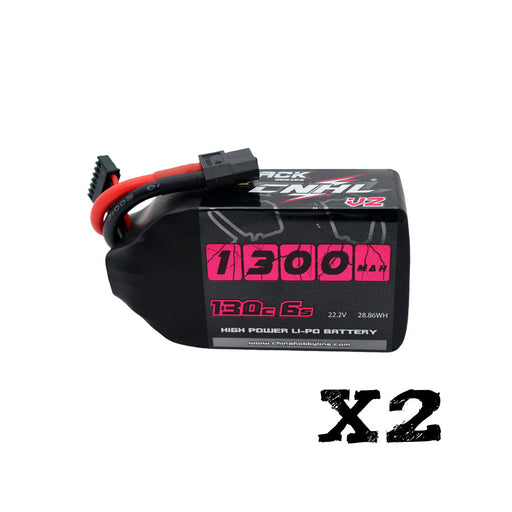
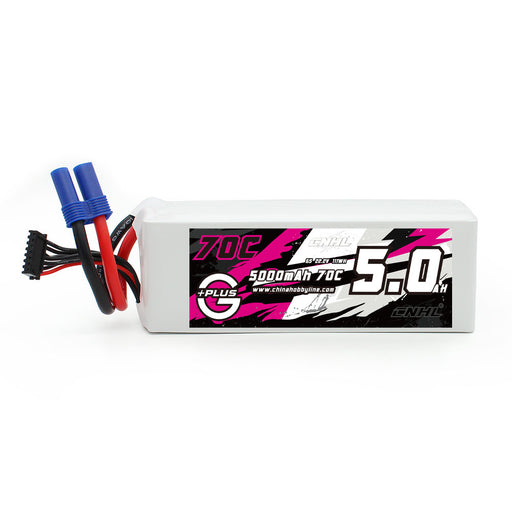
For everyday Catalina flying, a suitable conventional 4S LiPo offers a straightforward combination of current delivery and capacity. The 3700mAh option provides additional energy and installed mass, while the 3300mAh pack is lighter and may provide more flexibility where a lower battery weight is preferred.
Can Li-ion Batteries Offer Longer Flight Time?
Li-ion batteries bring a different strength to RC aircraft: high stored energy relative to battery weight. For efficient cruising aircraft, this can offer useful endurance potential.
For example, the CNHL Long Range 5000mAh 4S 21700 Li-ion battery uses BAK 50D cells and stores 72Wh of nominal energy at approximately 292.5g.
That makes it an interesting endurance-oriented battery technology, but it must not be treated as an automatic substitute for a high-discharge LiPo.
The Catalina has two motors, and takeoff or climbing current can be substantially higher than gentle cruising current. A Li-ion battery must be able to support the complete system's measured electrical demand, including short higher-power phases, without excessive voltage sag or overheating.
Important: Confirm the battery's allowed continuous and peak current, installation dimensions, and CG before using Li-ion in a twin-motor Catalina. An XT60 connector and matching 4S cell count alone do not establish full compatibility.
For a broader comparison of standard LiPo and long-range Li-ion options, visit our AVIOS PBY Catalina 1900mm battery collection.
Practical Ownership: Transport, Assembly, Maintenance & Spare Parts
A 1900mm wingspan aircraft is large enough to be visually impressive, but it also needs to be practical to transport. The Catalina addresses this with removable outer wing panels and quick electrical connections.

Reducing the installed span makes storage and transportation easier, especially for pilots using a typical passenger vehicle rather than a dedicated model-aircraft trailer.
The large canopy hatch also helps with everyday access. Battery changes, receiver installation, and routine inspections can be performed without removing the entire wing assembly.
A Practical Pre-Flight Checklist
- Wing connections: Check that the detachable sections are fully secured and that electrical connectors are properly seated.
- Propellers: Confirm that the clockwise and counter-clockwise propellers are installed in the correct positions.
- Motor operation: Verify proper motor response and differential-thrust direction, with the aircraft restrained and propeller safety observed.
- Retracts: On the land version, inspect the gear mechanism, doors, and wheel movement.
- Wingtip floats: Check the retract mechanisms and electrical connections.
- Battery and CG: Secure the battery and verify the balance using the appropriate manual.
- Radio setup: Confirm control directions, throws, and channel assignments before flight.
Long-Term Maintenance and Replacement Parts
Large scale RC aircraft often remain enjoyable for years, but the availability of specialized replacement components can influence ownership costs.
The Catalina's retract units, propellers, wingtip float mechanisms, and unique airframe components are worth considering before purchase, especially for pilots who expect to fly frequently.
It is sensible to check the current spare-parts catalog and availability of commonly damaged components. At the same time, isolated reports of mechanical problems or difficulty finding replacement parts should not be assumed to describe every aircraft.
For the water version, inspection should also include the hull, seals, and any areas exposed to splashing. Water-capable construction does not mean that electrical components should be left wet or that the fuselage is immune to leaks.
AVIOS PBY Catalina 1900mm FAQ
Can the 2026 AVIOS PBY Catalina retract version land on water?
No. The retract-equipped edition is intended for suitable grass and paved runways. It is not designed or approved for water operations. Choose the original water-capable version if water flying is a priority.
Does the 2026 Catalina have a steerable nose wheel?
The detailed launch configuration uses a retractable, non-steering nose wheel and differential motor thrust for directional control. Because some product descriptions have used contradictory terminology, confirm the actual production configuration and manual before purchase.
Can the original Catalina take off from grass?
Yes, suitable grass operations are possible with the original Catalina, but the aircraft relies on its hull rather than conventional wheeled landing gear. Surface conditions, pilot technique, and the risk of abrasion or damage must be considered.
Does the retract edition fly differently from the water version?
The two aircraft share the same basic airframe dimensions and power system. The retract edition adds weight and changes mass distribution, so CG and takeoff and landing behavior require attention, although its general scale-oriented flying character remains familiar.
Can I install the new retractable landing gear on my original Catalina?
The Catalina family includes compatible fuselage configurations, but that does not automatically mean a complete drop-in landing gear conversion kit is available. Verify official parts compatibility and the required structural and electrical components before planning an upgrade.
What battery does the AVIOS PBY Catalina 1900mm use?
The original water version recommends a 4S 3200–4500mAh LiPo with XT60, while the 2026 retract version recommends a 4S 3000–4000mAh LiPo with XT60. Battery weight and installation position should be selected to achieve the specified CG.
Is the AVIOS PBY Catalina 1900mm suitable for beginners?
The Catalina is better suited to pilots who already understand basic four-channel aircraft control, coordinated turns, stall awareness, and approach management. Twin-motor setup, differential thrust, retract systems, and water operation introduce additional considerations compared with a conventional beginner trainer.
Final Verdict: Which AVIOS PBY Catalina 1900mm Should You Choose?
The AVIOS PBY Catalina 1900mm succeeds because it offers something different from a conventional RC airplane. Its recognizable scale design, broad wing, twin-engine power system, and distinctive flying-boat character make it appealing even before considering the latest upgrade.
The 2026 retract edition adds an important new experience. Pilots who primarily fly from maintained grass or paved runways can enjoy wheel takeoffs, retractable undercarriage operation, and conventional landings without giving up the Catalina's classic silhouette.
But the new model is not a universal replacement for the original. A dedicated water-flying enthusiast may find that the earlier version delivers the more authentic Catalina experience, precisely because water operation remains central to its design.
Choose the original water version if: water takeoffs, lake operations, and the traditional flying-boat experience are your main priorities.
Choose the 2026 retract version if: you fly primarily from conventional runways and value wheeled takeoffs, shock-absorbing landings, and scale landing gear operation.
Whichever version you choose, the most rewarding Catalina flights are likely to be the ones that emphasize what makes this aircraft special: smooth scale passes, disciplined approaches, elegant turns, and a convincing flying-boat silhouette.
And once the aircraft is ready for its first flight, remember that a correctly balanced battery setup is just as important as the equipment installed on the airframe. Explore our CNHL battery options for both AVIOS PBY Catalina 1900mm versions to compare suitable 4S XT60 choices.






Leave a comment