
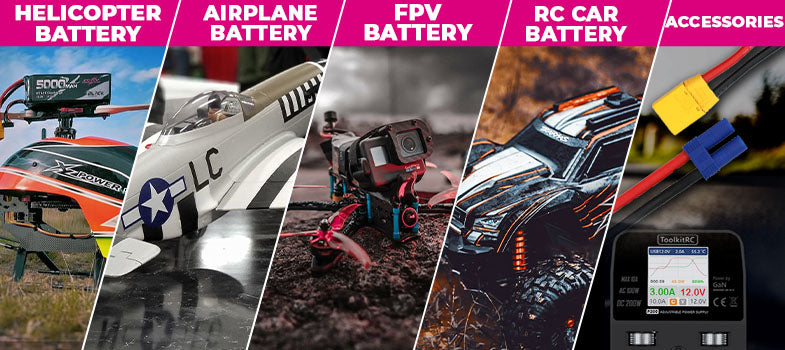
CNHL Lipo Batteries
CNHL aim at providing high-quality Li-Po batteries and RC products to all hobby enthusiasts with excellent customer services and competitive prices
The new Eflite Pilatus PC 21 1.3m, officially sold as the E-flite Pilatus PC-21 1.3m, is easy to underestimate from the name alone. A 1320mm wingspan normally suggests a fairly manageable mid-size foam aircraft. The PC-21 is different. Its 1448mm fuselage, deep body, five-blade propeller, retractable landing gear and roughly 3.6kg ready-to-fly weight give it much more physical presence than the "1.3m" label suggests.
But size is not what makes this release interesting. The real appeal is how many different qualities E-flite has managed to combine in one airplane. The PC 21 can run well into triple-digit speeds, climb aggressively, knife-edge and fly large aerobatics, yet the same airframe can slow down remarkably well on its large slotted flaps. Add a very usable battery bay, effective sprung landing gear and an unusually simple assembly system, and this becomes more than another fast foam scale airplane.
Quick Take
The PC-21's strongest feature is its range rather than any single headline number. A 5000mAh 6S pack is the logical starting setup, 6000mAh is especially attractive for longer five-blade flying, and the optional two-blade prop makes most sense as an efficiency conversion. The airplane can use grass, but five-blade ground clearance deserves attention. It is easy to assemble and surprisingly forgiving at low speed, but its mass and performance still make it an aircraft for pilots with solid low-wing experience.

| Wingspan | 1320mm / 51.97 in |
| Length | 1448mm / 57 in |
| Motor | 5065-470Kv brushless outrunner |
| ESC | Spektrum Avian 100A Smart ESC |
| Servos | 7 factory-installed metal-geared servos |
| Battery System | 6S LiPo |
| Recommended Battery Range | 4000–7000mAh, 30C or higher |
| Battery Connector | EC5 / IC5 power interface |
| Stock Propeller | 5-blade 12 × 12 electric propeller |
| Optional Propeller | APC 12 × 12E two-blade propeller |
| CG | 105–119mm behind the wing leading edge at the fuselage |
| Weight Without Battery | Approx. 2897g |
| Reference Flying Weight | Approx. 3617g with a 6S 5000mAh battery |
The PC-21 is a useful reminder that wingspan alone does not tell you how large an RC airplane will feel.
Its fuselage is actually longer than its wingspan. The broad center section, long nose, large canopy and tall landing gear give the model a substantial side profile, while the five-blade prop adds even more visual weight at the front. In the air, that creates the kind of presence normally associated with a larger model.
This proportion also explains why comparisons based purely on wingspan can be misleading. A conventional 1.3m warbird may genuinely feel compact. The PC-21 does not.
That matters operationally as well. Once an airplane combines roughly 3.6kg of flying weight with 100+ mph performance, the pilot needs enough field space to plan ahead. The PC 21 slows down well, but when the throttle comes forward it covers distance quickly.

The headline speed attracts attention, but the low-speed end of the envelope is what makes the airplane more useful.
At high power, the PC-21 feels clean and precise. It holds long lines, rolls crisply, climbs with authority and carries enough fuselage side area to make knife-edge flight surprisingly comfortable for a scale turboprop. There is enough power that large loops and sustained vertical maneuvers do not require much planning.
That part is expected.
What is less obvious from the outline is how much control remains once the speed comes down. The large slotted flaps transform the approach side of the airplane. With power managed properly, the PC 21 can be slowed to a point that looks almost inconsistent with the speed it can produce a few seconds later.
The stall is also relatively progressive. In a clean configuration it may show a modest wing break, but with flap the airplane tends to settle and mush rather than instantly snapping away. That gives the pilot useful warning and makes repeated approaches far less intimidating than the wing shape initially suggests.
So the PC-21's defining characteristic is not "fast."
It is the distance between its comfortable slow speed and its comfortable fast speed.
E-flite gives the PC-21 two different personalities through its propeller options.
The stock five-blade is the setup that visually completes the airplane. It fills the spinner properly, produces the right turboprop look and gives the PC 21 a distinctive sound under load. It also provides serious thrust and vertical performance.
The optional APC 12 × 12E two-blade takes the power system in a different direction.
Independent GPS testing has put the five-blade at approximately 120 mph and the two-blade at approximately 122 mph on the same model. Those figures will naturally vary with weather, battery condition and flying technique, but they make one point very clear:
The PC-21 does not need the two-blade to become fast.
The meaningful change is electrical load. Current testing has shown a reduction approaching 40A with the two-blade configuration under comparable high-power operation. That changes flight time, battery stress and motor/ESC workload far more than an extra couple of mph changes the flying experience.
| Prop Setup | Character | Best Reason to Use It |
|---|---|---|
| Stock 5-Blade 12 × 12 | Scale appearance, sound and strong thrust | Preserve the PC-21's full turboprop character |
| APC 12 × 12E 2-Blade | Lower load and greater efficiency | Extend useful flight time and reduce power-system demand |
If we were buying the airplane because we liked the PC-21, we would keep the five-blade. If maximizing endurance became the priority later, the two-blade would be a useful tool rather than a required upgrade.

The PC-21's battery bay gives us enough room that we do not need to treat battery selection as a simple "will it fit?" exercise. The more useful question is what battery weight and capacity best match the way the airplane will be flown.
For most setups, 5000mAh is the logical starting point. It gives the airplane a useful flight duration without committing unnecessary weight and creates a good reference for battery position and CG.
Moving toward 6000mAh makes sense if the stock five-blade will stay on the airplane and the pilot wants more time for scale passes, aerobatics and repeated approaches. A practical mixed-flight expectation is roughly seven to eight minutes around 5000mAh, while a well-chosen 6000mAh setup can push the usable session farther toward the eight-to-ten-minute range. Throttle use, propeller choice and reserve voltage naturally change those numbers.
Where things become more interesting is battery energy density.
A large capacity number does not automatically mean a large battery penalty. For example:
| Battery | Dimensions | Approx. Weight |
|---|---|---|
| CNHL Black Series 5000mAh 6S | 149 × 52 × 51mm | 798g |
| CNHL Lightning LiHV 7200mAh 6S | 149 × 52 × 50mm | 800g |
| CNHL Lightning LiHV 7800mAh 6S | 152 × 51 × 59mm | 875g |
The 5000 and 7200 above effectively occupy the same installed weight and footprint class. From the airplane's point of view, that comparison is more useful than simply looking at "5000" and "7200" on the labels.
The 7800 moves farther toward endurance. Its extra height and roughly 75g increase over the 7200 deserve a more deliberate CG and hatch-clearance check, but it remains remarkably light for a 7800mAh 6S pack.
That is why our PC 21 battery selection is not built around one capacity. It is built around weight, energy density, physical fit and the intended flight style.
For the full selection and individual pack dimensions, see the CNHL Eflite PC 21 battery collection.
LiHV Setup Note
CNHL Lightning 6S packs are LiHV batteries. A fully charged 6S LiHV pack can reach 26.1V, compared with 25.2V for a standard 6S LiPo. Unless the maximum input voltage of the complete PC-21 power system has been specifically confirmed for full-charge LiHV use, charge the pack only to the standard LiPo ceiling of 4.20V per cell / 25.2V total when using it in this aircraft.

A big battery compartment is useful. A big battery compartment with meaningful fore-aft adjustment is much better.
The PC-21 gives the pilot enough battery travel to tune the airplane around different pack weights without immediately reaching for ballast. Around 115mm behind the leading edge at the fuselage is a sensible starting point inside the published CG range, and there is enough adjustment available to work with very different battery classes.
We would not copy someone else's tray position just because the capacity is the same. A 5000mAh battery from one series can easily differ by 100g or more from another 5000mAh battery.
Once a good position is found, mark it in the tray. That makes battery changes repeatable and gives you a clear reference when moving between 5000, 6000 or higher-capacity packs.
Battery retention deserves attention as well. The PC-21 accelerates hard and is capable of aggressive aerobatics, so preventing fore-aft movement matters. A grippy strap or thin non-slip pad is a worthwhile addition even when the factory straps already hold the pack firmly downward.
The stock propeller does not behave like decoration.
Bring the throttle in abruptly and the PC 21 can pull left noticeably as the five-blade loads up. There is enough power that there is no reason to firewall the throttle immediately.
A better takeoff is straightforward: feed the power in progressively, hold the centerline with rudder, let the wing build speed and allow the airplane to rotate rather than forcing it off the ground.
That technique becomes even more useful during touch-and-goes because the airplane may already be light on the wheels when the propeller suddenly sees full power.
The PC-21 is not particularly difficult to land. It is simply an airplane that rewards a properly managed approach.
The slotted flaps give it a surprisingly low usable approach speed, but the clean airframe retains energy well. That means dragging it around the final turn at minimum airspeed is unnecessary and gives away the margin that makes the airplane pleasant to land.
A better approach is to keep enough speed through base and final for the wing to stay fully working, use the flaps and throttle to manage descent, then bleed off the remaining energy close to the runway.
Once that rhythm is established, the PC 21 becomes an excellent touch-and-go airplane. The sprung mains absorb small imperfections well, and the tricycle layout removes the extra ground-handling workload that comes with a fast taildragger.
Reverse thrust is useful rather than essential. On a long runway it may barely matter. On a short strip, the ability to shorten rollout adds a meaningful margin.
Yes, but the quality of the grass matters more than whether the field is technically grass or pavement.
The landing gear itself is ready for grass. The mains use trailing-link suspension, the nose strut has useful travel and the gear is capable of absorbing the movement that comes from a less-than-perfect surface.
The more important limitation is the five-blade propeller. Its ground clearance is not generous.
Short, reasonably smooth grass is therefore a realistic operating surface. Long grass, deep ruts or hidden bumps raise the chance of a prop strike even if the landing gear itself is handling the field comfortably.
For pilots who operate exclusively from rough grass, that should be part of the buying decision. For a maintained club strip, it is much less of a concern.

The retracts look scale, but they are not fragile scale decorations.
The trailing-link mains provide real suspension travel, the nose gear is sprung and the entire system gives the PC 21 enough compliance that a slightly imperfect landing does not immediately become an airframe event.
The tires themselves are relatively firm, which helps explain why a rough surface can still feel busy even when the struts are doing their job.
We would also include the nose strut in normal preflight maintenance. It should compress and extend smoothly. Keep the sliding surfaces clean and lubricate appropriately if the movement starts to feel sticky.
Flying skill and build difficulty are two completely different things on the PC-21.
The airframe goes together with very little drama. There is no glue-based build sequence, the horizontal stabilizers use a quick-retention system, the wings have integrated electrical connections and only a small amount of accessible hardware is needed to finish the assembly.
That matters if the aircraft travels to the field regularly. It also means there is very little incentive to leave it permanently assembled if your vehicle does not have the space.
Small details make ownership easier as well. The canopy mating area uses plastic protection rather than relying on exposed foam, reducing the wear that can appear after hundreds of battery changes. Servo access is also straightforward, which matters far more after two years of ownership than it does during the first unboxing.
The airframe is essentially the same, but the ownership experience is different.
| Version | Best Suited To |
|---|---|
| BNF Basic | Spektrum pilots who want AS3X Plus, SAFE Select and the simplest Smart integration |
| PNP | Pilots who want to choose their own receiver and radio ecosystem |
The Smart Transmitter File available to compatible Spektrum users can remove a large amount of repetitive setup work, but it does not replace a preflight inspection.
Control direction, flap operation, gear, throttle cut, failsafe and stabilization correction direction should all be checked before the first flight.
That last item matters particularly after changing a servo direction or modifying receiver programming. A stabilization system can only help when it knows which direction "correct" actually is.
The real PC-21 is an advanced trainer. That does not make the E-flite PC-21 a beginner RC trainer.
SAFE can self-level the airplane and limit bank angle, and on this airframe it can materially reduce workload. It is especially useful as a recovery aid while a pilot becomes comfortable flying the airplane without stabilization.
But SAFE cannot reduce a 3.6kg aircraft to the mass of a trainer, shorten the distance covered at 100 mph or create airflow over a stalled wing.
A pilot moving up from a stable low-wing sport aircraft, larger Timber-type platform or an easier warbird should find the transition reasonable. Someone still learning basic orientation and circuit landings should build that skill first.
The PC 21 does not justify its price through wingspan. It justifies more of it through integration.
The entire airframe is painted, the finish has a convincing semi-gloss appearance, and plastic reinforcement is used in places that are likely to see repeated handling. The canopy opening, cowling and other high-contact areas feel more durable than simply leaving molded foam exposed.
The servo installation is also designed with future servicing in mind. That may not be glamorous on launch day, but being able to access and replace a servo without cutting into the airframe is the kind of detail that improves long-term ownership.
The cockpit is less impressive. The exterior detail creates high expectations, and the relatively basic pilot figures and interior treatment do not quite reach the same level.
The lighting package is useful and adds scale presence, although the LEDs are better viewed as scale details than as exceptionally powerful daylight lighting.
It is not surprising that the Eflite PC 21 and CNHL Super Tucano 1600mm keep ending up on the same shopping list.
They are very different scale aircraft, but the RC experience overlaps in important ways. Both are modern military turboprops running strong 6S power systems. Both combine retractable tricycle landing gear, flaps, five-blade scale props, aerobatic capability and enough physical presence to feel like serious models rather than casual park flyers.
The distinction becomes clearer once you stop comparing wingspan and start looking at how each airplane fits into a flying day.

| Characteristic | Eflite PC 21 1.3m | CNHL Super Tucano 1600mm |
|---|---|---|
| Overall Character | Compact, energetic and very wide speed range | Larger, planted and smooth with strong big-airplane presence |
| Flying Style | Fast sport-scale flying, precision aerobatics and repeated touch-and-goes | Long smooth lines, pattern-like tracking, scale flying and broad aerobatics |
| Battery Setup | Large bay with generous fore-aft CG adjustment | 6S packs work well, but battery position is more important and the pack often prefers to sit farther aft |
| Landing Feel | Slippery but controllable; large flaps help manage speed | Very stable and forgiving with an easy, planted landing character |
| Grass Fields | Suitable for maintained grass, with attention to five-blade prop clearance | Particularly comfortable on grass with strong ground handling and effective landing gear |
| Assembly | Very fast, highly integrated and glue-free | Straightforward conventional PNP assembly with a larger modular airframe |
| Transport | Convenient if transported mostly assembled | The two-piece fuselage gives the 1600mm aircraft an unusually compact transport length once broken down |
| Radio / Electronics | Strong Spektrum integration, especially in BNF form | Open PNP platform with more freedom to choose receiver and radio system |
| Scale Presence | Far more substantial than a normal 1.3m model | Clearly the larger airframe and more imposing model at the flight line |
The PC-21 concentrates a lot of performance into a relatively manageable airframe. Its battery bay is particularly easy to work with, CG can be adjusted across a useful range without immediately resorting to ballast, and the BNF version ties receiver, stabilization, ESC telemetry and transmitter setup together very neatly.
It also has an unusually wide speed envelope. The airplane can be driven hard enough to satisfy a speed-oriented pilot without losing the ability to slow down and spend an entire flight working approaches.
That makes the PC-21 particularly attractive when you want one airplane to cover both fast sport flying and scale-style circuits without moving into a much larger assembled footprint.
The Super Tucano approaches the same general 6S turboprop experience from a larger scale.
Its 1600mm airframe has the visual presence that only a genuinely larger airplane can provide, but it does not fly like a heavy cruiser. The model has a smooth, planted, almost classic pattern-airplane character that makes long lines and large aerobatics especially satisfying.
Landing is one of its strongest qualities. It tracks cleanly on approach, behaves predictably as the speed comes away and handles grass particularly well. That combination makes the Super Tucano feel less demanding on the landing circuit than its size initially suggests.
Its battery installation requires a little more attention to fore-aft position than the PC-21, particularly with heavier 6S packs, but once balanced correctly the airplane's stability is one of the reasons it has become such a popular field model.
If the goal is to load the airplane into a vehicle without taking much apart, the PC-21 has the advantage. Its overall assembled footprint is smaller and many larger vehicles can carry it with minimal disassembly.
The situation changes when both airplanes are packed properly.
The Super Tucano uses a two-piece fuselage. Removing the rear fuselage section dramatically reduces the length of the largest component, which makes the 1600mm airplane much easier to store and transport than its assembled dimensions suggest.
So the practical distinction is simple:
PC-21 favors quick grab-and-go transport. Super Tucano favors modular transport.
This is one area where the PC-21 is particularly easy to work with. The long battery tray gives plenty of room to tune pack position, so moving between different battery weights is relatively straightforward.
The Super Tucano has a different balance preference. With common 6S 5000–5200mAh packs, getting the battery farther aft can become part of the setup, especially when targeting a less nose-heavy feel.
That is not a problem once the aircraft is dialed in, but it means the two airplanes approach battery installation differently:
The PC-21 gives you more adjustment room inside the stock bay. The Super Tucano rewards spending more time getting one preferred battery position exactly right.
Choose the PC-21 if you want a tighter, more integrated package with very high speed, excellent battery access, strong Spektrum integration and an unusually broad fast-to-slow flight envelope.
Choose the CNHL Super Tucano 1600mm if the larger scale presence, smooth pattern-like flying character, forgiving landing behavior and modular two-piece airframe are more important to you.
The overlap between them is real, but the flying experience is not redundant. One feels like a very refined high-energy sport-scale machine. The other feels like a larger, smoother precision aircraft with the presence to match.
The price makes more sense when the airplane is evaluated as a complete system rather than as "a 1.3m foam plane."
The PC-21 comes with a large 5065 motor, 100A Avian ESC, seven metal-geared servos, functional sprung retracts, large slotted flaps, a full five-blade scale propeller, lighting, extensive factory installation and a highly developed BNF option.
There are also small ownership details that cost money but rarely appear in headline specifications: protected canopy mating surfaces, accessible servo pockets, quick electrical connections and an assembly system designed to be taken apart repeatedly.
If maximum wingspan per dollar is the priority, there are larger airplanes available at similar money.
If the priority is a polished, integrated package that combines high performance with relatively low setup friction, the PC-21's value proposition becomes much easier to understand.
| What We Like | What We Would Watch |
|---|---|
| Exceptional fast-to-slow flight envelope | It still carries substantial energy into a landing |
| Five-blade looks and sounds right while already delivering very high speed | Five-blade ground clearance deserves attention on rough grass |
| Excellent battery bay and CG adjustment | Battery still needs positive anti-slip retention |
| Functional trailing-link landing gear | Keep the nose strut clean and moving freely |
| Very quick physical assembly | Easy assembly should not be confused with beginner flying skill |
| Strong exterior finish and thoughtful wear protection | Cockpit detail does not quite match the exterior |
| Useful SAFE / AS3X integration on BNF | Correct gyro direction and normal airspeed discipline still matter |
The PC-21 is marketed as a 100+ mph aircraft, and independent GPS testing has recorded approximately 120 mph with the stock five-blade prop and about 122 mph with the optional APC 12 × 12E two-blade setup. Actual results depend on battery condition, weather, altitude and flying technique.
A 6S 5000–5200mAh EC5 battery is the most natural starting point. Move toward 6000mAh if longer five-blade flights are a priority. Lightweight high-energy-density packs can also make sense when actual battery weight, dimensions, CG and voltage limits are checked rather than choosing by capacity alone.
See the full Eflite PC 21 battery collection for individual options.
Yes. The sprung trailing-link landing gear is well suited to maintained grass fields. The main limitation is the relatively low ground clearance of the stock five-blade prop, so shorter and smoother grass is preferable.
Only slightly in measured testing. Its more useful advantage is the substantial reduction in electrical load, making it the better option when efficiency and flight time matter more than the five-blade scale appearance.
No, but it benefits from a properly managed approach. The large flaps allow the airplane to slow down well, while the clean airframe retains energy efficiently. Maintain enough airspeed through the turn to final, then use flap and power to manage the descent rather than trying to arrive excessively slowly.
No. SAFE can reduce workload, but this is still a fast and relatively heavy 6S airplane with retracts, flaps and considerable inertia. It is much better suited to pilots who already have confident low-wing and landing experience.
No. The E-flite 1.3m PC-21 is an all-new and substantially larger design. The FMS 1.1m PC-21 remains a natural comparison because both represent the same full-scale aircraft, but they are separate RC platforms.
The PC-21 suits pilots who want a more integrated, compact high-performance package with excellent battery access and strong Spektrum support. The Super Tucano suits pilots who place more value on a larger airframe, smooth pattern-like flying characteristics, strong grass-field manners and a modular two-piece fuselage for transport.
The Eflite Pilatus PC 21 1.3m could have been built around a simple formula: large motor, small wing, impressive speed number. That would have made it entertaining but fairly one-dimensional.
Instead, the PC-21 works because the rest of the airplane keeps up with the power system.
The flaps make the slow end useful. The landing gear makes repeated touch-and-goes enjoyable. The battery bay gives pilots real freedom to tune weight and endurance. The five-blade prop provides the scale character without sacrificing serious performance, while the optional two-blade offers a meaningful efficiency alternative. Assembly is simple enough that transporting the airplane does not become a project.
There are still compromises. The five-blade deserves respect on rough grass, the cockpit could be more detailed, and a 3.6kg airplane capable of triple-digit speeds requires more judgment than SAFE can provide.
But for pilots who want a modern military turboprop that can transition from slow scale circuits to aggressive sport flying without changing airframes, the PC-21 covers an unusually wide range.
That is also why it sits so naturally beside the Super Tucano in a buying decision. The PC-21 delivers its performance in a tighter, highly integrated package. The CNHL Super Tucano 1600mm delivers a larger, smoother and more imposing version of the modern turboprop experience.
For PC-21 battery options, visit the CNHL Eflite PC 21 battery collection.
You can also explore LiPo batteries for RC warbirds, browse the complete CNHL airplane battery collection, or compare more 6S 22.2V LiPo batteries.
CNHL aim at providing high-quality Li-Po batteries and RC products to all hobby enthusiasts with excellent customer services and competitive prices

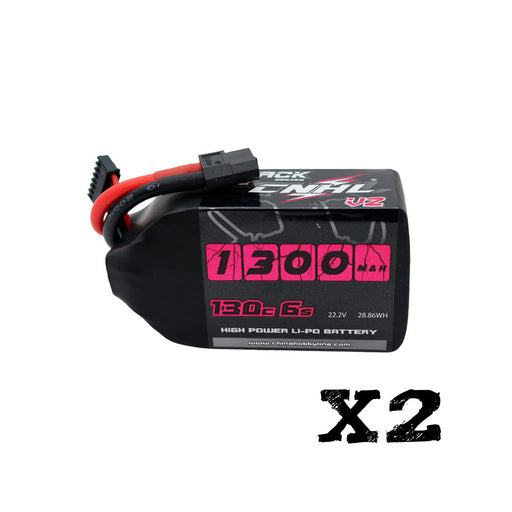
Quick Fit Check The 2 Packs CNHL Black Series V2.0 1300mAh 22.2V 6S 130C LiPo Battery with XT60 Plug is a strong fit for FPV pilots who want a prov...
View full detailsSpare Parts & Long-Term Support We know that for RC pilots, reliable spare parts support is an important part of keeping an aircraft fl...
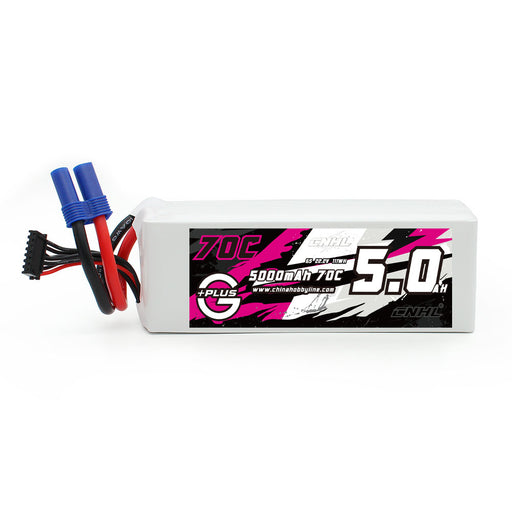
View full detailsSpecifications: Stock Number: 500706EC5 Capacity: 5000mAh Voltage: 22.2V / 6-Cell / 6S1P Discharge Rate: 70C Continual / 140C Burst Charge Rate: ...
View full details
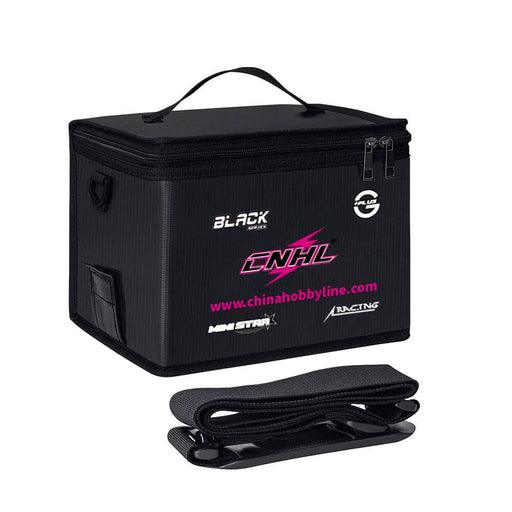
The CNHL LiPo Battery Bag is designed for safer LiPo charging, transport, and storage at home or at the field. It adds a practical layer of protect...
View full details

Quick Fit Check The 2 Packs CNHL Speedy Pizza Series Pro 1350mAh 6S 150C LiPo Battery with XT60 Plug is built for 5-inch FPV pilots who want a ...
View full details

Quick Fit Check The CNHL Speedy Pizza Series 2200mAh 22.2V 6S 120C LiPo Battery with XT60 Plug combines the familiar 2200mAh 6S format with a ligh...
View full details

Quick Fit Check The CNHL Speedy Pizza Series 2200mAh 14.8V 4S 120C LiPo Battery with XT60 Plug combines a widely used 2200mAh 4S format with a sli...
View full details

Quick Fit Check The CNHL Speedy Pizza Series 2200mAh 11.1V 3S 120C LiPo Battery with XT60 Plug takes the familiar 3S 2200mAh aircraft battery form...
View full detailsThe CNHL Long Range Series BAK 65E 6350mAh 21700 Li-ion battery cell is built around one clear priority: maximum stored energy from a lightweight c...
View full details

The CNHL Long Range Series BAK 50D 5000mAh 21700 Li-ion battery cell is designed for custom high-energy battery packs that need a strong balance be...
View full details




Leave a comment