
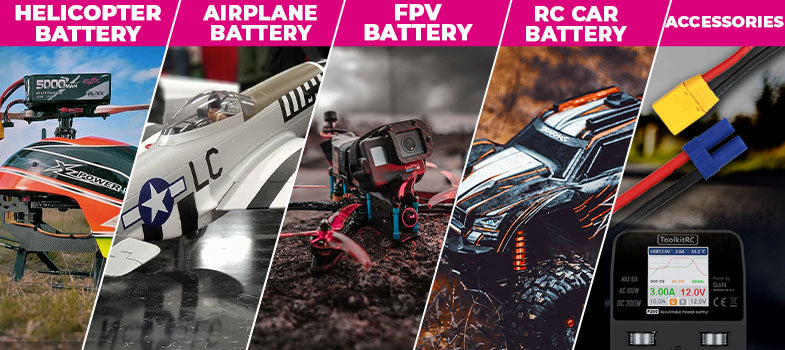
CNHL Lipo Batteries
CNHL aim at providing high-quality Li-Po batteries and RC products to all hobby enthusiasts with excellent customer services and competitive prices
The updated Hangar 9 Carbon Cub 15cc EP PNP makes a 90-inch (2.3m) wood-built STOL aircraft far more practical to own. It retains the scale presence, stable low-speed handling, functional flaps, and smooth aerobatic character that make a large Cub appealing, while simplifying the tasks that used to consume time at home and at the field. More importantly for electric pilots, the new top-access battery arrangement makes flying several packs in one session realistic rather than a chore.
The short answer: choose the EP PNP if you want a large, scale-looking electric Cub without building an ARF from the ground up. Start your battery search with a standard 6S 5000mAh LiPo using an EC5/IC5-compatible power connection; the published range is 4000–7000mAh. A lighter pack can suit weight-conscious STOL practice, while a larger pack may add energy reserve if it fits and the aircraft balances correctly. The right battery is not necessarily the biggest one.

| Specification | Updated EP PNP (HAN-3448) |
|---|---|
| Wingspan | 90 in / 2286mm (approximately 2.3m) |
| Fuselage length | 60 in / 1524mm |
| Airframe | Built-up balsa and lite-ply wood with UltraCote covering |
| Motor | Factory-installed Spektrum Avian 5065-450Kv outrunner |
| ESC | Factory-installed Spektrum Avian 100A Smart ESC |
| Servos | Six installed Spektrum A6380 digital HV metal-geared servos |
| Battery requirement | One standard 6S 22.2V LiPo, 4000–7000mAh |
| Recommended baseline | 6S 5000mAh with EC5 or IC5 connection |
| Radio equipment | Full-range 5+ channel transmitter and receiver, sold separately |
| Control surfaces | Ailerons, elevator, rudder, functional flaps; steerable tailwheel |
| Other equipment | LED landing lights, shock-absorbing main gear, optional floats |
| Published CG range | 100–120mm; use the manual for the precise measurement reference |
The aircraft is designated Skill Level 3 in EP PNP form. Its size, wood structure, and momentum mean it is better suited to a pilot comfortable with similar large aircraft than someone making a first solo RC flight. The EP PNP includes the electric power system and servos, not the flight battery, receiver, transmitter, or charger. The ARF is a different completion level and does not come with the same factory-installed electric equipment.
The earlier yellow-and-silver Carbon Cub 15cc developed a loyal following because of how it flew. The updated red-and-silver version keeps the essential 90-inch format, but addresses several ownership inconveniences that matter just as much as airborne performance.
The biggest upgrade is the separation of scale appearance from assembly difficulty. Large balsa aircraft often ask the pilot to spend considerable time fitting hinges, horns, pushrods, bracing, electronics, and power systems. The updated EP PNP arrives with much of that work completed, including servos, linkages, the electric motor, and ESC. The bolt-on tail arrangement avoids the traditional glued-on tail assembly. That is a major reduction in the commitment required to get a new wood model flying.
A second change becomes obvious every time the airplane travels to the flying field. The two-piece wings have simplified quick-connect struts, and the struts can fold against the wings for storage. The wing tube can ride inside the fuselage rather than being a separate loose item to remember. The pre-routed wing wiring also keeps the aileron, flap, and lighting connections organized.
The third and perhaps most useful change for electric flying is the top windshield battery hatch. The earlier aircraft's side-door and removable-tray arrangement looked convincing on the ground, but battery changes required more reaching, unscrewing, and repositioning. The new layout gives direct access to the battery and its connector. When a day at the field involves several 6S packs, that can make the difference between enjoying another flight and deciding the turnaround is not worth the trouble.
The updated paint scheme, factory-installed landing lights, improved wheel appearance, shock-absorbing landing gear, and cockpit detailing reinforce the scale impression. Still, the practical gains are what make this version more attractive as a regular flyer rather than a special-occasion model.

A PNP designation should not be confused with ready-to-fly. The pilot still needs to install and configure a receiver, verify servo directions and throws, set the center of gravity, inspect the airframe, and fit the propeller and spinner. The flight battery and charger must also be supplied separately. A safe first-flight setup deserves more attention than simply bolting the model together.
The new tail section uses locating tabs and mechanical fasteners. Bracing wires and tailwheel components are prepared for installation, while the main landing gear comes as an assembled unit. The wing panels arrive with their control surfaces and servo installations largely completed. For an experienced modeler, final assembly can fall in the roughly one-to-two-hour class, although careful radio programming and preflight checks can take longer. This is notably different from an ARF build, where sourcing and installing electronics and carrying out the remaining airframe assembly can consume many hours.
One small setup detail deserves attention: tailwheel steering spring tension. A spring system that feels acceptable on grass can feel vague on a hard runway if the springs are too loose. Check that both sides are properly attached, have appropriate tension, and provide predictable steering before the maiden. For the propeller, verify balance and install it only after the radio and throttle setup has been safely completed.
The new windshield hatch opens from the top, giving straightforward access to the battery's mounting area. A Velcro-style retention arrangement keeps the pack secure, and the ESC-side connector can be held in a fixed position. That arrangement is especially convenient when using multiple packs with similar connector and lead geometry: the pilot can remove the hatch, disconnect and swap the pack, secure it, reconnect, and close the hatch.
There is a trade-off worth understanding. A fixed connector position is convenient, but it can constrain how far the battery slides forward or aft. One practical 6S 5000mAh installation balanced correctly with the pack toward the rear of the usable space. A lighter battery may require a different position or a suitable extension to retain connector flexibility. The exact outcome depends on battery shape, weight, lead length, and equipment installation—not just stated capacity.
The connector bracket also occupies space near the scale cockpit seating area. Pilots who prioritize a detailed interior can choose a different lead-routing arrangement, but any modification must leave the power wiring secure, away from moving linkages, and free from abrasion. Do not sacrifice safe battery mounting for a more realistic cockpit.
Before ordering a replacement or additional pack, compare the entire installed package: body dimensions, wire exit direction, plug location, strap routing, available fore-aft movement, and hatch clearance. A pack that matches the published 6S voltage and capacity range is only a candidate until those mechanical details are checked.

The electric EP PNP uses a single 6S pack. Standard 6S LiPo means 22.2V nominal and 25.2V when fully charged. The published capacity range is 4000–7000mAh, with 5000mAh an especially sensible starting point. It is a broad enough range to tune the airplane for a preferred flying style, but it is not a blanket guarantee that every 6S battery within those capacities physically fits.
For choosing the right pack, begin with four questions. Does it use standard 6S voltage? Does it have an EC5 output connection compatible with the airplane's IC5/EC5 power input? Can it be secured inside the available space without crushing its leads or preventing the hatch from closing? And can the airplane balance at the required CG with that pack installed?
The following shortlist uses standard-voltage 6S LiPo, not LiHV packs. These are specifications-based recommendations for this battery category; physical installation in the newly updated EP PNP has not yet been independently verified for each SKU.
| CNHL battery | Dimensions (L × W × H) | Approx. weight | Selection role |
|---|---|---|---|
| Black Series 4000mAh 65C EC5 | 158 × 45 × 46mm | 650g | Lower weight, STOL-focused setup |
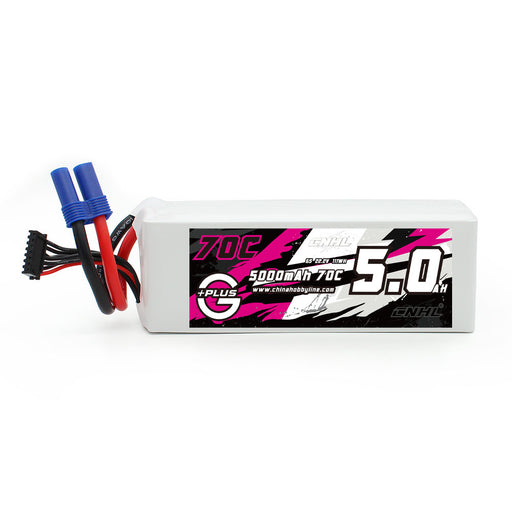
| G+Plus 5000mAh 70C EC5 | 149 × 51 × 49mm | 714g | Best all-round starting point |
| Racing Series 5200mAh 90C EC5 | 161 × 49 × 46mm | 763g | Sport flying and modest capacity increase |
| Racing Series 6200mAh 90C EC5 | 162 × 57 × 47mm | 902g | Higher energy reserve, subject to fit and CG |
CNHL Black Series 4000mAh 6S 65C — the lighter option. At approximately 650g, this is the lightest pack in the shortlist. It gives up some energy reserve in exchange for less battery mass. That can be attractive for frequent short-field approaches and pilots who prefer not to add unnecessary wing loading. Its 158 × 45 × 46mm dimensions still need verification in the new battery area, and a lighter pack must be positioned correctly to avoid an aft or forward CG problem. Compare the CNHL Black Series 4000mAh 6S EC5 battery.
CNHL G+Plus 5000mAh 6S 70C — the best overall starting point. This pack sits exactly in the manufacturer's recommended 5000mAh capacity class. At about 714g, it is also lighter than some other 5000mAh 6S battery formats. For circuits, scale passes, flap-assisted approaches, coordinated turns, and occasional aerobatics, there is little reason to start by carrying the largest battery possible. Its compact 149mm length is useful, although its 51 × 49mm cross-section still must fit the available space. See the CNHL G+Plus 5000mAh 6S 70C EC5 battery.
CNHL Racing Series 5200mAh 6S 90C — a middle ground for sport flying. This 763g pack adds a small capacity increase over 5000mAh without jumping into the much heavier 6200mAh format. The 90C label should not be mistaken for an automatic speed upgrade: power delivery depends on voltage under load, battery condition, current demand, motor, propeller, and ESC. The value here is a practical balance of energy reserve, current-handling specification, and installed mass. Explore the CNHL Racing Series 5200mAh 6S 90C EC5 battery.
CNHL Racing Series 6200mAh 6S 90C — when capacity matters most. A 6200mAh pack remains within the published capacity range, and its additional stored energy may benefit relaxed cruising or longer flight sessions. The trade-off is significant: at approximately 902g and 57mm wide, it weighs about 188g more than the G+Plus 5000mAh pack and needs more room. Its suitability must be established by actual bay clearance, strap security, lead routing, and CG. View the CNHL Racing Series 6200mAh 6S 90C EC5 battery.
For the full range of choices organized around this specific aircraft, browse 6S LiPo batteries for the Hangar 9 Carbon Cub 15cc EP PNP. This is the most useful starting point if you already own the aircraft and want to compare capacity, size, mass, and connector style in one place.
A large Cub can carry a useful spread of 6S batteries, but weight and CG are not interchangeable. A lighter battery reduces installed mass; it does not automatically improve the balance. A heavier battery contains more stored energy; it does not automatically produce proportionally longer flights. Battery location, propeller load, throttle use, and the airplane's total flying weight all affect the result.
As a practical reference, one flight-ready updated Carbon Cub configuration equipped with a 6S 5000mAh pack weighs approximately 5.08kg (11.2lb). That is a useful individual setup reference, not an official fixed takeoff weight for every completed example. Different receivers, pilots, accessories, batteries, and optional components change the number.
Use the published 100–120mm CG range as a reference and follow the aircraft manual for exactly where and how it is measured. Check the balance with the full flight battery installed, any cockpit accessories in place, and the wings and aircraft configured as instructed. Mark a safe battery position only after verifying it. If a connector bracket prevents enough fore-aft movement, resolve that constraint through safe cable routing and mounting rather than forcing the pack into an unsuitable location.
A useful comparison illustrates the trade-off. Moving from the 714g G+Plus 5000mAh to the 902g Racing 6200mAh adds approximately 26% more nominal capacity but also 188g of battery mass. Whether that extra energy produces worthwhile additional time depends on how much current the heavier aircraft needs and how aggressively it is flown. When the goal is repeated takeoffs, touch-and-goes, or precise slow approaches, a smaller battery can be the more enjoyable choice.
There is no single reliable flight-time figure for every Carbon Cub 15cc EP PNP setup. A rough planning calculation uses usable capacity (Ah) ÷ average current draw (A) × 60. For illustration only, using 80% of a 5000mAh pack and an average draw of 30A gives about eight minutes: 4.0 ÷ 30 × 60 = 8. That is a calculation, not a measured flight time for this aircraft. Actual average current can vary considerably with propeller, wind, throttle management, takeoff frequency, and aerobatics.
For the first flights, start conservatively with a transmitter timer, check the remaining battery voltage and capacity after landing, and adjust the timer from actual usage. Where the telemetry chain is supported, the Avian Smart system can help track current and voltage in flight; telemetry availability depends on the installed receiver and transmitter, not simply the ESC badge.
Battery selection for the Hangar 9 Carbon Cub 15cc EP PNP is about more than matching a capacity number. CNHL Lightning 6S LiHV batteries are particularly interesting because their lightweight, high-energy-density designs can offer more capacity without the same weight penalty as some conventional LiPo alternatives. A standard 6S LiPo reaches 25.2V when fully charged, while a 6S LiHV reaches 26.1V. Both battery types can be considered for a suitable 6S power system, with full LiHV charging used when the installed ESC is rated for the higher voltage. This allows pilots to explore lighter packs, greater energy capacity, and different flying characteristics without limiting their choices to conventional LiPo batteries.
The recommended 4000–7000mAh range provides a useful starting point rather than an absolute capacity limit. A lightweight 7200mAh LiHV battery may be a more practical choice than a heavier conventional LiPo with a lower capacity. Even larger 7800mAh or 8500mAh packs deserve consideration based on their actual specifications rather than capacity alone. The deciding factors are battery weight, physical dimensions, secure mounting, connector clearance, and the aircraft's 100–120mm CG range. Higher capacity can extend flight time, but the complete setup must still maintain appropriate flying weight, balance, and power-system operating limits. For this 90-inch Carbon Cub, choosing the right balance of usable energy and weight matters far more than treating 7000mAh as a hard ceiling.
The Carbon Cub's greatest strength is its range of flight styles. Its high-wing configuration, light wing loading for its class, and functional flaps support slow, controlled approaches and short-field flying. The 90-inch span also gives the aircraft a larger visual presence and more measured-looking movement than a smaller foam model.
For slow-speed handling, the important distinction is not that the airplane can never stall—it certainly can—but that its behavior can be predictable when properly set up. A clean power-off-style stall can show a mild wing drop followed by recovery when control inputs and airspeed are managed correctly. With full flaps deployed, the stall character changes, typically with more nose-down behavior. These characteristics should be explored only with plenty of altitude and space; they are not permission to fly beyond a safe margin on final approach.
The airplane also has enough performance for loops, rolls, inverted flight, flat turns, knife-edge-style maneuvers, and other sport aerobatics. It is not primarily a speed aircraft or an extreme 3D machine. What makes it engaging is the smoothness and scale-like presentation of the maneuvers. Coordinating rudder and aileron gives large Cub turns a much more convincing appearance, making this a useful aircraft for pilots who want to refine control technique.
The articulated, shock-absorbing main gear helps on imperfect grass surfaces. For more extreme bush-field use, some pilots may prefer larger, softer tundra-style wheels. Such changes also affect ground handling, scale appearance, drag, and sometimes CG, so they should be chosen for the operating field rather than appearance alone.

The aircraft's basic controls require a full-range 5+ channel radio system. An additional-channel receiver is not mandatory, but it can make a large scale model easier to fine-tune. Independent aileron channels allow electronic differential and more precise left/right adjustments. Separating flap functions and providing enough outputs for lighting or optional features can also simplify programming.
For flap setup, begin with the manufacturer's recommended travel and any specified elevator compensation. Verify that both flaps move equally, neither servo binds, and the airplane remains controllable through every selected flap position. Test reduced-speed approaches at altitude before relying on a new flap setting near the ground. If your radio supports flight modes, separate trim settings for different flap positions can be useful once the basic configuration is proven.
The Avian Smart ESC supports power-system telemetry through compatible Spektrum receivers and AirWare-equipped transmitters. Features such as AS3X+ stabilization or SAFE Select depend on the receiver, radio programming, and configuration; they are not automatically included merely because the aircraft is sold as EP PNP. Similarly, any reverse-thrust functionality requires confirmation of ESC programming and a deliberate, safe radio setup. Avoid adding a reverse switch until the basic aircraft operates reliably.
If your main objective is low-speed bush-plane flying rather than owning a particularly large wood-built scale aircraft, the CNHL Bison XT STOL 1750mm PNP deserves consideration. It shares the high-wing, flap-equipped, taildragger approach to short-field flying but pursues a different ownership experience.
| Comparison | Hangar 9 Carbon Cub 15cc EP PNP | CNHL Bison XT 1750mm PNP |
|---|---|---|
| Wingspan | 2286mm / 90 in | 1750mm |
| Construction | Balsa/lite-ply wood, UltraCote covering | EPO foam |
| Motor and ESC | Spektrum 5065-450Kv + Avian 100A Smart | 5055-420Kv + 80A ESC |
| Battery range | 6S 4000–7000mAh | 6S 3300–5000mAh |
| Main emphasis | Giant-scale realism and smooth large-model flying | Accessible STOL fun and practical bush flying |
| Other appeal | Detailed scale finish, two-piece wings, optional floats | Inflatable tires, FPV-friendly canopy, optional floats |
The Carbon Cub is approximately 31% larger in wingspan than the Bison XT, and its wood construction contributes a very different feel and presentation. Its price also reflects its size, airframe, and Spektrum equipment. The Bison XT emphasizes a more accessible EPO platform, large-field versatility, and a lower purchase cost. These are alternatives for overlapping interests, not identical substitutes.
For someone with limited storage or a preference for easily maintained foam aircraft, the Bison is a sensible route into 6S STOL flying. For someone specifically seeking a 90-inch balsa Cub, detailed scale finish, and a more immersive giant-scale experience, the Hangar 9 offers something a smaller foam aircraft cannot fully reproduce. Explore the CNHL Bison XT STOL 1750mm PNP if that alternative matches your priorities.

Choose EP PNP when the goal is to spend less time installing hardware and more time flying. It comes with a matched electric power system, installed servos, finished wood airframe, and assembly conveniences designed around everyday use. For a pilot who already flies electric aircraft and owns a compatible radio and charger, this can be a particularly direct path to a large balsa model.
Choose ARF when power-system choice and hands-on assembly are part of the enjoyment. The ARF allows gas, glow, or an electric installation selected by the builder, but that freedom carries additional component cost, assembly work, and setup decisions. The ARF's lower initial sticker price should not be compared with the PNP as though both boxes contain the same equipment.
For either version, the airfield and transport requirements remain real. A 2.3m airplane should be flown at a suitable organized field or sufficiently large, safe site—not in a small park. Folding struts and detachable wings improve portability, but the fuselage and wing panels still require careful handling and space in a car or storage area.
It uses one 6S 22.2V LiPo battery, with the manufacturer specifying 4000–7000mAh and an EC5 or IC5 main power connection. A 5000mAh pack is a practical baseline, subject to physical fit and correct CG.
Yes, 5000mAh is in the recommended class for the factory electric setup. Whether a specific pack fits depends on its dimensions, installed weight, connector leads, and the battery's mounting position.
The 6200mAh capacity is within the published range. The CNHL Racing Series 6200mAh EC5 battery is approximately 902g and 162 × 57 × 47mm, so its physical clearance and final balance must be checked in the actual aircraft before declaring it fitted.
No. The motor, ESC, and six servos are installed, but the receiver, transmitter, 6S flight battery, and compatible charger are supplied separately.
Yes. The pre-installed EP electronics, bolt-on tail, preassembled control hardware, simplified wing struts, and top-access battery hatch all reduce routine assembly and handling work. It still needs a complete radio setup and careful preflight checks.
It is a Skill Level 3 aircraft in EP PNP form. It flies in a stable, predictable manner when correctly set up, but its size, mass, and wood construction call for pilots with prior experience on comparable aircraft.
The ESC's power system can operate with compatible ordinary LiPo batteries. Telemetry features depend on the compatible receiver and transmitter arrangement. Verify connector, voltage, battery capability, and the specific ESC documentation before flight.
They serve different priorities. The Carbon Cub offers a significantly larger, wood-built scale experience; the Bison XT offers a smaller, EPO-based STOL platform with FPV-friendly design and a different price point. Choose based on flying field, storage space, budget, and how much scale fidelity matters.
The updated Hangar 9 Carbon Cub 15cc EP PNP is compelling because it fixes many small sources of friction without abandoning the airplane's central appeal. A 90-inch wood airframe still provides the presence and smooth scale feel expected from a large Cub, while the simplified wing assembly, accessible receiver compartment, and much better battery hatch make it easier to enjoy on an ordinary flying weekend.
The sensible electric starting point is one standard 6S 5000mAh EC5/IC5-compatible LiPo, followed by adjustments based on the airplane's balance and the way you actually fly. Weight-conscious STOL flying and extended cruising do not necessarily call for the same pack. Before buying, compare real dimensions and mass instead of treating capacity alone as proof of fitment.
Ready to narrow down your setup? Browse the dedicated Hangar 9 Carbon Cub 15cc EP PNP battery collection, or explore LiPo balance chargers if you are building a complete 6S charging setup. For a more compact STOL alternative, the CNHL Bison XT 1750mm PNP offers another route into bush-plane flying.
Fitment note: aircraft information and pack specifications are published reference values. The four highlighted CNHL batteries are selection candidates, not claims of CNHL-conducted physical fit testing in the updated EP PNP. Follow the model manual for balance and safe operation.
CNHL aim at providing high-quality Li-Po batteries and RC products to all hobby enthusiasts with excellent customer services and competitive prices
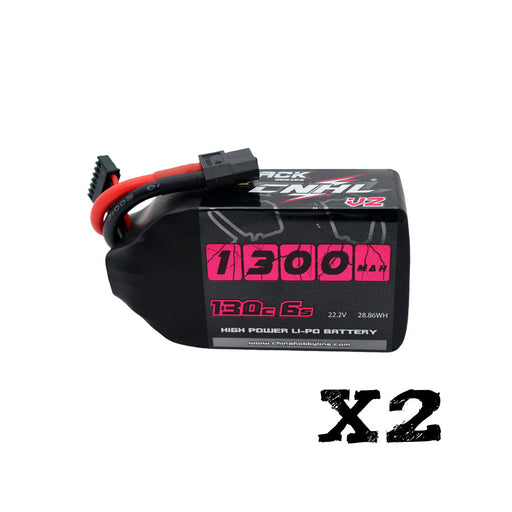
Quick Fit Check The 2 Packs CNHL Black Series V2.0 1300mAh 22.2V 6S 130C LiPo Battery with XT60 Plug is a strong fit for FPV pilots who want a prov...
View full detailsSpare Parts & Long-Term Support We know that for RC pilots, reliable spare parts support is an important part of keeping an aircraft fl...
View full detailsSpecifications: Stock Number: 500706EC5 Capacity: 5000mAh Voltage: 22.2V / 6-Cell / 6S1P Discharge Rate: 70C Continual / 140C Burst Charge Rate: ...
View full details
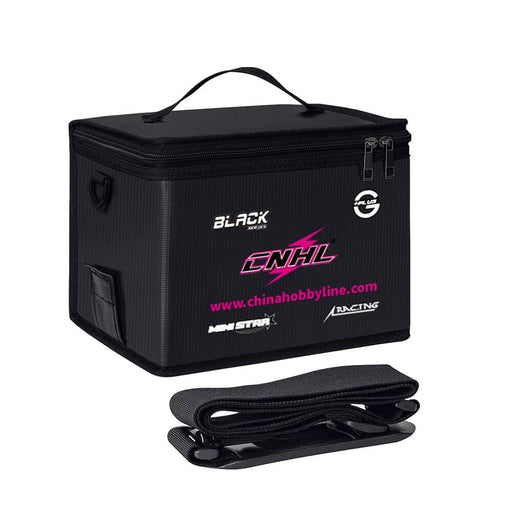
The CNHL LiPo Battery Bag is designed for safer LiPo charging, transport, and storage at home or at the field. It adds a practical layer of protect...
View full details

Quick Fit Check The 2 Packs CNHL Speedy Pizza Series Pro 1350mAh 6S 150C LiPo Battery with XT60 Plug is built for 5-inch FPV pilots who want a ...
View full details

Quick Fit Check The CNHL Speedy Pizza Series 2200mAh 22.2V 6S 120C LiPo Battery with XT60 Plug combines the familiar 2200mAh 6S format with a ligh...
View full details

Quick Fit Check The CNHL Speedy Pizza Series 2200mAh 14.8V 4S 120C LiPo Battery with XT60 Plug combines a widely used 2200mAh 4S format with a sli...
View full details

Quick Fit Check The CNHL Speedy Pizza Series 2200mAh 11.1V 3S 120C LiPo Battery with XT60 Plug takes the familiar 3S 2200mAh aircraft battery form...
View full details

The CNHL Long Range Series BAK 50D 5000mAh 21700 Li-ion battery cell is designed for custom high-energy battery packs that need a strong balance be...
View full details

The ISDT C4 EVO is a versatile smart battery charger built for AA, AAA and cylindrical rechargeable cells from compact 10440 batteries all the way ...
View full details


Leave a comment