
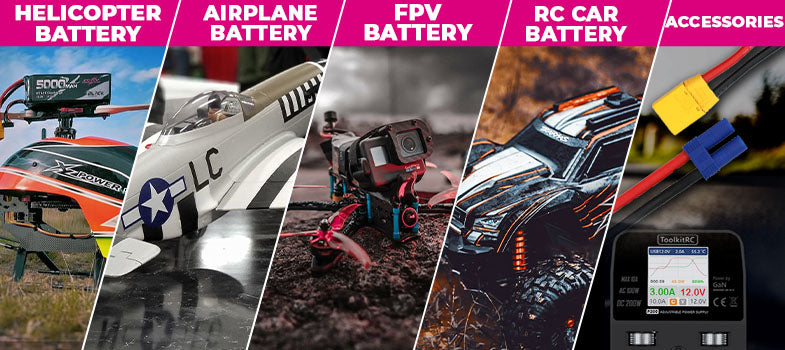
CNHL Lipo Batteries
CNHL aim at providing high-quality Li-Po batteries and RC products to all hobby enthusiasts with excellent customer services and competitive prices
The Pro Boat 1/6 Jetstream makes the most sense when it is treated as a terrain boat rather than a conventional speed boat. In clean shallow water, it can skim over areas where an exposed propeller would be vulnerable, rotate inside a narrow channel, back away from a bank and use current, rocks or small drops as part of the driving experience.
Its limitations are just as important. The Jetstream does not self-right, its intake does not like weeds or stringy algae, and its 20+ mph speed will not satisfy someone shopping for a fast Deep-V. The boat becomes much more convincing when the water is narrow, moving and close to the driver.
From our point of view, that is the key to understanding the ProBoat Jetstream: it is not trying to be the fastest RC boat on the lake. It is designed to make shallow water, rocky banks and compact running areas more interesting.

CNHL review summary
The Jetstream is a 24-inch, 1/6 scale ready-to-run RC jet boat. It uses an internal impeller and steerable jet nozzle instead of an exposed propeller and rudder. This changes both where the boat can run and how it must be driven.
The wide and relatively flat hull allows the boat to skim across shallow water and rotate quickly. The hull does not have the long, narrow profile of a Deep-V because straight-line speed and rough-lake tracking are not its only priorities.
Its short and broad shape can initially appear more toy-like than a normal performance RC boat. Once the full-size inspiration is understood, the proportions make more sense. The Shreddy version follows the look of Blake Wilkey's full-size mini jet boat, including the compact cockpit, roof structure, driver figure and high-impact graphics.
Pro Boat also gives the Jetstream more scale detail than most dedicated bashers. The roll cage, poseable driver, steering wheel, simulated speakers, deck material and front and rear LED light bars all contribute to the personality of the boat.
This styling will not appeal to everyone. Some drivers will prefer a clean competition-style hull with fewer parts above the deck. Others will consider the scale body one of the main reasons to choose the Jetstream over a more functional-looking basher.
| Scale | 1/6 |
| Length | 24 inches / 610mm |
| Beam | 12.6 inches / 320mm |
| Hull Height | 8.9 inches / 225mm |
| Approximate Weight | 7lb / 3.2kg |
| Motor | Spektrum Firma 4068 1600KV water-cooled brushless motor |
| ESC | Spektrum 100A water-cooled brushless marine ESC |
| Radio System | Spektrum SLT3 transmitter and SLR300 receiver |
| Recommended Battery | 14.8V 5000mAh 4S 50C hardcase LiPo with EC5 or IC5 connector |
| Top Speed | 20+ mph |
| Self-Righting | No |
The underside intake feeds water into the internal impeller. The pump then accelerates that water and sends it through the steerable nozzle at the rear of the boat.
Because the propulsive hardware remains inside the hull and pump housing, there is no exposed propeller hanging below the boat. This is the main reason the Jetstream can cross shallow rocky water that would be risky for a conventional prop-driven RC boat.
The trade-off is that the boat depends on jet flow for steering. The nozzle can point left or right when the throttle is closed, but there is little water passing through it. The Jetstream therefore has very limited steering authority without power.
The correct driving habit is to keep a controlled amount of throttle through the turn. Drivers coming from RC cars often want to release the trigger before steering. Drivers coming from rudder-equipped boats may expect the hull to continue turning while coasting. Neither instinct works particularly well here.
Once the throttle-on steering becomes familiar, the boat can rotate extremely tightly. Quick 180-degree turns, broad slides and 360-degree spins are all part of its character. It feels more like controlling a compact jet ski or mini jet boat than steering a traditional RC speed boat.
The third channel on the SLT3 transmitter operates the reverse gate. Lowering the gate redirects the outgoing jet stream toward the front of the boat, producing rearward movement.
The driver still applies normal forward motor power after engaging the gate. Pushing the trigger in the RC-car reverse direction is not the main operating principle. The bucket changes the direction of the water; the motor continues driving the impeller in its normal direction.
Reverse is not especially fast, but it is genuinely useful. It can help the Jetstream back away from a bank, move off a scale trailer, escape a low-speed obstruction or stop more abruptly before reaching an obstacle.

The ProBoat Jetstream top speed is listed at more than 20 mph. On a wide and calm lake, that figure can look modest. A fast Deep-V or catamaran will cover open water much more quickly.
That comparison does not show the Jetstream at its best. In a narrow creek, 20 mph leaves very little reaction time between rocks, bends, banks and shallow drops. The boat also produces more visible movement than the number suggests because it throws a large rooster tail, pivots rapidly and repeatedly climbs on and off the surface.
Strong current is another part of the performance picture. The 1600KV motor and 100A ESC provide enough thrust for the Jetstream to work upstream through moving water, provided the intake stays clear and the hull has enough depth to remain on plane.
When the intake leaves the water during a jump, the pump cannot produce thrust. After landing, it takes a brief moment for the pump to refill and push a solid stream of water again. The driver should expect this pause when chaining jumps or crossing turbulent sections.
We would not recommend the Jetstream to someone whose main question is, “What is the fastest boat I can buy?” It is a better match for someone asking, “What can I run in this shallow creek that would destroy a normal propeller?”
The Jetstream is advertised for water as shallow as approximately two inches, but water depth is only one part of the fit check.
A clean two-inch channel over stones may work very well. A six-inch-deep pond filled with weeds may be unusable. The intake needs a clean and continuous supply of water, and stringy material can reduce pump output very quickly.
Grass, algae, moss and loose leaves are more troublesome for the Jetstream than solid rocks. A rock may slide beneath the armor or be stopped by the intake protection. Soft vegetation can wrap around the grate or partially cover the inlet, making the boat feel as though the battery has suddenly lost power.
From our assessment, the best environments are:
We would avoid launching it into fast remote rivers, water leading toward a dam or culvert, heavily weeded ponds and locations where the boat cannot be followed from shore.

No. The Pro Boat 1/6 Jetstream does not have self-righting.
The hull is wide and stable, and it may recover from brief submersion or rough water without turning upside down. That does not mean it is impossible to capsize. A badly angled jump, side impact, submerged obstacle or steep wave can still invert the boat.
Once upside down, the Jetstream cannot deliberately roll itself back onto the hull. In calm water, that means waiting for a rescue boat or retrieving it from the shore. In moving water, the boat can travel downstream before the driver has time to react.
This is not a small specification detail. It should influence where the boat is used, how much battery reserve is kept and whether the owner prepares a separate recovery method.
CNHL recovery recommendations
The main hull is constructed from rigid ABS, while the center underside and chines receive replaceable glass-filled nylon armor. These pieces are designed to take abrasion when the boat slides over stones or reaches a shallow bank.
The armored underside is useful, but it does not make the complete boat indestructible. The hull can survive a hard contact while still collecting deep scratches, chipped corners or damage to smaller attached components.
The rear trim-tab links deserve particular attention. The tabs are adjustable and help tune the running attitude, but the exposed linkage can bend or break when the stern strikes a rock. The light bars, roll cage and rear body details can also take damage before the main hull fails.
The intake uses protective bars to stop larger stones from reaching the composite impeller. A replaceable aluminum wear ring helps maintain clearance around the impeller and protects the pump housing in abrasive shallow-water conditions.
Inside the hull are the 100A water-cooled ESC, 4068 1600KV water-cooled motor, receiver, steering servo and reverse-gate servo. Separate switches operate the main electronics and LED system.
The rear access panel is held in place magnetically. It is convenient for battery and electronics access, but the compartment should not be assumed to remain completely dry during aggressive running.
After a long session, jumps or repeated submersion, water can collect inside the hull and add noticeable weight. The Jetstream does not include the same type of active bilge system found in some specialized basher boats, so the hull should be returned to shore, drained and inspected regularly.
The SSL Strap/Slide/Lock system is one of the best-designed parts of the Jetstream.
The battery is secured to a removable tray with hook-and-loop straps. The complete tray then slides into the center of the hull and locks into position. This is much easier than trying to tighten battery straps inside a narrow and wet boat compartment.
Because a second tray is included, two batteries can be prepared before the session begins. Once the first pack is finished, the complete tray can be removed and replaced rather than rebuilding the battery installation inside the hull.
The hard-mounted IC5 connector is another useful detail. It prevents the power lead from moving around the shaft, motor and servo linkages, and it makes the electrical connection more consistent during quick battery changes.
Pro Boat recommends one 14.8V 5000mAh 4S 50C hardcase LiPo battery with an EC5 or IC5 connector.
From a CNHL battery-fit perspective, the Jetstream is more sensitive to physical battery design than a typical open-tray RC car. Length, width, height, cable direction, installed weight and tray retention all affect the final result.
| Battery | Approx. Size | Approx. Weight | CNHL Recommendation |
|---|---|---|---|
| CNHL Ultra-Thin Racing LiHV 6000mAh 4S 120C Hardcase EC5 | 138 × 47 × 37mm | Approx. 479g | Best overall hardcase option |
| CNHL G+Plus 5000mAh 14.8V 4S 100C EC5 | 146 × 48 × 36mm | Approx. 560g | Closest to the official capacity |
| CNHL Lightning LiHV 4500mAh 4S 120C EC5 | 143 × 31 × 45mm | Approx. 398g | Lightweight handling option |
| CNHL Lightning LiHV 7200mAh 4S 120C EC5 | 145 × 48 × 34mm | Approx. 554g | Best longer-runtime option |
| CNHL Lightning LiHV 8500mAh 4S 120C EC5 | 146 × 48 × 42mm | Approx. 657g | Maximum capacity; measure before ordering |
The Ultra-Thin 6000mAh is our preferred all-round Jetstream battery. Its 138 × 47 × 37mm dimensions remain close to the expected full-length hardcase footprint, while the 6000mAh capacity provides a useful increase over the standard 5000mAh recommendation.
The 479g weight also keeps it lighter than several lower-capacity alternatives. Its hard outer case is better suited to a boat that may jump, strike rocks or experience sudden tray loads.
The G+Plus 5000mAh matches the official capacity and uses standard 14.8V LiPo chemistry. It is the simplest choice for an owner who wants to stay near the original electrical specification.
Because it is a soft pack, it should be strapped securely to the SSL tray and inspected after hard impacts.
The Lightning 7200mAh is the strongest capacity-focused alternative. Its 34mm height and approximately 554g weight are moderate for a pack of this capacity, making it more balanced than simply choosing the largest battery available.
The 8500mAh option can store more energy, but its additional height and weight may change planing response, hull attitude and impact loads. We would measure the compartment carefully before choosing it over the 7200mAh pack.
See the complete best battery collection for the Pro Boat 1/6 Jetstream for the full fit guide, or browse more CNHL RC boat batteries.
The Jetstream uses a hard-mounted IC5-style power connection. A CNHL battery fitted with an EC5 plug is physically compatible with this connector, so a separate power adapter is normally unnecessary.
The EC5 connection supplies normal positive and negative power, but it does not provide Spektrum Smart battery identification or telemetry data.
The included SLT3 system should not be treated as a remaining-capacity display. Use a timer, monitor the way the boat responds and return with enough reserve for another approach to shore.
The CNHL Ultra-Thin 6000mAh and Lightning 4500mAh, 7200mAh and 8500mAh packs use LiHV chemistry. A fully charged 4S LiHV battery reaches 17.4V, while a standard 4S LiPo reaches 16.8V.
The stock Jetstream specification confirms standard 4S LiPo use but does not clearly establish support for a fully charged 17.4V LiHV pack. Unless Pro Boat or Spektrum confirms otherwise, charge these LiHV batteries to the standard LiPo limit of 4.20V per cell, or 16.8V total.
For a 5000mAh 4S battery, we would plan around approximately 7–12 minutes rather than promise one fixed figure.
Flat-water cruising, mixed throttle and a clean intake can place the boat toward the upper part of that range. Repeated full-throttle acceleration, current, tight turns and intake restriction can move it toward the lower end.
Water inside the hull also matters. As the boat becomes heavier, it takes more power to accelerate and remain on top of the water. A larger battery may extend runtime, but the gain will not be perfectly proportional because the larger pack also increases the load.
In a river, maximum theoretical runtime should never be the target. The Jetstream needs enough remaining power to return against the current, make another landing attempt and clear a partially restricted intake.
The Jetstream can be enjoyed in standard form, but a few upgrades and spare parts are more useful than simply adding power.
The optional CNC-machined aluminum impeller and aluminum intake grate strengthen the pump area for frequent shallow-water use. They do not make the intake immune to grass, algae or loose debris, so inspection is still necessary.
Extra battery trays are among the most practical ProBoat Jetstream upgrades. Several batteries can remain strapped and ready, reducing the time spent rebuilding the installation between runs.
The hull includes mounting points for an optional Firma 120A Smart Marine ESC. Combined with compatible Spektrum equipment, it can add telemetry capability. The upgrade is not required for ordinary 4S operation.
The rear trim-tab links and nearby body parts should be checked frequently when the boat is used around rocks. Keeping replacement links or repair materials available may be more useful than chasing additional top speed.
The roll cage and high driving position make the Jetstream an attractive FPV platform. The simulated rear speakers also encourage small sound-system projects, while the large body provides plenty of space for custom wraps and licensed-inspired graphics.
These modifications suit the scale character of the boat, but cameras, sound systems and mounting hardware add weight above the hull. Keep the installation secure and avoid compromising hatch access or water resistance.
The Jetstream and Streamline RC Thrasher are frequently compared because both can run in shallow water and interact with rocks, current and jumps. They approach the category from different directions.
| Category | Pro Boat Jetstream | Streamline RC Thrasher |
|---|---|---|
| Main Focus | Scale jet boat, shallow-water stunts and reverse maneuvering | Maximum basher durability and aggressive white-water use |
| Battery System | 4S | Up to 6S depending on version and setup |
| Self-Righting | No | Yes |
| Reverse Gate | Included | Optional depending on configuration |
| Appearance | Detailed driver, cockpit, cage, lights and licensed graphics | Simpler shape designed to reduce snagging and aid recovery |
| Best Match | Scale appearance, cruising, tight turns and moderate bashing | Higher speed, self-recovery and repeated heavy impacts |
For repeated hard hits, large jumps and difficult white water, the Thrasher is the more specialized basher. Its self-righting system also reduces the risk of losing the boat after a capsize.
The Jetstream offers a different package. It has richer scale detail, a standard reverse gate, easier battery swaps and a calmer 4S power system. It is more enjoyable when the driver wants to explore a compact water course rather than attack every obstacle at maximum speed.
Water conditions can change the result significantly. In an algae-filled creek, the Jetstream's low intake is at a disadvantage. In clean shallow water with small wakes, tight corners and visible banks, the same boat becomes much more convincing.
Our conclusion is not that the Jetstream replaces the Thrasher. The Thrasher remains the stronger pure basher, while the Jetstream is the more scale-focused and accessible all-round jet boat.

Disconnect and remove the battery before working around the intake or impeller. Drain the hull, remove the rear panel and allow the interior to dry.
Inspect the intake before installing another battery. A small amount of algae or grass can reduce thrust enough to resemble a weak battery or failing motor.
Check the steering linkage, reverse gate, trim-tab links, ride plate, armor sections, light bars and rear corners after contact with rocks.
Remove sand and grit from around the wear ring and impeller area. Do not continue applying throttle when the pump is blocked or the impeller cannot rotate freely.
The rigid drive shaft and pump still require lubrication and inspection. Access is more involved than servicing the visible flex shaft on many conventional RC boats, so follow the maintenance intervals and disassembly procedure in the current manual.
Stainless steel hardware reduces corrosion but does not eliminate the need to dry the boat, especially after dirty, mineral-heavy or salt-contaminated water.
The Pro Boat 1/6 Jetstream is worth buying when the local water matches the design.
It gives the driver access to shallow rocky areas that would be risky for a normal propeller boat. It can rotate inside a narrow channel, use reverse thrust, cross small drops and turn a modest stretch of water into a more technical RC course.
It is less suitable for buyers who mainly want high speed, automatic self-righting or the greatest possible resistance to repeated impacts. A large open lake also removes much of the terrain interaction that makes the Jetstream interesting.
The strongest reasons to choose it are the protected jet drive, scale appearance, SSL battery system, reverse gate and unusual handling. The strongest reasons to hesitate are the lack of self-righting, intake sensitivity, possible water accumulation and need for a safe recovery method.
Our recommendation is simple: buy the Jetstream because you have the right place to run it, not simply because it is a large 4S RC boat.
The listed top speed is 20+ mph. It is slower than many high-speed Deep-V boats, but the same speed feels much more intense in a narrow creek, around rocks or against current.
Pro Boat recommends one 14.8V 5000mAh 4S 50C hardcase LiPo battery with an EC5 or IC5 connector.
Yes. EC5 and IC5 are physically compatible for normal power delivery. An EC5 battery does not provide Spektrum Smart battery data.
No. The boat is wide and stable, but it cannot intentionally roll itself upright after a capsize.
It can run in very shallow water when the intake remains submerged and the channel is clear. Weeds, grass, algae and leaves can block the intake even when the water is deeper.
A practical planning range is approximately 7–12 minutes. Runtime depends on throttle use, current, intake condition, onboard water and battery health.
The Thrasher is the stronger dedicated basher with more speed and self-righting. The Jetstream offers more scale detail, a standard reverse gate, simpler 4S operation and a more relaxed stunt and cruising character.
Compare additional capacities, connectors and voltage options in the complete CNHL RC boat battery collection.
CNHL aim at providing high-quality Li-Po batteries and RC products to all hobby enthusiasts with excellent customer services and competitive prices
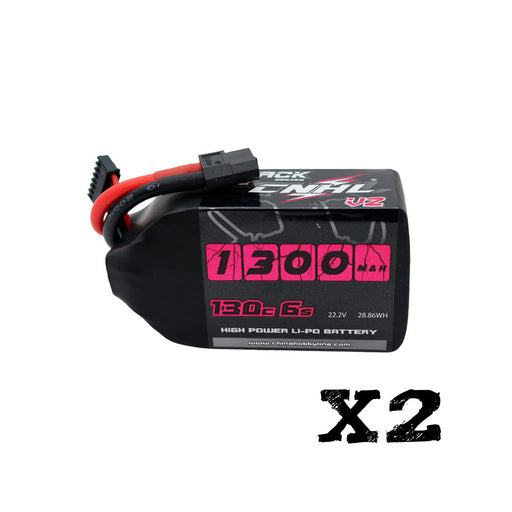
Quick Fit Check The 2 Packs CNHL Black Series V2.0 1300mAh 22.2V 6S 130C LiPo Battery with XT60 Plug is a strong fit for FPV pilots who want a prov...
View full detailsSpare Parts & Long-Term Support We know that for RC pilots, reliable spare parts support is an important part of keeping an aircraft fl...
View full details
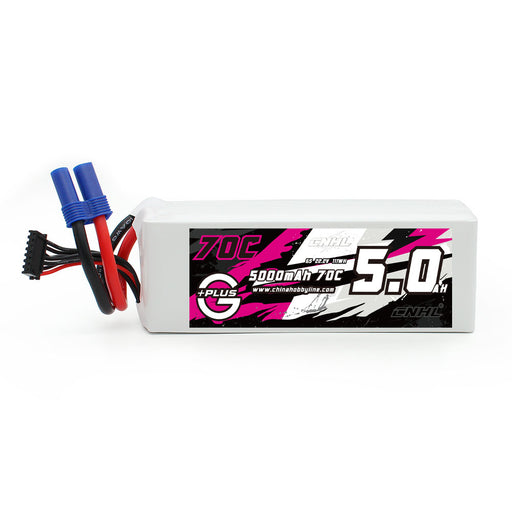
Specifications: Stock Number: 500706EC5 Capacity: 5000mAh Voltage: 22.2V / 6-Cell / 6S1P Discharge Rate: 70C Continual / 140C Burst Charge Rate: ...
View full details
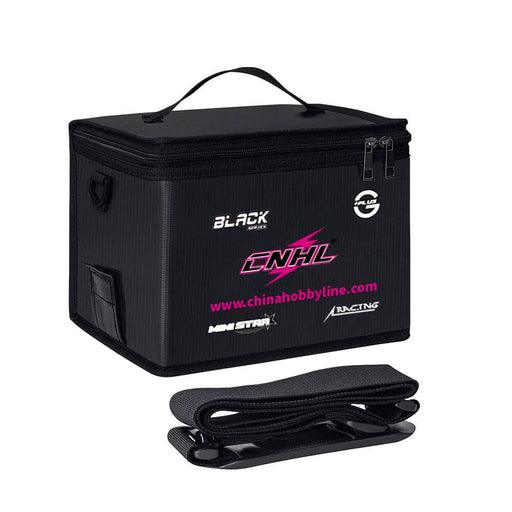
The CNHL LiPo Battery Bag is designed for safer LiPo charging, transport, and storage at home or at the field. It adds a practical layer of protect...
View full details

Quick Fit Check The 2 Packs CNHL Speedy Pizza Series Pro 1350mAh 6S 150C LiPo Battery with XT60 Plug is built for 5-inch FPV pilots who want a ...
View full details

Quick Fit Check The CNHL Speedy Pizza Series 2200mAh 22.2V 6S 120C LiPo Battery with XT60 Plug combines the familiar 2200mAh 6S format with a ligh...
View full details

Quick Fit Check The CNHL Speedy Pizza Series 2200mAh 14.8V 4S 120C LiPo Battery with XT60 Plug combines a widely used 2200mAh 4S format with a sli...
View full details

Quick Fit Check The CNHL Speedy Pizza Series 2200mAh 11.1V 3S 120C LiPo Battery with XT60 Plug takes the familiar 3S 2200mAh aircraft battery form...
View full details

The CNHL Long Range Series BAK 50D 5000mAh 21700 Li-ion battery cell is designed for custom high-energy battery packs that need a strong balance be...
View full details

The ISDT C4 EVO is a versatile smart battery charger built for AA, AAA and cylindrical rechargeable cells from compact 10440 batteries all the way ...
View full details


Leave a comment