
CNHL Lipo Batteries
CNHL aim at providing high-quality Li-Po batteries and RC products to all hobby enthusiasts with excellent customer services and competitive prices
The 2026 Traction Hobby 1/8 Ford Bronco Raptor is not simply a licensed body placed on a conventional crawler chassis. Its front independent suspension, rear solid axle, selectable drivetrain, two-speed planetary transmission, locking differentials and detailed Ford body all follow the same scale-oriented direction.
At approximately 625mm long with a 376mm wheelbase, this is also a genuinely large RC truck. The 1/8 scale changes the experience: the Bronco Raptor has more visual presence, more room for functional systems and enough body detail to appeal to Ford collectors as well as trail drivers.
Traction Hobby offers both brushed and brushless RTR configurations. They share the same core chassis and Bronco Raptor body architecture, but the motor system, radio equipment, wheels, tires and interior functions make the two versions meaningfully different. Below is a closer look at the platform and which version makes the most sense for different buyers.

The Traction Hobby Bronco Raptor is an officially licensed 1/8-scale recreation of Ford's high-performance Bronco Raptor. It is available in orange and gunmetal gray and uses a 1.5mm polycarbonate quick-release body shell.
The proportions are one of its strongest features. The wide fenders, broad front end, external spare tire, large mirrors and tall greenhouse give the truck the stance expected from a Bronco Raptor rather than the narrower appearance of a generic trail body.
| Scale | 1/8 |
| License | Ford Bronco Raptor |
| Overall Size | 625 × 282 × 255mm |
| Wheelbase | 376mm |
| Track Width | 227mm |
| Minimum Ground Clearance | 43mm |
| Battery Support | 2S–4S lithium battery |
| Power Connector | XT60 |
The chassis layout is one of the most important differences between this Bronco Raptor and a conventional crawler. Traction Hobby uses a 1.5mm steel C-channel frame with independent double-wishbone front suspension and a four-link rear solid axle.
That configuration gives the truck a mechanical layout closer to the character of the full-size Bronco than a traditional front-and-rear solid-axle crawler. The independent front end helps preserve the correct stance and steering geometry, while the rear live axle still provides the articulation and durability expected from a trail-oriented RC platform.
The front nylon suspension arms have been lengthened by approximately 10mm per side, and the steering hardware uses new CNC metal steering knuckles. Together with the 227mm track width, these changes give the truck a wider and more planted front end.

The transmission is more sophisticated than the fixed four-wheel-drive layout found in many trail trucks. An integrated planetary transmission combines high and low gearing with selectable drivetrain functions, allowing the Bronco Raptor to operate in front-wheel drive, rear-wheel drive or four-wheel drive depending on the setup and terrain.
This gives the truck more than one driving character. High range is better suited to open trails and general driving, while low range gives finer control when the terrain becomes slower or more technical. Changing the driven axle configuration also adds another layer of interaction that suits the scale nature of the vehicle.
The drivetrain uses metal gearing together with 7mm metal driveshafts, so the mechanical system is designed around the size and weight of a 1/8-scale platform rather than scaled-up 1/10 hardware.

Front and rear differential locks are controlled independently by dedicated function servos. This allows the Bronco Raptor to move between more natural open-differential driving and increased traction when conditions require it.
On smoother trails, unlocking the differentials can reduce tire scrub and make steering feel more natural. When climbing loose surfaces or crossing uneven ground, locking one or both differentials helps keep torque going to wheels that still have traction.
This is an important part of the Bronco Raptor's identity. It is not built around a permanently locked crawler drivetrain; instead, the driver can change the setup as the terrain changes.
Steering is handled by a 30kg high-voltage metal-case coreless servo, while the auxiliary drivetrain functions use 35kg high-voltage digital standard servos.
That matters because the Bronco Raptor asks much more from its electronics than a basic two-channel RC truck. The vehicle needs to manage steering, transmission functions, differential locks and selectable drivetrain operations in addition to throttle and lighting.
The chassis also includes CNC metal side-step brackets, rear metal tow hooks and a front winch mounting position, giving owners practical mounting points for additional trail equipment.

Detailed scale bodies often make everyday maintenance more difficult, so the Bronco Raptor's electronics layout is worth attention. The receiver box has been moved toward the front of the chassis and uses a quick-release latch arrangement for easier access.
Both the brushed and brushless chassis also provide externally accessible power-switch positions. This reduces the need to remove the body simply to switch the truck on or off.
The body lighting is connected through a centralized plug-board system rather than relying on numerous individual wires each time the body is removed. On a truck with headlights, grille lighting, indicators, interior illumination and chassis lighting, that is a practical improvement rather than a cosmetic detail.
The body is where the 1/8 scale really pays off. The extra physical size allows the Bronco Raptor's wide-body proportions, wheel openings, grille, mirrors and rear spare-wheel treatment to remain visually balanced rather than compressed into a smaller shell.
The 1.5mm PC shell uses a quick-release mounting system and includes folding mirrors, windshield wipers, door handles, scale interior detailing and an external spare tire. Metal badges and a separately finished roof add further separation between body elements.
The relatively clean factory-style presentation is also important. The Bronco does not depend on oversized roof racks or permanently installed expedition accessories to look complete. That preserves the original Raptor proportions and gives owners the choice to add accessories later rather than remove them from a new body.
The lighting system is unusually extensive. It includes low beams, high beams, daytime running lights, turn signals, grille lighting, fog lamps, mirror indicators, brake lights, reversing lights and rear indicators.
The daytime running lights can switch between orange and white, while the illuminated FORD grille logo supports multiple colors. Inside the body, the instrument display and center screen are backlit, and the chassis itself also includes underbody lighting.
The system can therefore be used in two different ways: owners who enjoy maximum scale lighting can use the full package, while those who prefer a cleaner factory appearance can choose which lighting functions to emphasize.

The body and chassis are shared, but the brushed and brushless versions are not simply the same truck with a different motor. The radio system, wheels, tires and interior functions also change.
| Feature | Brushed Version | Brushless Version |
|---|---|---|
| Power System | 775 brushed motor + Hobbywing 880 ESC | Hobbywing Fusion integrated brushless system |
| Radio | DumboRC DDF-350 | FlySky G7P+ |
| Receiver | Gyro-equipped receiver | Gyro-equipped receiver |
| Wheels | 2.2-inch nylon wheels | K-BACK licensed CNC metal negative-offset wheels |
| Tires | Mud-focused AT tires | All-terrain AT tires |
| Interior Steering Wheel Linkage | Not listed as standard | Included |
The brushed version makes sense if you prefer the familiar Hobbywing 880 and 775 motor combination, want a straightforward RTR drivetrain or already expect to change electronics later. You still receive the same chassis architecture, differential functions, two-speed system, lighting and licensed Bronco body.
The brushless version is the more premium factory package. The Hobbywing Fusion system, FlySky G7P+, CNC metal wheels and interior steering-wheel linkage make it the stronger choice for owners who want a more complete high-spec RTR without immediately replacing major electronics.
Traction Hobby lists 43mm of minimum ground clearance together with a 48.5-degree approach angle, 36.5-degree breakover angle and 38-degree departure angle.
Those figures match the intended role of the vehicle. This is not a stripped-down competition crawler with extreme body clearance. It is a large scale trail truck that balances body realism with usable off-road geometry.
The 120mm-diameter, 43mm-wide tires also maintain sensible proportions. They are large enough for the 1/8 chassis without making the Bronco look like a heavily modified rock buggy.

Both the brushed and brushless Bronco Raptor support 2S–4S lithium batteries and use an XT60 vehicle-side connector.
For practical battery selection, use approximately 150 × 46mm as the Bronco Raptor battery tray reference. The important detail is that this is an open tray secured with adjustable straps rather than a closed battery compartment.
That gives owners more flexibility with wider rectangular packs. Selected CNHL batteries can be installed on their side, allowing the thinner pack dimension to sit across the tray width while the straps secure the battery in the vertical orientation.
Battery installation tip: If a CNHL pack is wider than the tray in its normal flat orientation, rotate it onto its side so the thinner dimension sits across the approximately 46mm tray width. Secure both straps evenly and keep all wires clear of rotating drivetrain components.
For a 4S setup, capacities around 5000–6700mAh provide several useful choices depending on the balance you want between battery weight and available capacity. See the 1/8 Traction Hobby Ford Bronco Raptor battery collection for the recommended CNHL options.
Most selected CNHL packs use EC5, while the Bronco Raptor uses XT60. A properly rated EC5-to-XT60 adapter provides a convenient reversible connection without permanently changing the vehicle or battery wiring.

The strongest part of the Bronco Raptor is how consistently the whole vehicle follows the character of the full-size truck. The body keeps the broad Raptor proportions, the front uses independent suspension, the rear retains a solid axle, and the drivetrain adds selectable drive modes instead of reducing the vehicle to a permanently locked crawler.
The clean body treatment also helps. The Bronco looks complete without relying on oversized racks or permanent expedition accessories. That makes the vehicle more attractive to owners who prefer an original factory-style appearance and want to choose their own modifications later.
The chassis follows the same philosophy. CNC steering hardware, a revised front suspension, accessible electronics, a two-speed drivetrain and independently controlled differential locks all support the same goal: a large-scale trail vehicle with meaningful mechanical functions rather than decorative complexity.
That combination gives the Bronco Raptor a wider audience than a pure crawler. It can appeal to Ford owners, scale-model collectors, trail drivers and RC enthusiasts who enjoy operating mechanical functions as much as overcoming obstacles.
The Bronco Raptor makes the most sense for drivers who value scale realism, mechanical functions and vehicle identity rather than judging an RC truck only by maximum articulation or outright speed.
| Strengths | Considerations |
|---|---|
| Official Ford Bronco Raptor body with convincing 1/8 proportions | Large 625mm body requires more storage and transport space |
| IFS front and four-link solid rear axle | Not designed as a dedicated competition crawler |
| Two-speed planetary gearbox and selectable drivetrain | More drivetrain functions mean more system complexity |
| Independent front and rear differential locks | More servos and linkages require proper setup and maintenance |
| Extensive exterior, interior and chassis lighting | Some owners may prefer a simpler lighting appearance |
| Brushed and Fusion brushless RTR choices | A kit or electronics-free version would appeal more to some experienced builders |
It is a 1/8-scale RC truck measuring approximately 625 × 282 × 255mm with a 376mm wheelbase.
Yes. The model uses Ford-licensed Bronco Raptor styling and branding.
Yes. It uses independent double-wishbone front suspension with a four-link rear solid axle.
Yes. The front and rear differentials can be controlled independently through dedicated function servos.
Yes. Its integrated planetary transmission provides high and low gearing together with selectable drivetrain functions.
Both versions support 2S–4S lithium batteries and use an XT60 connector. The practical battery tray reference is approximately 150 × 46mm.
Selected rectangular packs can be installed on their side so the thinner dimension fits across the tray width. The open strap-style mount makes this orientation practical.
The brushed model uses a 775 motor, Hobbywing 880 ESC and DumboRC DDF-350 radio. The brushless version uses a Hobbywing Fusion integrated system, FlySky G7P+, CNC metal wheels and adds an interior steering-wheel linkage.
It is better treated as the 2026 Traction Hobby 1/8 Ford Bronco Raptor rather than a confirmed Bronco Raptor V2.
The Traction Hobby Bronco Raptor succeeds because its body, chassis and functions all support the same identity. The Ford-licensed proportions, front independent suspension, rear solid axle, selectable drivetrain, locking differentials and detailed lighting work together rather than feeling like unrelated features added to a generic platform.
The brushed model offers a more conventional electronics package, while the brushless Fusion version adds a higher-spec radio, CNC wheels and additional interior functionality. The best choice depends less on the body or chassis and more on how much of the factory electronics package you want to keep.
For owners planning a 4S setup, the open strap-style battery tray also provides useful flexibility. Compare our recommended batteries for the 1/8 Traction Hobby Ford Bronco Raptor, or browse the wider CNHL RC car battery collection for other trail trucks, crawlers and large-scale RC vehicles.
CNHL aim at providing high-quality Li-Po batteries and RC products to all hobby enthusiasts with excellent customer services and competitive prices
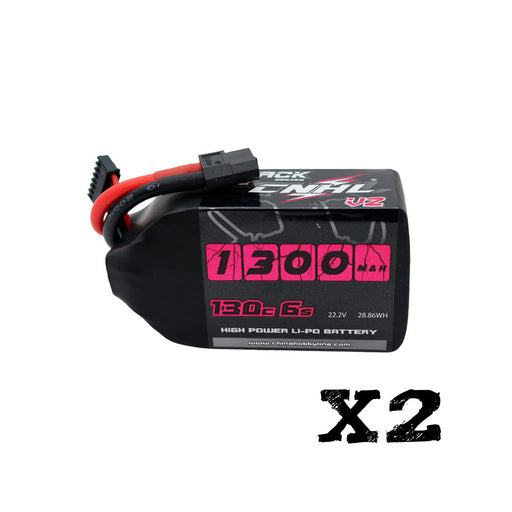
Quick Fit Check The 2 Packs CNHL Black Series V2.0 1300mAh 22.2V 6S 130C LiPo Battery with XT60 Plug is a strong fit for FPV pilots who want a prov...
View full detailsSpare Parts & Long-Term Support We know that for RC pilots, reliable spare parts support is an important part of keeping an aircraft fl...
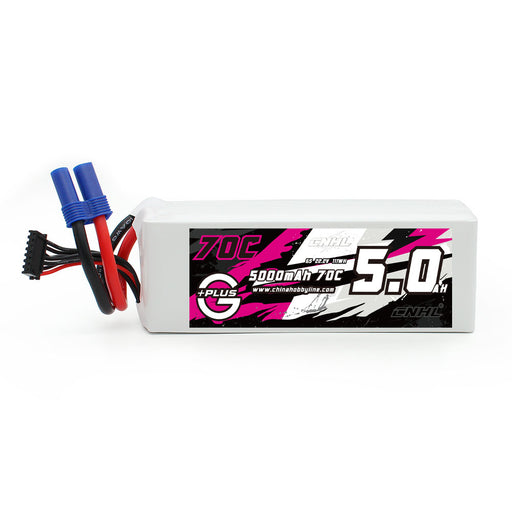
View full detailsSpecifications: Stock Number: 500706EC5 Capacity: 5000mAh Voltage: 22.2V / 6-Cell / 6S1P Discharge Rate: 70C Continual / 140C Burst Charge Rate: ...
View full details
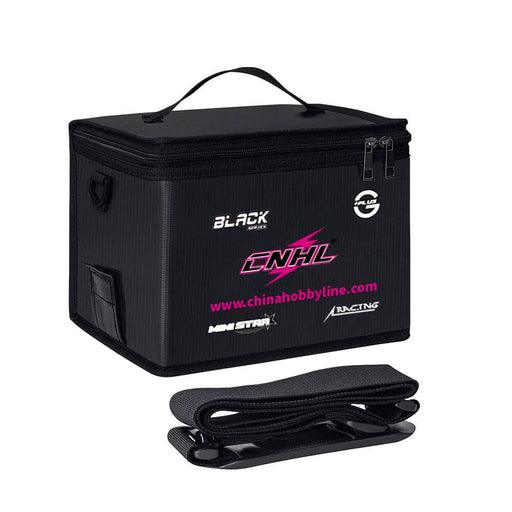
The CNHL LiPo Battery Bag is designed for safer LiPo charging, transport, and storage at home or at the field. It adds a practical layer of protect...
View full detailsQuick Fit Check The 2 Packs CNHL Speedy Pizza Series Pro 1350mAh 6S 150C LiPo Battery with XT60 Plug is built for 5-inch FPV pilots who want a ...
View full details

The CNHL Long Range Series BAK 65E 6350mAh 21700 Li-ion battery cell is built around one clear priority: maximum stored energy from a lightweight c...
View full details

The CNHL Long Range Series BAK 50D 5000mAh 21700 Li-ion battery cell is designed for custom high-energy battery packs that need a strong balance be...
View full details

The ISDT C4 EVO is a versatile smart battery charger built for AA, AAA and cylindrical rechargeable cells from compact 10440 batteries all the way ...
View full details

The CNHL Long Range Series 6350mAh 21.6V 6S1P 21700 Li-ion battery combines six BAK 65E high-energy cells into a 137.16Wh pack designed for ultra-e...
View full details

The CNHL Long Range Series 5000mAh 21.6V 6S1P 21700 Li-ion battery combines six BAK 50D cells into a compact 108Wh pack designed around long-range ...
View full details




Leave a comment