

CNHL Lipo akut
CNHL pyrkii tarjoamaan korkealaatuisia Li-Po-akkuja ja RC-tuotteita kaikille harrastajille erinomaisella asiakaspalvelulla ja kilpailukykyisillä hinnoilla

Traxxas built the Jato 4X4 VXL around a simple idea: keep the platform light, give it real punch, and let drivers decide whether the day is about bashing, practice laps, or trying to hang with the “big money” cars at a local track. That mix is exactly why the Jato gets two completely different reactions online. Some see a basher wearing a racing suit. Others see an underdog that can absolutely pressure faster rigs into mistakes when the driver is consistent.
What stands out immediately is how the Jato behaves under load. It accelerates like a serious e-buggy down the straight, but it also shows its lightweight personality the moment throttle comes back on mid-corner. This is not a car that hides sloppy inputs. It rewards clean lines, patience on corner exit, and a setup that matches the surface—especially tires and brake feel.
Track feedback on the Jato is remarkably consistent across different drivers: it has plenty of power, surprisingly decent steering response for a stock RTR, and brakes that can feel overly aggressive until they are tuned. On a fresh or slightly slick surface, the rear can wash out when throttle is applied too early. That behavior is often blamed on the chassis, but most drivers who spend time with it end up pointing at tires first, then brake/throttle tuning second.
That’s also why some racers report doing well with it right away, while others struggle for a few sessions. When the car is light, any sudden power delivery (or sudden braking) becomes more visible, and the setup window feels narrower than heavier buggies that “soak up” mistakes.

On a typical club layout, the Jato’s lap time potential is real, but it comes with a specific driving requirement: it needs to be settled before power is applied. When it is lined up and driven smoothly, it rotates well and carries speed through sections that punish heavier cars. When it is driven like a high-grip race kit on the wrong tires, it can feel edgy—especially on power.
Several practical notes come up repeatedly in track sessions:
That last point matters. The Jato isn’t only fun because it is quick—it is fun because it feels like a challenge. It allows practice laps that feel meaningful without requiring a full race kit build.
Under the shell, the Jato shows a clear basher leaning: thick center diff behavior, durable plastic links, and an RTR approach to electronics. That’s not automatically a negative. Durable plastic links can survive crashes better than adjustable turnbuckles, and the car’s general toughness is part of the appeal.
The weak points are also predictable. Stock RTR servos are often the first “confidence limiter,” especially when the car starts to push or when quick corrections are needed after a landing. Some drivers also point out that suspension tuning is where the Jato has the most easy wins: it can feel a little under-damped or bouncy in the rear until oil and ride height are dialed for the track.

Most track complaints about the Jato start with “it washes out on power” or “it feels skaty.” In practice, those are usually tire and brake settings showing up more strongly because the car is light.
Tires: On a dusty or slick track, the wrong tread/compound makes the rear step out instantly the moment throttle is applied. With the right tires, the same car suddenly looks planted. This is why the Jato can appear inconsistent between two different tracks even with the same driver.
Brakes: Strong brakes are not a problem by themselves—race buggies run strong brakes too. The issue is modulation. If brake is too aggressive, the car dives and rotates more than expected into corners, which then forces a correction that ruins the exit. Many drivers prefer adjusting brake curve or overall brake strength on a race transmitter. Without that, the car can feel harder than it needs to be.

A recurring theme from club racers is that the Jato becomes more fun when it is run in a field of more expensive cars. Not because it is automatically faster, but because it has enough straight-line power and rotation to stay in the fight. Drivers who are consistent can pressure faster rigs into errors—especially in traffic.
It’s also worth noting how many people mention transmitter upgrades (Sanwa-type radios are a common example) as the moment the Jato feels easier. Better radio tuning doesn’t only add “speed.” It makes the car calmer, more predictable, and less tiring to drive over a full practice session.
The Jato 4X4 VXL is a 4S platform, and many drivers agree it already has “power galore.” The goal is not chasing exaggerated numbers—it’s getting consistent output so the throttle feel stays predictable lap after lap. On a light buggy, voltage sag and inconsistent punch can make the rear end feel unpredictable.
For drivers building a clean, reliable 4S setup, a properly matched battery selection (with the right connector plan) makes the whole car feel more consistent. CNHL’s collection page is organized specifically for the Traxxas Jato 4X4 VXL so it’s easier to choose capacity and discharge level without guessing.
4S LiPo Batteries for Traxxas Jato 4X4 VXL (XT90 / EC5 options)
Connector note: many setups revolve around XT90 or EC5 for solid current handling. The key is keeping the connector plan clean and avoiding unnecessary “weak links” that create heat or inconsistency. If an adapter is needed for compatibility, it should be treated as part of the power system, not an afterthought.
Before judging the Jato as a track car, a few practical checks tend to make the difference between frustration and fun:
| On-Track Behavior | Likely Cause | What to Adjust First | Expected Result |
|---|---|---|---|
| Rear steps out when throttle is applied | Tire compound not matched to surface; abrupt throttle timing | Switch to track-appropriate tires; smooth throttle application | More stable corner exit and improved rear grip |
| Car feels twitchy or nervous on corner entry | Brake strength too aggressive for grip level | Reduce brake percentage or soften brake curve | Smoother turn-in and better mid-corner balance |
| Inconsistent landings after jumps | Shock damping not matched to jump size | Adjust shock oil weight and ride height | More controlled landings and faster recovery |
| Steering feels vague at speed | Servo saver compliance or limited steering authority | Improve radio tuning or upgrade steering servo | More precise steering and confidence through corners |
| Throttle feels inconsistent over a full run | Voltage sag or connector inefficiency | Use a stable 4S LiPo setup with XT90 or EC5 connectors | Predictable power delivery and consistent lap times |
Out of the box, the Jato 4X4 VXL is best described as a basher-leaning buggy with real track potential. It is not a purpose-built race kit, and it doesn’t pretend to be. But it does allow genuine practice laps, and with the right tire choice and a few tuning decisions, it can absolutely hang at the club level.
That’s why the “great basher wearing a racing suit” line exists—and why other drivers strongly disagree. The Jato sits in a middle space. It can bash, it can practice, and it can race casually. What it asks in return is a driver willing to tune the feel instead of expecting a one-size-fits-all setup.

Yes. Multiple club racers use it for practice and racing. Clean laps are achievable, and it can be competitive when tires and basic setup match the surface.
Most of the time, that feeling is tire-related and amplified by the car’s light weight. Abrupt throttle timing can also make the rear step out on slick tracks.
A race transmitter makes it easier to tune brake and throttle curves. Many drivers report that the car becomes more predictable and easier to drive with better radio control and a stronger servo.
Tires matched to the track are often the fastest improvement. After that, servo confidence and shock tuning typically deliver the biggest gains in consistency.
For this platform, consistent output matters. A stable 4S pack with a clean connector plan helps keep throttle feel predictable over a full session.
A curated selection organized for this platform is available here: Traxxas Jato 4X4 VXL 4S battery collection (XT90 / EC5 options) .
CNHL pyrkii tarjoamaan korkealaatuisia Li-Po-akkuja ja RC-tuotteita kaikille harrastajille erinomaisella asiakaspalvelulla ja kilpailukykyisillä hinnoilla

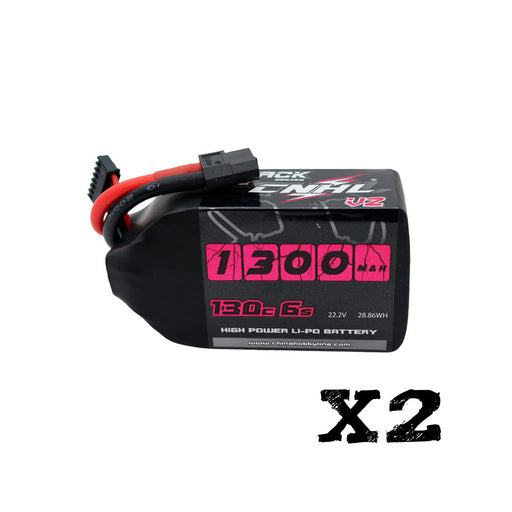
Nopea sovitustarkistus 2 Packs CNHL Black Series V2.0 1300mAh 22.2V 6S 130C LiPo-akku XT60-liittimellä sopii erinomaisesti FPV-lentäjille, jotka ha...
Näytä täydet tiedotVaraosat ja pitkäaikainen tuki Tiedämme, että RC-piloteille luotettava varaosatuki on tärkeä osa sitä, että lentokone pysyy lentokunnossa vuo...
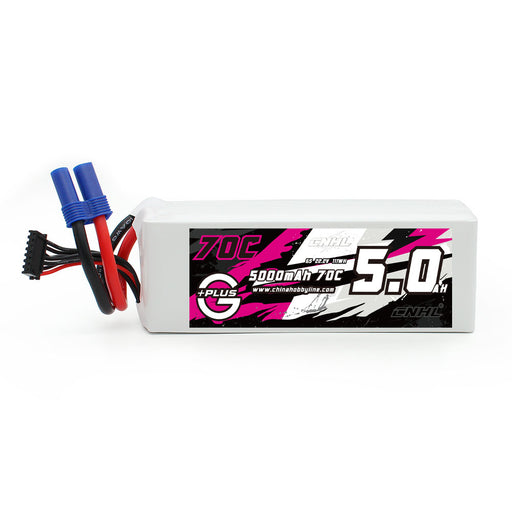
Näytä täydet tiedotTekniset tiedot: Varastonumero: 500706EC5 Kapasiteetti: 5000mAh Jännite: 22,2V / 6-kennoa / 6S1P Purkunopeus: 70C jatkuva / 140C hetkellinen Lata...
Näytä täydet tiedot
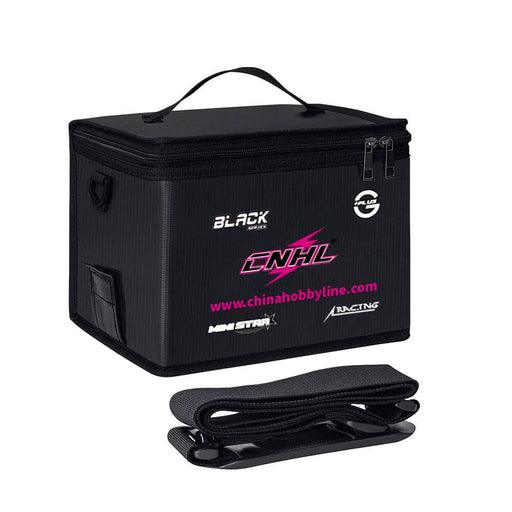
CNHL LiPo Battery Bag on suunniteltu turvallisempaan LiPo-lataukseen, kuljetukseen ja säilytykseen kotona tai kentällä. Se lisää käytännöllisen suo...
Näytä täydet tiedotNopea sovitustarkistus 2 paketin CNHL Speedy Pizza Series Pro 1350mAh 6S 150C LiPo -akku XT60-liittimellä on suunniteltu 5-tuuman FPV-piloteill...
Näytä täydet tiedot

The CNHL Long Range Series BAK 65E 6350mAh 21700 Li-ion battery cell is built around one clear priority: maximum stored energy from a lightweight c...
Näytä täydet tiedot

The CNHL Long Range Series BAK 50D 5000mAh 21700 Li-ion battery cell is designed for custom high-energy battery packs that need a strong balance be...
Näytä täydet tiedot

The CNHL Long Range Series 6350mAh 21.6V 6S1P 21700 Li-ion battery combines six BAK 65E high-energy cells into a 137.16Wh pack designed for ultra-e...
Näytä täydet tiedot

The CNHL Long Range Series 5000mAh 21.6V 6S1P 21700 Li-ion battery combines six BAK 50D cells into a compact 108Wh pack designed around long-range ...
Näytä täydet tiedot

The CNHL Long Range Series 12700mAh 21.6V 6S2P 21700 Li-ion battery combines twelve BAK 65E high-energy cells into a 274.32Wh battery pack for larg...
Näytä täydet tiedot




Kommentit
Jätä kommentti