
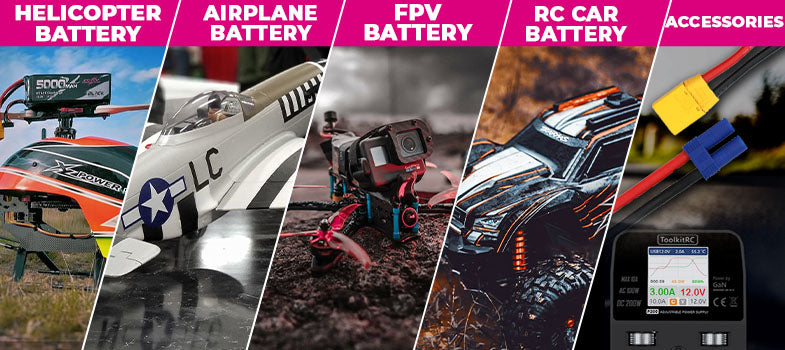
CNHL Lipo Batteries
CNHL aim at providing high-quality Li-Po batteries and RC products to all hobby enthusiasts with excellent customer services and competitive prices
The HobbyKing Hall Cherokee V2 is not simply an old foam glider with a new motor. The 1700mm V2 replaces the original top-mounted EDF concept with a remarkably simple retractable pusher pod, adds stronger removable wings, improves the tail and landing protection, and turns the Cherokee into a much more convincing powered sailplane.
The Cherokee V2 is best understood as a sport-oriented powered sailplane rather than an ultra-light thermal floater. Its 3S power system gives it confident climbs, and once the motor pod folds back down the airframe carries speed and energy nicely through power-off glides. At slower speeds, however, the tapered wing asks for a little more discipline than a beginner-focused glider. A correctly set CG, moderate aileron travel and smooth, coordinated turns make a noticeable difference to how settled the model feels.
If you like vintage sailplane styling, unusual engineering and a model that can switch between powered climbing and genuine power-off soaring, the Cherokee V2 is one of HobbyKing’s more interesting recent releases.

| Wingspan | 1700mm / 66.9in |
| Length | 920mm / 36.2in |
| Approx. Flying Weight | Approx. 900g in the published reference configuration |
| Power System | 3S brushless retractable pusher system with 6x4E propeller |
| ESC | 20A brushless ESC |
| Recommended Battery | 2200mAh 3S shorty LiPo with XT60 |
| Recommended CG | 60–65mm behind the wing-root leading edge |
| Skill Level | Better suited to pilots with previous fixed-wing experience than as a first RC airplane |
Best description: a vintage-styled sports-scale powered sailplane rather than a slow trainer-style thermal floater.
The model takes its name and general inspiration from the Hall Cherokee, a full-size American homebuilt sailplane designed by Stan Hall and introduced in the 1950s. The original aircraft was aimed at amateur construction and carried the unmistakable proportions of an earlier generation of sailplanes: a relatively short fuselage, high-mounted tapered wing and simple single-seat configuration.
HobbyKing previously released an RC Cherokee around a decade ago. That first-generation model developed a loyal following, but its powered version placed an EDF unit above the wing. The V1’s top-mounted EDF provided convenient self-launch capability, but the exposed unit created extra drag and offered only modest climb performance. By replacing it with a retractable propeller system, the V2 gains stronger powered climbs while presenting a cleaner profile during power-off gliding.
The V2 keeps the recognizable retro silhouette while changing the part of the aircraft that mattered most: how it gets to altitude.
| Feature | Cherokee V1 | Cherokee V2 |
|---|---|---|
| Powered Version | Top-mounted EDF | Retractable pusher motor pod with 6x4 propeller |
| Power-Off Drag | EDF remained exposed above the airframe | Motor pod folds down close to the fuselage |
| Wing Structure | Earlier, less transport-friendly arrangement | Removable reinforced wings with joiner system |
| Horizontal Tail | Smaller tail arrangement | Enlarged removable horizontal stabilizer |
| Practical Protection | More exposed foam | Hardened nose protection, servo covers and belly skid protection |
The retractable power system is by far the most important difference. It changes not only climb performance, but also what happens after the motor is switched off.
The most clever part of the Cherokee V2 is that the motor pod does not need a dedicated retract servo or a separate retract channel.
Apply throttle and propeller thrust rotates the pod upward into its operating position. Close the throttle and the motor stops producing thrust; airflow then gradually pushes the pod back down toward the fuselage. Resistance in the pivot prevents the assembly from simply flapping freely in the airflow.

The real strength of the Cherokee V2 motor pod is its mechanical simplicity. The system avoids a dedicated retract servo and complex sequencing, using motor thrust to deploy the pod and airflow to return it to the fuselage when power is removed. Fewer moving parts also mean fewer things to adjust, synchronize or potentially fail, which makes the concept especially well suited to a practical powered sailplane.
When the motor is off, the pod folds down closely along the upper fuselage to reduce its exposed profile and drag. It is a low-profile retracting system rather than a fully internal installation, so the motor and propeller assembly remain externally visible even in the stowed position.
Only slightly. Although the motor sits high above the fuselage when deployed, the thrust line is well matched to the airframe and does not produce a dramatic pitch change under normal power application.
There can be a brief transition as the pod rises and the propeller begins producing full thrust, but once the system is deployed the Cherokee settles quickly into a steady powered climb. This makes switching between powered and unpowered flight feel straightforward rather than requiring a large elevator correction every time the throttle is used.
The normal flight rhythm is simple: use the motor to gain altitude, reduce the throttle once the desired height is reached, and let the pod fold back down as the Cherokee transitions into power-off soaring. The result is a practical self-launch system that provides useful climb performance without leaving a large fixed power unit exposed during the glide.
The Hall Cherokee V2 flies more like a sport-oriented powered sailplane than a slow, ultra-forgiving thermal trainer. On 3S power it climbs confidently, carries energy well and transitions naturally into power-off gliding once the motor pod folds back down.
In normal flight the model feels stable and efficient, with enough control authority for smooth circuits, steeper turns and basic aerobatics such as loops and rolls. The reinforced wing also gives it a more solid feel than its lightweight foam construction might suggest.
The main characteristic to respect is low-speed handling. As airspeed falls, especially during tighter turns or with the CG moved too far aft, the Cherokee becomes noticeably more sensitive and can drop a wing abruptly once it reaches the stall. Excessive aileron travel can make this behavior feel sharper than necessary.
With the CG kept within the recommended range, moderate control throws and enough airspeed carried through turns, the Cherokee feels much more settled and predictable. It is not difficult to fly once properly set up, but it rewards more precise energy management than a beginner-focused glider.
The Cherokee V2 can drop a wing quite sharply once it is pushed beyond the stall, but that does not mean it is unstable during normal flight. The important distinction is that the airplane behaves well when it is carrying adequate airspeed, while the stall itself can develop more abruptly than it does on a soft, trainer-style thermal glider.
The tapered wing makes low-speed energy management especially important. Tightening a turn while allowing the airspeed to decay can bring the outer wing closer to the stall, so slow, steep turns near the ground are best avoided. Keeping the model moving smoothly through the turn gives it a much wider and more predictable operating margin.
Setup also has a noticeable influence on how sharp the airplane feels near the stall. A rearward CG increases pitch sensitivity, excessive aileron travel can make roll inputs unnecessarily aggressive, and turbulent air can exaggerate sudden wing movement. Starting with a conservative setup makes the Cherokee considerably easier to read and manage.
With those basics sorted, the Cherokee V2 is much better described as an intermediate-friendly powered sailplane than as a difficult aircraft. It simply asks the pilot to respect airspeed and balance instead of relying on the extremely forgiving low-speed behavior of a beginner thermal trainer.
Yes, the Cherokee V2 can work thermal lift, but it is better treated as an energy-carrying sailplane than an ultra-light thermal floater. Once the motor is shut down and the pod folds back, the aircraft settles naturally into power-off soaring and can stay aloft efficiently when usable lift is available.
The key is to let the Cherokee fly at the speed it prefers. Its tapered wing and relatively scale-like proportions favor a cleaner, slightly faster glide rather than the extremely slow, almost stationary circling style associated with very light thermal trainers. Trying to stretch the glide too far by flying close to the stall reduces the margin for error and makes the model less comfortable in tighter turns.

This makes the Cherokee especially versatile. It can use the motor for a quick climb, transition into thermal searching, carry speed through broader soaring circuits, or use the same airframe for slope flying and light sport aerobatics. The retractable power system also gives the pilot an easy way to regain altitude if the lift weakens.
In practical terms, the Cherokee V2 is best viewed as a powered soaring and sport-glider platform with useful thermal capability, rather than a dedicated ultra-low-speed thermal machine.
Yes, within reason. The Cherokee V2 has enough power and control authority for loops, rolls, wingovers, inverted passes and faster sport-style flying, especially when the aircraft is carrying good airspeed.
Its reinforced wing structure gives the airframe enough stiffness for this kind of flying without making the model feel excessively heavy, while the 3S power system provides useful energy for climbing and setting up larger maneuvers.
That said, the Cherokee is still fundamentally a sailplane. Its noticeable dihedral favors upright stability, roll response is more relaxed than on a dedicated aerobatic model, and the airplane feels best when maneuvers are flown with smooth energy management rather than constant full-power input.
In practice, the Cherokee V2 works well as a powered sailplane with useful sport-aerobatic capability. It can be flown more aggressively when desired, but its strongest character still comes from combining powered climbs, gliding and occasional aerobatics in the same flight.
A compact 2200mAh 3S LiPo with XT60 is the best all-round starting point for the Hall Cherokee V2. It keeps the aircraft close to its intended power, weight and balance range while still providing enough capacity for repeated climbs and extended power-off soaring.
Battery fit is unusually important on this model. The Cherokee’s slim fuselage leaves a relatively narrow equipment bay, and the battery has to share that space with the ESC, receiver, servo linkages and wiring. A pack that looks suitable on capacity alone can still become awkward if it is too long, too thick or leaves insufficient room for the power lead.

Battery position matters just as much as physical fit. The Cherokee V2 should balance within the recommended 60–65mm CG range, so a compact pack that can slide forward or backward gives much more freedom during setup. Moving the balance too far aft makes the aircraft more sensitive in pitch and reduces the margin available near the stall.
For most pilots, the 2200mAh 3S class offers the best compromise between capacity and installed weight. A lighter 1500mAh 3S pack can be useful when reducing weight is the priority, particularly for glide-focused flying, while a compact 2400mAh option provides a little more stored energy when its dimensions and final CG remain suitable.
CNHL offers all three directions in the Best Batteries for the HobbyKing Hall Cherokee V2 collection, making it easier to choose between the standard 2200mAh setup, a lighter 1500mAh configuration and a compact 2400mAh alternative.
The Cherokee’s 20A-class power system also means battery selection is not a contest for the highest possible C-rating. Physical fit, installed weight, CG adjustment and wire clearance are more important than an extreme discharge number. The motor is primarily there to gain altitude efficiently before the aircraft transitions back into soaring flight.
If using a 3S LiHV pack, also consider charging voltage separately from physical compatibility. Unless the installed ESC has been confirmed for the higher fully charged LiHV voltage, the conservative approach is to charge the pack only to standard 3S LiPo voltage.
For other powered gliders and sailplanes, browse LiPo Batteries for Gliders & Sailplanes. For additional fixed-wing battery options, see CNHL Airplane Batteries.
A 2200mAh 3S battery can support surprisingly long flights in the Cherokee V2 when the motor is used mainly for climbing rather than continuous powered flight. The exact duration depends much more on throttle use, lift conditions and flying style than on capacity alone.
Repeated power passes, aerobatics and frequent full-throttle climbs will use the pack much faster. In a more typical sailplane rhythm—climb to altitude, shut the motor down and spend most of the flight gliding—the same 2200mAh battery can remain useful for a much longer session.
Real-world flying has shown that mixed powered climbing and soaring can range from shorter sessions to well over 20 minutes while still leaving useful voltage in the pack. That wide spread is normal for a powered sailplane because the motor may only be running for a small percentage of the total flight.
For this reason, it is better to think of 2200mAh as a balance of weight, fit and available climb energy rather than as a fixed flight-time number. Good lift and efficient throttle management can extend the total session dramatically, while aggressive powered flying will shorten it just as quickly.
Yes, the Cherokee V2 can work with more than one 3S battery capacity, but 2200mAh remains the best-balanced reference point. Moving smaller or larger changes more than flight time: battery weight, physical dimensions and how far the pack can move inside the narrow fuselage all affect the final CG.
| Battery Capacity | Best Use | Main Consideration |
|---|---|---|
| 1300–1500mAh 3S | Lower-weight, glide-focused setup | The lighter pack may need to sit farther forward to keep the CG within the recommended range. |
| 2200mAh 3S | Best all-round starting point | Offers the strongest balance of capacity, installed weight, CG adjustment and usable battery space. |
| 2400mAh 3S | Slightly more stored energy without moving far from the 2200mAh baseline | Check dimensions, installed weight and CG carefully; LiHV packs also require appropriate charging-voltage consideration. |
| 2600mAh 3S | Higher-capacity setup where the individual pack still fits | Clearance becomes tighter and additional battery weight can move the aircraft farther away from its intended lightweight sailplane setup. |
The practical limit is therefore set by more than capacity. A larger 3S pack may physically fit, but it is only useful if there is still enough room for the XT60 lead and surrounding electronics while allowing the aircraft to balance correctly.
For most pilots, 2200mAh remains the sweet spot. Move toward 1300–1500mAh when lower installed weight is the priority, or toward 2400–2600mAh when additional capacity is worth the extra weight and tighter installation. Whichever direction you choose, recheck the 60–65mm CG after every battery change.
For a 1.7m sailplane, the Cherokee V2 is remarkably easy to assemble, break down and transport. The wing panels are removable, the horizontal stabilizer screws into place, and the normal airframe assembly does not require major glue work. That makes the airplane much easier to live with than its wingspan might suggest.

The removable wing system is especially important. Internal reinforcement and a substantial wing joiner give the long foam panels the support they need in flight, while still allowing both sides to come off for storage or transport. Instead of carrying a fully assembled 1.7m glider, the Cherokee can be reduced to a much more manageable package between flying sessions.
The same practical thinking continues through the rest of the airframe. Covered wing servos keep the installation tidy, the removable tail simplifies storage further, and hardened protection around the nose and belly helps the foam cope with routine handling and grass-field operation.
These details do not change the Cherokee’s basic flying mission, but they make a meaningful difference to ownership. The V2 is quicker to prepare at the field, easier to fit into a car and less awkward to store at home, which matters on a model with a 1700mm wingspan.
They are optional, but spoilerons can be especially useful on the Cherokee V2 if your receiver and radio allow the two ailerons to be controlled independently. The standard Y-lead keeps the airplane simple, while separate aileron channels open the door to differential, flaperons and spoilerons.
Of those options, spoilerons are particularly relevant to the way the Cherokee flies. The airframe carries energy well in the glide, which is helpful for soaring but can make it easy to arrive over the landing area with more height or speed than expected. Raising both ailerons together reduces lift and increases the descent rate, giving the pilot another way to control the approach without simply forcing the airplane into a slower, less comfortable flight condition.
This can make short-field landings easier and help steepen the approach while preserving useful airspeed. It is especially valuable on a sailplane with a relatively clean glide and a stall that is better avoided close to the ground.
Flaperons are also possible, but they should be treated more cautiously. Lowering both ailerons changes the outer-wing lift distribution and low-speed handling, so more flap is not automatically better on a tapered wing. Small changes and careful testing are preferable to aggressive settings.
Any spoileron or flaperon setup should first be tested at a safe altitude. Spoilerons can produce a much stronger increase in sink rate than expected, so start with modest travel and confirm how the airplane responds before relying on the function during landing.
Yes. The Cherokee V2 can perform a rolling takeoff, but its single-wheel undercarriage makes the quality of the surface much more important than it would be on a conventional two- or three-wheel airplane.
The monowheel supports the fuselage once the model is moving, while the wings need to be kept reasonably level during the initial acceleration. With enough forward speed, the ailerons become more effective, the wing stabilizes, and the Cherokee can transition smoothly into flight.

Grass condition makes a noticeable difference. Short, firm grass gives the wheel and fuselage less resistance, while long, dry or sticky grass can slow the model before it reaches a comfortable flying speed. Because the airplane rests partly on its wingtips when stationary, an uneven surface can also cause one side to drag during the first part of the takeoff roll.
The tow or launch hook underneath the fuselage is another detail worth checking before attempting a ground launch. If it sits low enough to catch the grass, the additional drag can make the takeoff roll considerably less predictable.
For a smooth field and favorable wind, the rolling takeoff is a useful part of the Cherokee’s scale-like character. On rougher grass, however, a conventional hand launch is usually the simpler and more repeatable way to get the model airborne.
Aerotow is a genuine secondary launch option for the Cherokee V2. The airframe includes a tow-hook provision, allowing the model to be flown more like a traditional sailplane when a suitable tow aircraft and experienced pilots are available.
The 1700mm span and relatively light airframe make this kind of operation well matched to the Cherokee’s character. Once released at altitude, the motor can remain off and the aircraft can be flown entirely as a sailplane until additional height is needed.
A glider-style bungee launch is also conceivable using an appropriate launch setup, although it is better treated as an optional technique rather than one of the Cherokee’s primary operating modes. Hook position, line tension and launch loads all need to suit the airframe rather than simply assuming any generic bungee setup will work.
For everyday flying, the retractable motor remains the easiest and most self-contained way to launch the Cherokee. The tow point is valuable because it adds another dimension to the model, allowing pilots to enjoy self-launching, aerotow and more traditional sailplane-style operation from the same airframe.
The Cherokee V2 is not especially quiet under power. Its small, high-RPM pusher propeller and externally mounted motor pod naturally produce a sharper sound than the low-speed glide that follows once the throttle is closed.
A clean, consistent propeller note is normal. What deserves attention is a harsh buzzing, rapidly increasing vibration or a sound that suggests the propeller and motor pod are no longer running smoothly. Because the motor sits on a deployable structure above the fuselage, any imbalance or looseness can be more noticeable than it would be on a rigid nose-mounted power system.
If the power system sounds unusually rough, check the propeller for damage or imbalance, the motor mounting screws, the pod pivot and surrounding hardware before continuing to fly. The propeller should rotate freely without visible wobble, and the motor assembly should remain secure throughout its deployment range.
In normal operation, the sound is simply part of the Cherokee’s powered-climb phase. Once the throttle is closed and the pod folds back down, the aircraft returns to the much quieter character expected from a sailplane.
The Cherokee V2’s red-and-white finish is best treated as a sports-scale interpretation rather than a documented replica of one specific full-size Hall Cherokee. The colors suit the model’s vintage sailplane character and give the aircraft excellent visibility in the air, but there is not enough evidence to present the scheme as historically exact.
That distinction matters on a model inspired by a recognizable home-built glider design. The airframe captures the general Cherokee shape and period character, while the finish appears to prioritize visual appeal and orientation rather than strict reproduction of a known aircraft registration or historical paint scheme.
For that reason, the most accurate description is vintage-inspired, high-visibility and sports-scale. It looks convincing on the airframe without needing to be presented as an exact scale livery.
The Hall Cherokee V2 is best suited to pilots who already have some fixed-wing experience and want a sailplane with more character than a conventional nose-motor foam glider. Its appeal comes from the combination of self-launch capability, genuine power-off soaring and a flight envelope that still leaves room for sport flying.
It is especially rewarding for pilots who enjoy managing altitude and airspeed rather than simply leaving the motor running. A typical flight can move naturally between powered climbs, long gliding sections, thermal searching, slope-style cruising and the occasional loop or roll. The retractable motor pod is central to that experience because the airplane feels much more like a sailplane once the throttle is closed.
The Cherokee also suits owners who appreciate practical field use. Its 1700mm wingspan gives it a strong presence in the air, while the removable wings and tail keep transport and storage manageable. The trade-off is a relatively tight equipment bay and a greater need to pay attention to battery position, CG and low-speed handling.
It is less suited to someone looking for an ultra-slow beginner thermal trainer that can be floated around with very little attention to energy state. The Cherokee prefers to carry some speed, its stall can become more abrupt once pushed too far, and its battery compartment rewards careful setup rather than oversized packs.
For an experienced beginner moving beyond basic trainers or an intermediate pilot looking for something distinctive, the Cherokee V2 offers a particularly interesting balance of self-launch convenience, real sailplane behavior and light sport capability.
The Cherokee V2’s strengths and compromises come from the same basic idea: it is a lightweight, self-launching sailplane that tries to preserve genuine glider behavior without becoming mechanically complicated. That gives it a distinctive flying experience, but also means setup and airspeed deserve more attention than on a beginner-oriented foam glider.
| Pros | Things to Consider |
|---|---|
| Simple retractable motor system that provides self-launch capability without a dedicated retract servo or complex sequencing. | Tight battery and electronics space makes pack dimensions, wiring and receiver placement important. |
| Confident 3S climb performance for gaining altitude quickly before transitioning back into the glide. | The stall break can be abrupt, with a noticeable wing drop if the model is allowed to become too slow. |
| Efficient power-off glide with good energy retention for soaring, broad circuits and slope-style flying. | Prefers to carry some airspeed rather than float at extremely low speed like a dedicated beginner thermal trainer. |
| Removable reinforced wings combine useful structural support with easier storage and transport. | CG and control setup matter, especially if battery size or onboard equipment changes. |
| Fast, largely glue-free assembly keeps field preparation simple for a 1700mm model. | Monowheel ground handling is surface-sensitive, particularly on long, uneven or high-drag grass. |
| Broad flying envelope covering powered soaring, thermal searching, slope flying and light aerobatics. | The external high-RPM motor pod is audible under power, and any unusually harsh vibration should be checked rather than treated as normal. |
Overall, the Cherokee V2 gives up some of the ultra-forgiving low-speed behavior of a trainer glider in exchange for a much broader and more distinctive flying experience. Its best qualities appear when the pilot uses the motor to gain energy, lets the airplane glide at its natural speed and treats CG and stall margin as part of the setup rather than afterthoughts.
It is better suited to pilots with some previous fixed-wing experience than to a complete beginner. The Cherokee V2 is manageable when properly set up, but its more pronounced stall break, sensitivity to CG and preference for carrying some airspeed make it less forgiving than a dedicated trainer glider.
A compact 2200mAh 3S shorty LiPo with XT60 is the best all-round starting point. Battery dimensions matter because the equipment bay is narrow, and the pack must still leave enough room for wiring while allowing the aircraft to balance correctly.
Start with the CG approximately 60–65mm behind the wing-root leading edge. Recheck the balance whenever the battery, camera or other onboard equipment changes, because even a modest rearward shift can make the airplane noticeably more sensitive.
No. The motor pod rises automatically under motor thrust and folds back toward the fuselage when the throttle is closed and airflow acts on the mechanism. Normal operation does not require a separate retract servo or dedicated retract channel.
No. The pod folds down closely along the upper fuselage to reduce its exposed profile, but the motor and propeller assembly remain externally visible. It is a low-profile retracting system rather than a fully internal installation.
Yes. The Cherokee V2 can search for and use thermal lift effectively once the motor is shut down. It prefers a cleaner, slightly faster glide than an ultra-light thermal trainer, so it works best when allowed to carry some airspeed rather than being flown close to the stall.
Yes. Its power-off glide and ability to carry energy make slope soaring a natural secondary use. The retractable motor also provides a useful way to regain altitude or return safely if the lift weakens.
The Cherokee V2 can drop a wing quite sharply once it is pushed fully through the stall, but that does not make it unstable in normal flight. Correct CG, moderate control throws and adequate airspeed through tighter turns give the airplane a much more predictable margin.
Yes, provided the left and right ailerons are connected to separate receiver channels and the radio supports the required mixing. Spoilerons are particularly useful for increasing sink rate and shortening the landing approach without forcing the aircraft to slow excessively. Start with modest travel and test the response at a safe altitude.
Yes—if you want a powered sailplane with genuine glider character rather than the easiest possible trainer experience.
The Hall Cherokee V2’s strongest feature is the way its power system supports the flying experience instead of defining it. The retractable pusher pod provides useful 3S climb performance when altitude is needed, then folds back along the fuselage when the throttle is closed so the airplane can return to power-off soaring without carrying a permanently exposed propulsion unit high in the airflow.
That gives the Cherokee a broad and unusually engaging flight envelope. It can climb under its own power, search for lift, cruise efficiently with the motor off, work a slope, carry energy through faster passes and mix in loops, rolls and other light aerobatics when desired. Used like a sailplane rather than a continuously powered sport model, it can also turn a modest 3S battery into a surprisingly long flying session.
The trade-off is that the Cherokee asks the pilot to pay attention to setup and energy state. The recommended CG range matters, excessive control travel can make the airplane feel unnecessarily sharp, and the stall becomes much less forgiving once too much airspeed is lost. It is happiest when flown smoothly and allowed to carry the speed its wing prefers.
That balance is what gives the Cherokee V2 its personality. It is not simply a long-wing foam airplane with a motor attached. It behaves like a sailplane first, while the retractable power system adds the convenience of self-launching whenever altitude is needed.
For pilots who already understand basic fixed-wing handling and want something more distinctive than a conventional nose-motor glider, the Cherokee V2 offers a compelling mix of self-launch capability, power-off soaring, practical transport and light sport performance.
For battery fitment and selected compact 3S options, visit our HobbyKing Hall Cherokee V2 Battery Collection.
CNHL aim at providing high-quality Li-Po batteries and RC products to all hobby enthusiasts with excellent customer services and competitive prices
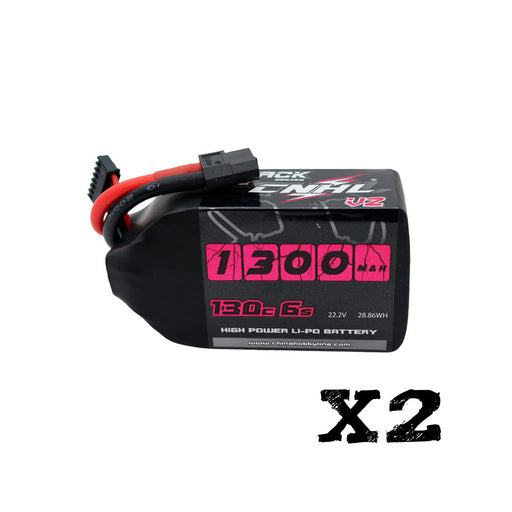
Quick Fit Check The 2 Packs CNHL Black Series V2.0 1300mAh 22.2V 6S 130C LiPo Battery with XT60 Plug is a strong fit for FPV pilots who want a prov...
View full detailsSpare Parts & Long-Term Support We know that for RC pilots, reliable spare parts support is an important part of keeping an aircraft fl...
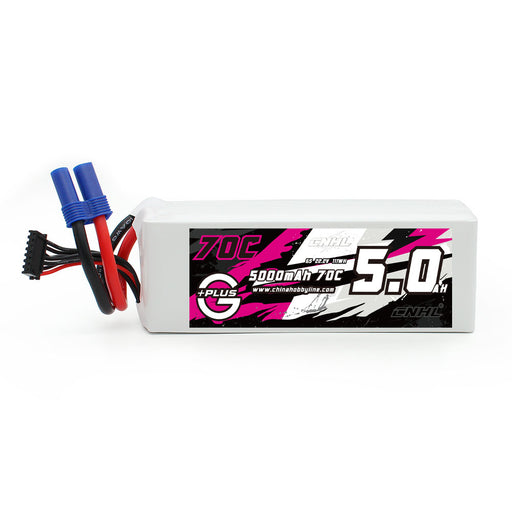
View full detailsSpecifications: Stock Number: 500706EC5 Capacity: 5000mAh Voltage: 22.2V / 6-Cell / 6S1P Discharge Rate: 70C Continual / 140C Burst Charge Rate: ...
View full details
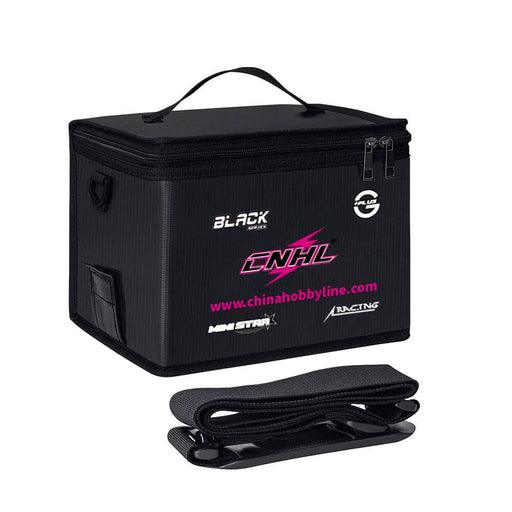
The CNHL LiPo Battery Bag is designed for safer LiPo charging, transport, and storage at home or at the field. It adds a practical layer of protect...
View full details

Quick Fit Check The 2 Packs CNHL Speedy Pizza Series Pro 1350mAh 6S 150C LiPo Battery with XT60 Plug is built for 5-inch FPV pilots who want a ...
View full details

Quick Fit Check The CNHL Speedy Pizza Series 2200mAh 22.2V 6S 120C LiPo Battery with XT60 Plug combines the familiar 2200mAh 6S format with a ligh...
View full details

Quick Fit Check The CNHL Speedy Pizza Series 2200mAh 14.8V 4S 120C LiPo Battery with XT60 Plug combines a widely used 2200mAh 4S format with a sli...
View full details

Quick Fit Check The CNHL Speedy Pizza Series 2200mAh 11.1V 3S 120C LiPo Battery with XT60 Plug takes the familiar 3S 2200mAh aircraft battery form...
View full details

The CNHL Long Range Series BAK 50D 5000mAh 21700 Li-ion battery cell is designed for custom high-energy battery packs that need a strong balance be...
View full details

The ISDT C4 EVO is a versatile smart battery charger built for AA, AAA and cylindrical rechargeable cells from compact 10440 batteries all the way ...
View full details


Leave a comment