
CNHL Lipo Batteries
CNHL aim at providing high-quality Li-Po batteries and RC products to all hobby enthusiasts with excellent customer services and competitive prices

The Losi 22S Dirt Late Model is one of the most convincing ready-to-run introductions to 1/10 scale RC dirt oval racing. Its appeal goes beyond the detailed body. Underneath is a longer oval-specific chassis, adjustable battery tray, sealed gear differential, metal transmission, and a manageable 2S brushless system that gives new racers a useful starting point without removing the tuning options experienced drivers expect.
It is closely related to the Losi 22S Sprint, but it is not simply the same car with a different shell. The Dirt Late Model uses a longer chassis plate, longer wheelbase, larger front bumper, and a battery arrangement suited to the proportions of the closed-wheel body.
Early track running also reveals a realistic picture of the stock setup. It turns into corners confidently and follows a clean racing line well, but the rear can become loose when the throttle is applied aggressively on corner exit. Steering-rate changes, battery placement, tire preparation, and small suspension adjustments can make a noticeable difference.
Quick answer: The Losi 22S Dirt Late Model is best for scale-focused oval racers, existing 22S Sprint owners, and clubs interested in a manageable RTR spec class. It is not the best choice for grass, jumps, rough-road bashing, or buyers who have no suitable oval-style driving area.
| Best For | Dirt oval beginners, club racers, 22S Sprint owners, and scale-focused RC collectors |
| Strongest Feature | Scale accuracy combined with an adjustable 2WD racing platform |
| Main Limitation | Its full value depends on access to an oval track or a local group of racers |
| Stock Handling | Confident turn-in, predictable on the racing line, and potentially loose under power on corner exit |
| Stock Speed | 25+ mph on 2S; one GPS test recorded exactly 25 mph |
| Battery | 7.4V 2S hard case LiPo with IC5 or a physically compatible EC5 plug |
| Overall Assessment | A strong RTR oval platform that becomes much more rewarding with basic setup work and multiple cars on track |
The Losi 22S Dirt Late Model is a 1/10 scale, rear-wheel-drive RC oval racer inspired by the closed-wheel dirt late models used throughout American short-track racing.
Unlike a winged Sprint Car, a Dirt Late Model covers the wheels with a wide body. This allows closer side-by-side racing because light body contact is less likely to hook two exposed tires together. The lower body and absence of a large top wing also create a different visual and driving experience from the Losi 22S Sprint.
The unusual body shape is intentional. Full-size Dirt Late Models often use skewed, offset, and twisted bodywork because the car spends most of its racing life turning counterclockwise. The wide side panels, low nose, rear spoiler, and asymmetrical profile help the vehicle remain stable and generate useful aerodynamic loading through the corner.
| Scale | 1/10 |
| Vehicle Type | 2WD Dirt Oval Late Model |
| Chassis | 2.5mm 6061-T6 aluminum |
| ESC | Spektrum Firma 45A Brushless Smart Lite |
| Motor | Spektrum Firma 3650 3300Kv sensorless brushless motor |
| Receiver | Spektrum SR215 DSMR with transponder port |
| Servo | Spektrum S684 waterproof metal-gear servo |
| Battery | 7.4V 2S LiPo with IC5 connector |
| Differential | Sealed gear differential with 3000cSt fluid |
| Final Drive Ratio | 10.21:1 |
| Length | 24.25 in / 616 mm |
| Width | 11.8 in / 300 mm |
| Weight | Approximately 5.49 lb / 2.5 kg without battery |
| Top Speed | 25+ mph |
The body is one of the clearest differences between this car and a conventional buggy conversion. Losi has reproduced the unusual late model shape rather than hiding an existing chassis beneath a generic wedge shell.

The body includes:
The panel supports are particularly useful. The body is wide and extends far beyond the central chassis, so unsupported Lexan could flutter or fold under airflow and contact. Internal bracing helps the shell retain its shape without making it unnecessarily heavy.
The outer-side wheel covers contribute to the late model appearance, but their practical purpose is also important. Dirt and clay can pack into open wheels during a race, increasing rotating weight and creating imbalance. The covers help reduce that buildup.
This matters because an oval car repeats the same directional load lap after lap. A wheel that becomes progressively heavier or unbalanced can affect consistency, steering feel, and acceleration.
The molded air cleaner is not only a scale detail. It hides the release for the complete body-and-cage assembly.

Press the button behind the air cleaner, lift the front, and slide the body forward. The entire assembly comes off without exposed posts or traditional body clips.
This design improves:
The rear of the body must engage correctly when it is reinstalled, so the system may feel slightly awkward the first few times. Once the movement becomes familiar, it is much quicker than removing a detailed cage separately.
No. The two cars are closely related, but the Dirt Late Model uses meaningful structural changes.

| Area | 22S Dirt Late Model | 22S Sprint |
|---|---|---|
| Body | Closed-wheel late model | Open-wheel Sprint Car with large wing |
| Chassis Length | Longer aluminum chassis and wheelbase | Shorter Sprint-specific layout |
| Front Protection | Large foam-supported bumper | Open-wheel front layout |
| Battery Area | Large adjustable tray with movable stops | Shorter Sprint-oriented arrangement |
| Driving Character | Closed-wheel side-by-side racing | Open-wheel racing with greater contact sensitivity |
| Shared Value | Common 22S architecture, similar electronics, TLR-inspired geometry, setup knowledge, and many option parts | |
Existing 22S Sprint owners are likely to understand the Dirt Late Model quickly because many adjustment points and platform concepts are familiar. At the same time, the longer chassis and closed-wheel body create enough difference to make it more than a duplicate purchase.
The 2.5mm 6061-T6 aluminum chassis provides a flat, low platform. Countersunk hardware keeps the underside smooth, while the long battery area gives the driver room to adjust pack position.

The suspension uses aluminum-bodied shocks, adjustable steel turnbuckles, multiple shock-mounting positions, and 22S suspension components derived from TLR racing geometry. The factory setup is relatively soft and intended to work across common dirt oval conditions rather than one specific prepared surface.
The transmission uses metal gears, an adjustable dual slipper clutch, and a sealed gear differential filled with 3000cSt fluid. This is an important distinction from a fixed solid rear axle. The gear differential allows racers to tune the car for different grip levels by changing fluid rather than committing the chassis to one locked behavior.
Some experienced oval racers may prefer a more locked rear feel, but the stock differential offers a flexible starting point for an RTR intended to operate on dirt, clay, carpet, and other surfaces.
Three early types of running provide a useful picture of the car:

The car turns into the corner willingly. On a defined racing line, it is easy to predict where the nose will go, and the driver does not need excessive steering input to make the vehicle rotate.
This positive turn-in is useful for beginners because the car does not feel reluctant or heavily understeered. It can, however, become nervous when steering rate is set too high.
When the car remains on a clean, higher-grip line, it feels smooth and repeatable. A driver who carries consistent speed and avoids sudden corrections can link together stable laps.
This is where oval racing becomes more demanding than it first appears. The goal is not simply to turn left. It is to repeat the same entry point, arc, throttle application, and exit lap after lap while managing traffic.
The stock car can become loose when power is applied abruptly. This was most noticeable on unprepared dirt, dusty sections, and lower-grip inside lines.
Possible contributors include:
The important point is that the car responded well to adjustment. In one track session, relatively small spring-preload changes were enough to improve corner-exit stability and make the vehicle easier to drive.
On dusty pavement and loose dirt, the car remained controllable when the driver reduced throttle slightly through the turn. It could also be made to slide for fun, but deliberate drifting is not the fastest way around an oval.
On a dry dirt track, the higher outside line provided noticeably more traction than the loose inside. The car could remain near full throttle for extended sections when it stayed in the available grip.
The stock system combines a Firma 45A Smart Lite ESC with a 3650 3300Kv sensorless motor. Losi rates the vehicle at more than 25 mph, and a GPS run on a 2S 5000mAh battery recorded exactly 25 mph.
That speed is appropriate for the intended use. Oval racing rewards consistent laps more than isolated top-speed numbers. A car that enters the corner too quickly, spins on exit, or moves off the racing line will lose more time than it gains on the straight.
The stock system also leaves the vehicle approachable for an RTR class. Increasing power without improving grip and setup could make the car more difficult to race rather than more competitive.
The sensorless system can cog slightly at very low speed. A sensored system would provide smoother low-speed throttle response and may help experienced racers apply power more precisely.
That does not mean the stock electronics belong in the trash. The original system reaches the claimed speed, runs smoothly once the vehicle is moving, and is suitable for general oval driving or a stock class.
Until comparable lap-time testing is available, it is more accurate to describe a sensored system as a refinement for throttle feel rather than a guaranteed performance requirement.
During running in approximately 38°C / 100°F conditions, the ESC did not appear heavily stressed, while the motor became noticeably warm after repeated high-throttle laps.
The temperature observations were made by touch rather than with a temperature gun, so they should not be treated as precise thermal measurements. Drivers in hot climates should monitor actual motor temperature before deciding whether additional cooling is necessary.
Too much steering travel can make the car react sharply and break rear traction. Reduce steering rate until the vehicle follows the desired arc without requiring constant correction.
If a different compatible Spektrum transmitter is used, recalibrate neutral, full throttle, and full brake or reverse. Correct endpoints help make throttle response more consistent.
The large tray allows the battery to move forward or rearward.
Moving the battery forward can increase front support and may make corner entry feel more secure. Moving it rearward increases rear weight and may improve traction, although excessive rearward bias can make the car slower to rotate.
Small preload adjustments can change how the chassis transfers weight through a constant-direction corner. Make one change at a time and record the result rather than adjusting several corners without a clear baseline.
The Hoosier Soft tires may need some running time before reaching their best grip. Clean them lightly according to local track practice and avoid soaking the wheels. Water trapped inside can damage foam inserts and create imbalance.
| Battery | Best For | Why Choose It |
|---|---|---|
| CNHL Racing 4900mAh 2S 120C EC5 | Best overall | Closest to the repeatedly tested 5000mAh setup and the strongest balance of runtime and response |
| CNHL Racing 5600mAh 2S 120C EC5 | Longer practice sessions | Adds useful capacity without moving directly to the largest featured battery |
| CNHL Racing 6600mAh 2S 120C EC5 | Extended open practice | Longest runtime where local class rules do not restrict battery capacity |
For verified-fit EC5 options, visit the Losi 22S Dirt Late Model battery collection.
The 4900mAh battery remains close to the 5000mAh size used in track testing while avoiding the additional installed mass of larger endurance packs. It is the strongest general recommendation for drivers who want both useful runtime and responsive chassis behavior.
The 5600mAh option is useful for longer setup sessions. It gives the driver more time to test steering rate, battery position, tire preparation, or suspension changes without stopping as frequently.
The 6600mAh battery is aimed at open practice and recreational running where maximum runtime matters more than maintaining the lightest race setup. The additional weight may alter corner response and weight transfer, so it should be treated as part of the chassis setup.
The stock Firma ESC uses IC5, while the recommended CNHL batteries use EC5. EC5 and IC5 are physically compatible, so no adapter is required.
The vehicle will operate normally, but an EC5 battery does not transmit Spektrum Smart battery data through the additional communication contact.
Race rule reminder: A battery can fit the vehicle but still be illegal for a particular class. Check local limits for capacity, weight, hard case format, charge voltage, and approved electronics before buying a pack specifically for organized racing.
The underlying car is the same, but the completion packages are different.
| Version | Battery | Charger | Best For |
|---|---|---|---|
| Standard RTR | Sold separately | Sold separately | Drivers who already own suitable 2S batteries and a charger |
| Summit Racing Edition | Spektrum Smart 2S 4000mAh 30C IC5 included | Spektrum S160 USB-C Smart Charger included | New owners who want a nearly complete package |
The Summit Racing package still needs a suitable USB-C power supply for the charger. An ordinary low-output phone adapter may not allow the S160 to deliver its full charging performance.
Experienced RC users may prefer the battery-sold-separately version because it lets them choose their own battery capacity and use an existing charger.
A prepared dirt or clay oval is the ideal environment, but it is not the only place where the vehicle can run.
Suitable alternatives include:
The car is not a general-purpose basher. Its low chassis, limited suspension travel, soft oval tires, and wide body make it a poor choice for:
A solo cone course can be enjoyable, but the car becomes much more compelling when several drivers use similar equipment. Traffic, passing, line choice, and lap consistency are what turn simple left-hand corners into actual racing.
The vehicle has several qualities that suit RTR spec racing:
The challenge is local adoption. Many tracks already run Sprint Car, MudBoss, NASCAR, Street Stock, or other oval categories. Adding another class only works when enough drivers commit to it.
Before buying specifically for competition, ask the nearest track:
Search interest around this comparison is understandable because both products target RC oval buyers. However, the underlying platforms may be very different.
A fair comparison should consider:
The Losi’s clearest advantages are its scale-accurate body, low aluminum chassis, adjustable battery placement, TLR-inspired geometry, and shared 22S parts base.
A Traxxas-based option may still be the better racing purchase in an area where that class is already established and local shops carry the required parts. The car supported by the local track can be more useful than the stronger paper specification.
The vehicle combines an aluminum chassis, steel turnbuckles, aluminum-bodied shocks, metal transmission gears, steel drive components, and durable composite suspension parts.
Early runs included minor tumbles and curb contact without obvious chassis damage. The cars continued to run and track correctly afterward. This is encouraging for normal race incidents, but it should not be interpreted as evidence that the vehicle is suitable for hard bashing.
Long-term parts availability remains a concern for some Losi owners. Shared 22S suspension and transmission components improve the ownership case, but frequent racers may still want to monitor availability of model-specific parts such as:
Yes. The vehicle is fully assembled and includes a transmitter and receiver. Standard RTR versions still require a 2S LiPo battery and charger. The Summit Racing package includes both, but its S160 charger needs a suitable USB-C power supply.
No. “22S” is the Losi model-series name. The vehicle runs on a standard 2S LiPo battery.
Losi rates the vehicle at more than 25 mph. A GPS test on 2S recorded exactly 25 mph.
Yes. Multiple early runs used 5000mAh-class 2S batteries successfully. The adjustable tray also allows the battery to move forward or rearward.
Yes. EC5 and IC5 are physically compatible. An EC5 battery will power the car normally but will not provide Spektrum Smart battery-data communication.
Yes, provided the pavement is smooth and an oval layout is available. Soft dirt-oriented tires may wear faster on abrasive asphalt or concrete.
Possible causes include loose dirt, new tires, aggressive throttle application, excessive steering rate, battery placement, spring preload, and differential setup. Start with transmitter and basic chassis adjustments before replacing electronics.
No. The stock sensorless system reaches the claimed speed and works normally once the car is moving. A sensored setup may provide smoother low-speed throttle response for advanced racers.
Neither is universally better. The Dirt Late Model provides a closed-wheel body and longer chassis, while the Sprint delivers the open-wheel and winged Sprint Car experience. Local class support may decide which is the better purchase.
The Losi 22S Dirt Late Model succeeds because it is more than a detailed shell. The longer chassis, adjustable battery tray, TLR-inspired suspension, tunable differential, metal transmission, clipless body system, and correctly proportioned body make it feel like a purpose-developed oval vehicle.
Its stock setup is approachable without being completely passive. The car rewards steering-rate changes, battery-position testing, tire preparation, and small suspension adjustments. That makes it accessible to a new oval driver while leaving enough tuning depth for club racing.
The most important question is not whether it can reach 25 mph or accept a larger battery. It is whether the owner has a suitable place and people to race with. As a single vehicle, it is an attractive specialty RC car. In a field of similar late models, it becomes the close and strategic racing platform it was designed to be.
For compatible replacement and practice batteries, explore the CNHL Losi 22S Dirt Late Model battery collection.
CNHL aim at providing high-quality Li-Po batteries and RC products to all hobby enthusiasts with excellent customer services and competitive prices

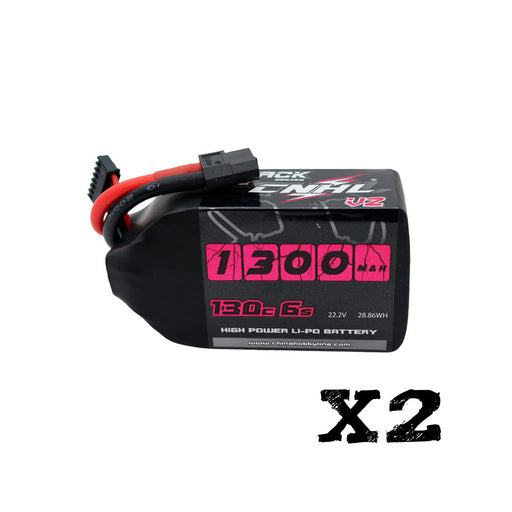
Quick Fit Check The 2 Packs CNHL Black Series V2.0 1300mAh 22.2V 6S 130C LiPo Battery with XT60 Plug is a strong fit for FPV pilots who want a prov...
View full detailsSpare Parts & Long-Term Support We know that for RC pilots, reliable spare parts support is an important part of keeping an aircraft fl...
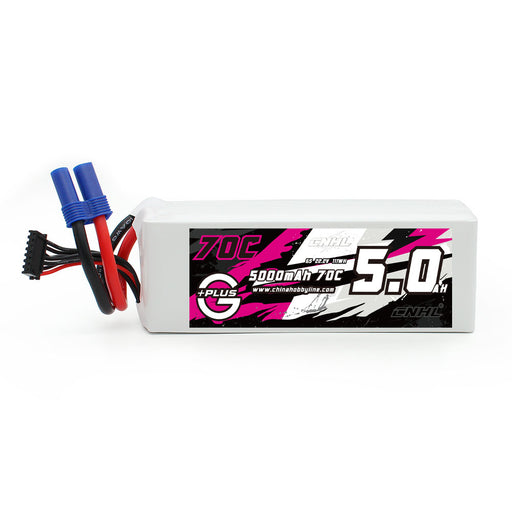
View full detailsSpecifications: Stock Number: 500706EC5 Capacity: 5000mAh Voltage: 22.2V / 6-Cell / 6S1P Discharge Rate: 70C Continual / 140C Burst Charge Rate: ...
View full details
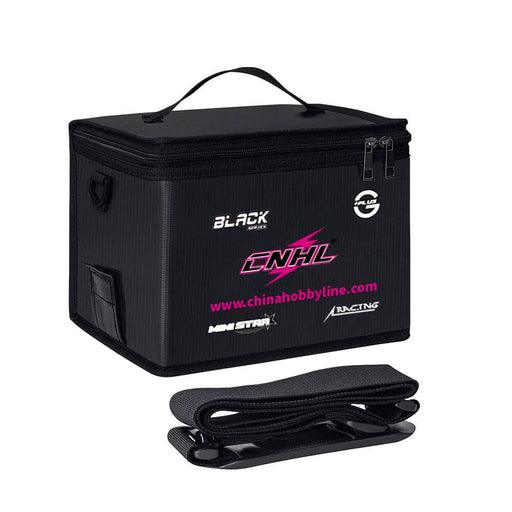
The CNHL LiPo Battery Bag is designed for safer LiPo charging, transport, and storage at home or at the field. It adds a practical layer of protect...
View full details

Quick Fit Check The 2 Packs CNHL Speedy Pizza Series Pro 1350mAh 6S 150C LiPo Battery with XT60 Plug is built for 5-inch FPV pilots who want a ...
View full details

Quick Fit Check The CNHL Speedy Pizza Series 2200mAh 22.2V 6S 120C LiPo Battery with XT60 Plug combines the familiar 2200mAh 6S format with a ligh...
View full details

Quick Fit Check The CNHL Speedy Pizza Series 2200mAh 14.8V 4S 120C LiPo Battery with XT60 Plug combines a widely used 2200mAh 4S format with a sli...
View full details

Quick Fit Check The CNHL Speedy Pizza Series 2200mAh 11.1V 3S 120C LiPo Battery with XT60 Plug takes the familiar 3S 2200mAh aircraft battery form...
View full detailsThe CNHL Long Range Series BAK 65E 6350mAh 21700 Li-ion battery cell is built around one clear priority: maximum stored energy from a lightweight c...
View full details

The CNHL Long Range Series BAK 50D 5000mAh 21700 Li-ion battery cell is designed for custom high-energy battery packs that need a strong balance be...
View full details




Leave a comment