
CNHL Lipo akut
CNHL pyrkii tarjoamaan korkealaatuisia Li-Po-akkuja ja RC-tuotteita kaikille harrastajille erinomaisella asiakaspalvelulla ja kilpailukykyisillä hinnoilla
An AC LiPo charger connects directly to household power, while a DC charger requires an external DC power source such as a dedicated power supply, field battery or compatible power station. AC chargers prioritize simplicity. DC chargers prioritize compact size, flexible power and system expansion. AC/DC chargers provide both input options but may deliver different maximum output depending on which source is used.
Quick answer: Choose an AC charger when you want the simplest plug-in charging setup at home. Choose a DC charger when you need higher output, compact size or flexible field charging and are comfortable selecting an external power supply. Choose an AC/DC charger when you want wall-power convenience for everyday use and a higher-power DC option for large batteries or multiple channels.
The input type does not determine battery compatibility by itself. An AC, DC or AC/DC charger must still support the correct battery chemistry, S count, charging current, output wattage, balance connection and main battery connector.

| Comparison | AC Charger | DC Charger | AC/DC Charger |
|---|---|---|---|
| Power Source | Household AC outlet | External DC source | Either AC or compatible DC input |
| Setup | Simple plug-in operation | Requires charger and power supply matching | Simple on AC, expandable on DC |
| Size | Usually larger because the power supply is built in | Charger itself can be smaller | Usually larger than a comparable DC-only charger |
| Maximum Power | Limited by the internal AC supply | Depends on charger and external source | Often lower on AC and higher on DC |
| Portability | Convenient where wall power is available | Flexible for field batteries and portable supplies | Works in both home and field environments |
| System Cost | One main device | Charger plus external power source | Higher initial flexibility, with optional DC supply |
| Best For | Simple home charging | High-power or compact modular setups | Users who need both convenience and expansion |
An AC LiPo charger contains an internal power supply that converts household alternating current into the lower-voltage DC power required by the charging electronics. The user normally connects the charger directly to a wall outlet and then connects the battery through the appropriate charge lead and balance port.
An AC charger is effectively two devices in one enclosure:
AC charging is especially suitable for users charging small and medium batteries, one or two packs at a time, without needing a separate high-power charging bench.
A DC LiPo charger does not contain a household AC power supply. It accepts direct-current input from an external source and converts that power into the controlled voltage and current required by the battery.
Possible DC sources include:
The ToolkitRC M6D dual-channel DC charger is an example of a compact charger format designed to operate from a compatible external DC source.
An AC/DC charger includes both a built-in AC power supply and a separate DC input path. It can connect directly to wall power for convenience or use an external DC source when more output or field flexibility is required.
This format is attractive because it avoids forcing the user to choose only one charging environment.
The ToolkitRC M6DAC V2 represents this dual-input format. The ToolkitRC M6DAC Pro is another AC/DC dual-channel option for users who want wall-power convenience and a separate DC performance path.
The charging electronics and built-in AC supply may have different power limits. The charger might be capable of substantial output when connected to an external DC source, while its internal AC supply provides a lower amount of power.
This occurs because the built-in AC section must fit inside the charger and operate within:
For example, an AC/DC charger may provide enough AC power for one or two moderate batteries but require an external DC source to reach its maximum advertised output.
Before buying, identify three separate figures:
Do not assume that the largest number on the product page applies when the charger is connected to a wall outlet.
The required charger power depends on battery full-charge voltage and intended charging current:
Approximate battery-side charging power = full-charge voltage × charging current
| Battery | Approx. 1C Current | Ideal Battery-Side Power | Likely Input Choice |
|---|---|---|---|
| 3S 2200mAh | 2.2A | About 28W | AC is usually sufficient |
| 2S 5000mAh | 5A | About 42W | AC is usually sufficient |
| 4S 5000mAh | 5A | About 84W | AC or DC, depending on channels |
| 6S 5000mAh | 5A | About 126W | Higher-power AC or DC |
| Two 6S 5000mAh packs | 5A per pack | About 252W total | Powerful AC/DC or DC system |
| 6S 7000mAh | 7A | About 176W | DC may provide more headroom |
AC charging is not automatically low power, and DC charging is not automatically high power. The actual decision depends on the charger specifications and complete load.
For the full calculation, read How Many Watts Does My LiPo Charger Need?
An AC charger is usually the better choice when:
An AC charger can also handle large batteries when its internal supply is appropriately rated. The key is comparing required watts with the actual AC output specification.
A DC charger is usually the better choice when:
DC becomes particularly attractive when the internal AC power available from an all-in-one charger would limit simultaneous channel output.
An AC/DC charger is usually the best compromise when:
The main trade-off is that an AC/DC charger may be larger and more expensive than a comparable DC-only model. Its highest output may also require an additional DC power supply, meaning the built-in AC section does not eliminate every future equipment purchase.
A DC power supply must match the charger in three areas:
Power-supply watts = output voltage × maximum output current
The supply must operate within the charger’s permitted input-voltage range. More wattage is not useful if the voltage is outside the charger’s limits.
Two 4S 5000mAh batteries at approximately 1C require about 168W of ideal battery-side output. A power supply should provide additional margin for charger losses, cooling and normal operation.
Two 6S 5000mAh batteries at approximately 1C require about 252W at the battery. A 300W or greater compatible input system is a more practical starting point than a supply rated exactly at 252W.
Also check:
The ToolkitRC ADP200 200W power supply is designed for moderate DC charging systems where portability and a compact setup matter.
It may suit:
It should not be selected for a charging load that approaches or exceeds its total available power after charger losses are considered.
The ToolkitRC ADP750 750W power supply is more suitable for a permanent charging bench or several compatible devices drawing power at once.
It may suit:
The charger must still accept the supply voltage. A high total wattage does not guarantee that every charger can access the full amount.
Many DC chargers can operate from a suitable field battery when the source voltage falls within the charger’s input range. This is common at flying fields and race locations without convenient AC power.
A field battery must have:
The source battery loses energy while charging the destination packs. The system therefore needs a plan for:
Do not drain the source battery below its appropriate limit. Configure the charger’s input protection where supported.
A compatible DC charger may be able to use a vehicle electrical source, but the setup requires careful attention to charger input voltage, vehicle operating state, current draw, cabling and low-voltage protection.
High charging power at low input voltage can require substantial current. For example:
500W ÷ 12V ≈ 42A before conversion losses
This is far beyond what should be drawn through a light-duty accessory socket. High-current installations require correctly rated wiring, connectors and protection.
Do not assume that every vehicle outlet or portable connector can provide the charger’s requested input power.
A charger may require a higher input voltage to reach its maximum output. Even when a power supply has a high total wattage rating, the charger can remain limited by:
For the same power:
Higher voltage reduces input current, but the charger must explicitly support that voltage. Never exceed the charger’s stated input range.
AC input is often sufficient for one small or medium battery. DC becomes more valuable when the battery is large, the target charging rate is high or portability is important.
The combined power requirement can expose the limit of an internal AC supply. Two 6S 5000mAh packs at 1C need about 252W of ideal battery-side output. A charger may need external DC input to maintain full current on both channels.
A quad-channel charger must distribute total available power across four tasks. AC can remain convenient for small packs, but several large batteries may require a stronger DC input source.
The ToolkitRC Q6AC quad-channel charger represents a multi-channel AC/DC format for users managing several independent battery tasks.
| Battery Setup | Recommended Starting Point | Reason |
|---|---|---|
| 3S 1300–2200mAh | AC charger | Low to moderate power requirement |
| 2S 5000–8000mAh | AC or AC/DC | Voltage is low, but high capacity may need substantial current |
| 4S 5000mAh | AC/DC | AC can handle one pack; DC adds multi-pack headroom |
| 6S 1300mAh FPV | AC or compact DC | Higher voltage but modest capacity |
| 6S 5000mAh | High-power AC/DC or DC | Approximately 126W at 1C before losses |
| Two large 6S batteries | DC or powerful AC/DC system | Combined output and input power become critical |
| Mixed home and field use | AC/DC charger | One device works with both input environments |
An AC charger may appear more expensive than a DC charger because it includes the power supply. A DC charger may appear less expensive until the external supply, cables and connectors are added.
Compare the complete system:
A modular DC system can cost more initially but may offer better long-term expansion. An AC charger can remain the better value when its built-in output already covers the battery fleet.
An AC charger integrates the power supply and charging electronics. This is convenient but means both functions are tied to one enclosure.
A modular DC setup separates:
This can make upgrades more flexible:
- replace the charger while keeping the power supply - add a second charger to the same supply - upgrade the supply without replacing the charger - use the charger with different compatible field sourcesThe modular approach also creates more connection points and configuration responsibilities. The better system depends on whether the user values simplicity or expansion.
| Charging Need | Recommended Format | CNHL Example |
|---|---|---|
| Compact modular dual-channel charging | DC charger | ToolkitRC M6D |
| Home convenience plus DC expansion | Dual-channel AC/DC charger | ToolkitRC M6DAC V2 |
| Dual-channel AC/DC alternative | AC/DC charger | ToolkitRC M6DAC Pro |
| Four independent charging tasks | Quad-channel AC/DC charger | ToolkitRC Q6AC |
| Compact external DC source | Moderate-power supply | ToolkitRC ADP200 |
| High-output charging bench | Multi-port DC power supply | ToolkitRC ADP750 |
These examples represent charging formats rather than automatic matches for every battery. Confirm the current product specifications, input requirements and power available per channel before selecting a system.
Browse the CNHL LiPo battery charger collection for AC/DC chargers, compact DC chargers and multi-channel charging systems.
For ToolkitRC chargers, power supplies and related equipment, visit the ToolkitRC collection.
Before ordering, confirm:
An AC charger contains a built-in power supply and connects directly to household electricity. A DC charger requires an external direct-current source.
It is usually easier because no separate power supply needs to be selected. Battery chemistry, S count, current and connectors still require correct setup.
Not automatically, but DC-only chargers often offer high output relative to their size. Actual performance depends on both the charger and external source.
The built-in AC supply may have a lower power limit than the charger electronics can accept through the separate DC input.
Not for normal AC operation. A separate DC power supply may be needed to reach higher output or charge where wall power is unavailable.
No. A DC-only charger requires a compatible AC-to-DC power supply between the wall outlet and charger.
No. The supply voltage must fall within the charger’s input range, and it must provide enough current, wattage and a compatible connection.
It may operate the charger when voltage and connectors are compatible, but output remains limited by the approximately 200W input source and charger losses.
Yes, when the voltage and connector are compatible. The charger draws only the power required within its own limits.
Yes, when the charger provides enough AC output. At approximately 1C, a 6S 5000mAh pack needs about 126W at the battery, plus system headroom.
Not necessarily, but two 6S 5000mAh batteries at 1C require about 252W of ideal battery-side output. Many chargers need a suitable external DC source to maintain that load.
Yes, when the source battery voltage, capacity, discharge capability and connector suit the charger. Input low-voltage protection should be configured appropriately.
Do not assume so. Accessory sockets normally have limited current capacity and may be unsuitable for high charging power.
A DC charger body is often smaller, but the complete system also includes its source. An AC charger is simpler when wall power is available, while DC can be more flexible in the field.
Choose AC for simple home charging, DC for modular high-output or field use, and AC/DC when you need both convenience and expansion.
Buy an AC charger when its built-in power already covers your battery fleet and simplicity is the priority. Buy a DC charger when compact size, field operation, modular upgrades or higher output matter more than having one self-contained device.
For many RC users, an AC/DC charger is the most flexible long-term choice. It can operate directly from household power for routine charging and use an external supply when large batteries, multiple channels or higher charging rates create greater power demand.
Before deciding, calculate the watts required by your largest battery and the number of packs you intend to charge simultaneously. Then compare the charger’s AC output, DC output, per-channel power and external power-supply requirements.
For the complete charger-selection framework, read How to Choose the Right LiPo Battery Charger for Your RC Batteries. For the wider topic cluster, visit the CNHL LiPo Battery Charging Guide.
CNHL pyrkii tarjoamaan korkealaatuisia Li-Po-akkuja ja RC-tuotteita kaikille harrastajille erinomaisella asiakaspalvelulla ja kilpailukykyisillä hinnoilla

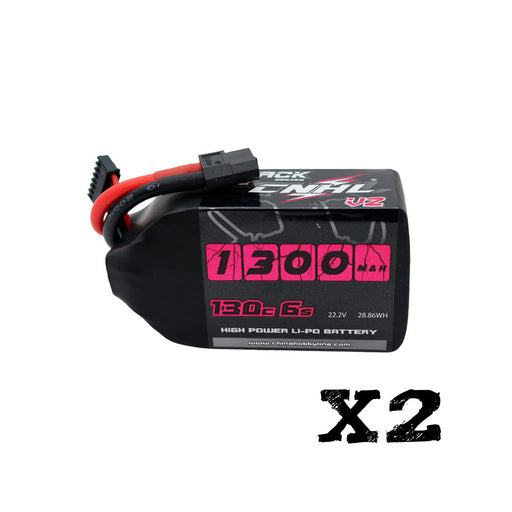
Nopea sovitustarkistus 2 Packs CNHL Black Series V2.0 1300mAh 22.2V 6S 130C LiPo-akku XT60-liittimellä sopii erinomaisesti FPV-lentäjille, jotka ha...
Näytä täydet tiedotVaraosat ja pitkäaikainen tuki Tiedämme, että RC-piloteille luotettava varaosatuki on tärkeä osa sitä, että lentokone pysyy lentokunnossa vuo...
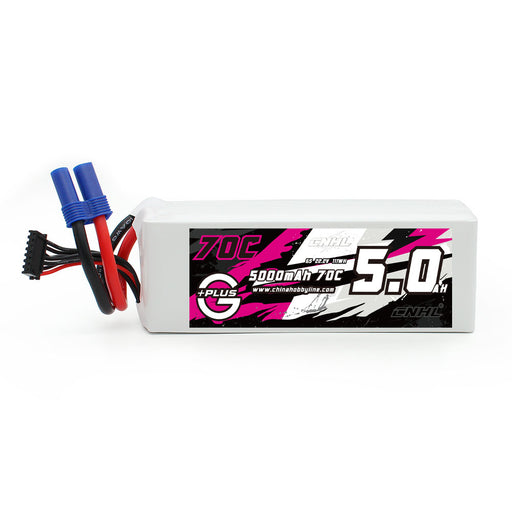
Näytä täydet tiedotTekniset tiedot: Varastonumero: 500706EC5 Kapasiteetti: 5000mAh Jännite: 22,2V / 6-kennoa / 6S1P Purkunopeus: 70C jatkuva / 140C hetkellinen Lata...
Näytä täydet tiedot
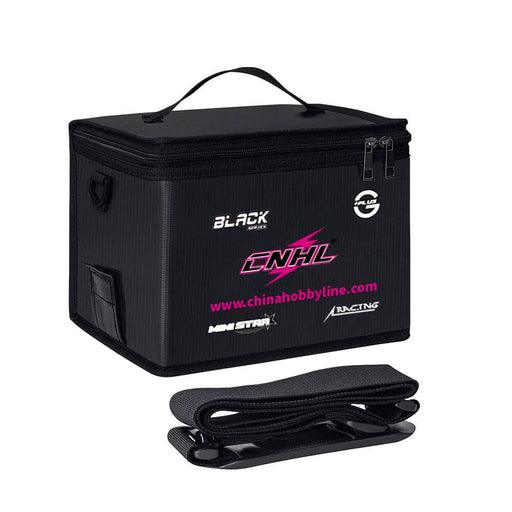
CNHL LiPo Battery Bag on suunniteltu turvallisempaan LiPo-lataukseen, kuljetukseen ja säilytykseen kotona tai kentällä. Se lisää käytännöllisen suo...
Näytä täydet tiedot

Nopea sovitustarkistus 2 paketin CNHL Speedy Pizza Series Pro 1350mAh 6S 150C LiPo -akku XT60-liittimellä on suunniteltu 5-tuuman FPV-piloteill...
Näytä täydet tiedot

Quick Fit Check The CNHL Speedy Pizza Series 2200mAh 22.2V 6S 120C LiPo Battery with XT60 Plug combines the familiar 2200mAh 6S format with a ligh...
Näytä täydet tiedot

Quick Fit Check The CNHL Speedy Pizza Series 2200mAh 14.8V 4S 120C LiPo Battery with XT60 Plug combines a widely used 2200mAh 4S format with a sli...
Näytä täydet tiedot

Quick Fit Check The CNHL Speedy Pizza Series 2200mAh 11.1V 3S 120C LiPo Battery with XT60 Plug takes the familiar 3S 2200mAh aircraft battery form...
Näytä täydet tiedot

The CNHL Long Range Series BAK 50D 5000mAh 21700 Li-ion battery cell is designed for custom high-energy battery packs that need a strong balance be...
Näytä täydet tiedot

The ISDT C4 EVO is a versatile smart battery charger built for AA, AAA and cylindrical rechargeable cells from compact 10440 batteries all the way ...
Näytä täydet tiedot


Jätä kommentti