

CNHL Lipo akut
CNHL pyrkii tarjoamaan korkealaatuisia Li-Po-akkuja ja RC-tuotteita kaikille harrastajille erinomaisella asiakaspalvelulla ja kilpailukykyisillä hinnoilla
The E-flite P-51D Mustang “Big Beautiful Doll” 1.5m is a remarkably complete 6S scale warbird, but its appeal goes well beyond the new paintwork. The updated release combines the familiar three-piece 1500mm airframe, functional retracts and landing flaps with softer main tires that address one of the old model’s most noticeable ground-handling weaknesses. Its brushless power system can deliver fast, authoritative flying; its takeoff and landing behavior still asks for a pilot who understands taildraggers.
This is the distinction that matters before buying one. The Mustang can look planted and effortless in a clean high-speed pass, then become demanding during a crosswind takeoff, accelerated turn or poorly managed final approach. It rewards technique rather than making technique unnecessary. Below, we examine what really changed, how the airplane behaves, what the PNP and BNF Basic versions involve, and the practical setup decisions that help this iconic fighter look as good in the air as it does on the ground.
Already preparing your 6S setup? See the CNHL 6S battery collection for the Eflite P-51D Mustang 1.5m. The detailed flight and setup discussion comes first; battery fitment is covered later in this guide.

Mustangs are everywhere in RC aviation, and for good reason: the long nose, tapered wing outline, belly radiator scoop and characteristic taildragger stance make the P-51 instantly recognizable. The problem is that a handsome scale model is not automatically a satisfying airplane to fly. Its proportions, weight, wheel placement and landing behavior have to work together.
At 1.5 meters, this airplane occupies an attractive middle ground. It is substantially more imposing than a small park warbird, with enough physical presence for readable details in the air. Yet it avoids some of the transport and storage complications of substantially larger models. Its center wing panel houses the main landing gear, while the outer panels can be removed without dealing with conventional wing bolts at the flying field.
The “Big Beautiful Doll” finish is modeled on the P-51D associated with wartime ace Colonel John Landers. Polished-looking silver surfaces, a bold black-and-white checkerboard nose and the distinctive markings give it an unmistakable air-show personality. Against varied sky backgrounds, the dark checkerboard and high-contrast markings also help the airplane retain visual character during a pass, although silver aircraft can still become difficult to read under some lighting conditions.
The smart way to understand this release is as a refinement of an established platform, not a new aircraft disguised as an old favorite. That is largely a strength. The essential airframe geometry, power system and extensive scale detailing remain familiar, while the most visible changes target appearance and usability.
| Area | Big Beautiful Doll update | Why it matters |
| Finish | Silver Big Beautiful Doll scheme with prominent checkerboard markings | A notably different scale appearance |
| Main tires | Softer diamond-tread tires | More forgiving contact with firm runways |
| BNF stabilization | Enhanced AS3X+ in the supplied receiver | Updated stabilization behavior and tuning access |
| BNF setup | Smart Transmitter File; optional SAFE Select | Convenient setup for compatible Spektrum pilots |
| Core design | Established 1.5m airframe, retracts and 6S power layout | Familiar strengths and handling demands remain |
The tires deserve more attention than their modest description suggests. Hard wheels can transmit a sharp landing impact back into the landing-gear system, especially when the touchdown is a little firm or slightly misaligned. Softer tires provide some compliance and can reduce the tendency for an imperfect touchdown to turn into a pronounced bounce on pavement. They do not give the airplane the ability to survive a high-energy stall onto its gear.
There is also an important completion-level distinction: AS3X+, SAFE Select and Smart Transmitter File are BNF Basic receiver features, not equipment included with the PNP version. The PNP airplane has the same essential airframe and motor/ESC package, but its receiver and associated flight-assistance setup are chosen by the owner.

A large share of this Mustang's charm comes from the functional scale features. The aircraft has retractable main gear with shock-absorbing struts, a retractable tailwheel, sequenced main and tailwheel doors, operational flaps and LED navigation lighting. Molded panel lines, guns, exhaust details, painted surfaces and removable drop tanks complete the silhouette.
The gear sequence is more than a visual trick. The inner doors open and close in an organized order rather than remaining exposed throughout the flight. That makes a gear-up pass look clean and gives the aircraft a more convincing full-scale character. It also means the pilot must verify the complete cycle on the ground. A main gear leg retracting does not by itself prove every door has cleared and closed as intended.
The drop tanks are worth treating as an optional scale accessory, not something that must stay on for every flight. They look superb, but additional external stores introduce drag and can change the feel of the airplane. A clean configuration is a logical choice when learning the model's energy management, especially during the first few flights.
And the paint deserves care during transport. A finished EPO foam model can have excellent surface detail, but protruding exhaust pieces, wing tips, gear doors and painted edges still need thoughtful handling. Treating this as a detailed aircraft rather than a rough-and-tumble foam trainer will preserve its appearance.

The basic build is refreshingly straightforward for a warbird of this size. The horizontal tail mounts to the fuselage, the center wing section bolts in place, the propeller and spinner are assembled, and the outer wing panels attach using guided plug-in connections. Nine factory-installed servos and the installed brushless power system keep the amount of bench work manageable. The main assembly needs no structural gluing; a small scale antenna/detail part may require adhesive.
That fast assembly should not be mistaken for permission to skip inspection. Check linkage security, ball-link engagement, propeller hardware, wheel clearance, retract operation and control-surface directions. In particular, verify that the propeller is properly assembled and balanced. Any reverse-thrust function should be configured and tested with appropriate propeller and electrical safety precautions, following the ESC instructions.
The three-piece wing makes life easier when a vehicle or storage rack cannot accommodate the full span. Because the main landing gear lives in the center section, the outer panels detach without leaving the gear hanging from loose wing sections. The quick connections are convenient, but repeated removal still calls for careful technique: support the parts at the intended attachment points rather than levering against fragile foam edges.

For pilots who have enough room, transporting the aircraft with the wing assembled is another reasonable option. The design gives you a choice. Just remember the four-blade propeller and retractable tailwheel while packing the model—clearance around the nose and tail matters more than a simple wingspan measurement might suggest.
The factory power system pairs a 4258-460Kv, 14-pole brushless outrunner with a large four-blade propeller and a 100A Spektrum Avian Smart ESC. The result is the kind of authority a large Mustang ought to have: strong acceleration, energetic climbs and enough performance for scale aerobatics without needing to retrofit the nose with an entirely new power system.
The advertised potential for level-flight speeds beyond 80 mph is impressive, but speed is only part of the experience. The more compelling quality is how the airplane carries momentum through a wide turn, tracks through a high-speed pass and converts speed into a vertical maneuver. A cleanly trimmed 1.5m Mustang can feel smooth and substantial, with a presence smaller warbirds struggle to reproduce.
There is also ample power for rolls, loops, stall turns and other aerobatics. That does not make it an unlimited-angle-of-attack aerobatic model. A scale warbird's wing and loading impose real limits, particularly when the pilot combines a steep bank with a hard elevator pull. Strong power can get the model out of trouble only if the wing is still flying and the pilot has enough altitude and time to respond.
At the other end of the envelope, the full-span character of the aircraft becomes apparent when the flaps come down. Flaps increase drag and can support a slower approach, but the airplane still needs appropriate airspeed and power. The correct lesson is not to fly every maneuver fast; it is to manage the aircraft's energy deliberately rather than relying on one throttle position throughout the flight.
Takeoff is one of the first moments when this Mustang reveals that it is not a larger trainer. With a powerful propeller and its tail low, rapid throttle application can produce a pronounced yawing tendency. P-factor is part of the story, but engine torque, spiraling slipstream, the way the tail rises and the interaction of rudder authority with airspeed all contribute to what the pilot feels on the runway.
The remedy is a controlled takeoff roll, not a competition to reach full throttle in the shortest possible distance. Align the model carefully, increase power progressively, and be ready to make small, prompt rudder corrections. As the tail comes up, the airplane's directional behavior changes; do not assume the same rudder input will be correct from the first foot of the roll until liftoff.
Wind direction matters, especially on a narrow strip. A quartering crosswind can ask considerably more of the pilot than a straightforward headwind. The soft main tires improve rolling contact and landings, but they do not neutralize propeller-driven yaw. If your chosen runway gives little room to correct a developing swing, this is not the aircraft to use while first learning taildragger takeoffs.
Takeoff-flap settings should follow the manual and a properly verified transmitter setup. Avoid experimenting with extreme flap or rudder rates simply to overcome a technique problem; any setup change needs fresh ground checks and, where stabilization is installed, confirmation that it remains correctly configured.
This is the most important section of the review. The updated Mustang may feel beautifully stable once established in the air, yet the final approach exposes mistakes in energy control. Gear and flaps create drag; a steep or poorly aligned approach invites rushed corrections; and an attempt to float the airplane indefinitely while the speed decays can finish in a wing drop or a nose-over after touchdown.
A reliable landing begins before the model reaches the runway threshold. Establish a repeatable pattern, select the flap position appropriate to the conditions, lower the gear early enough to confirm its sequence, and use elevator and throttle together to control the approach path. Think of flying the Mustang onto its wheels rather than chopping the power and waiting for it to settle.
The softer main tires are a meaningful improvement, especially on hard surfaces. They can moderate the rebound that made some firm landings of the earlier 1.5m model unforgiving. A well-judged touchdown on the main wheels looks superb. But soft tires are not a substitute for the correct descent rate, airspeed or alignment. A heavy arrival can still transmit substantial energy into the retract mounts and surrounding structure.

A small, recoverable bounce and a large, destabilizing bounce are not the same event. If the airplane rebounds significantly, the safer response may be an immediate, properly controlled go-around rather than forcing it onto the pavement with more elevator. Maintain directional control, apply power with awareness of the yaw tendency and give the aircraft room to regain flying speed.
The Avian ESC can be configured for reverse-thrust operation, which can shorten a landing roll in the hands of a pilot who understands the setup. However, switching between forward and reverse thrust is not always instantaneous. Motor braking, ESC soft-start behavior and reverse response are separate details, and a delay can be especially noticeable when runway space is tight.
Reverse thrust should therefore be treated as an optional ground-handling tool, not as a rescue system for a bad approach. Verify its direction and control assignment safely on the ground, understand the delay in your configuration, and avoid relying on it to make up for a touchdown that is too fast or too far down the strip.
Short grass and smooth pavement each introduce different challenges. The larger four-blade propeller deserves particular respect around uneven turf and taller grass, where prop clearance can disappear quickly as the aircraft pitches forward. Choose a suitable, unobstructed flying field with ample runway and clear approaches.
The Eflite P-51D 1.5m can slow down in a controlled attitude surprisingly well, particularly when properly balanced and kept coordinated. That does not make every stall benign. A gentle, wings-level reduction in speed and an accelerated stall during a hard turn impose very different demands on the wing.
Pulling excessive elevator at higher load factor can produce an abrupt wing drop even though the airplane has plenty of engine power. The important habit is to avoid turning an approach correction into a high-load, low-altitude maneuver. Maintain coordinated turns, preserve a sensible speed margin and reduce the load on the wing before asking it to recover.
A heavier battery setup also changes the aircraft's mass and landing energy. A correct center of gravity remains essential, but CG alone cannot erase an unnecessarily high all-up weight or an overaggressive final turn. It is best to learn the clean and flap-down behavior at altitude before trying to reproduce a tight, dramatic approach near the ground.
The airframe, stock propulsion arrangement and 6S battery requirements are shared between the two versions. The difference that matters is how much radio setup you want to take responsibility for.
| Consideration | PNP (EFL-3360) | BNF Basic (EFL-3359) |
| Receiver | Choose and install your own | Spektrum AR637TA+ installed |
| Stabilization | Depends on your receiver and setup | Factory AS3X+, optional SAFE Select |
| Transmitter file | Configure your radio | Smart Transmitter File for supported radios |
| Published skill level | Level 4 | Level 3 |
| Battery | 6S LiPo, EC5/IC5 | 6S LiPo, EC5/IC5 |
For a pilot already committed to Spektrum AirWare, the BNF Basic version offers a streamlined route to a known receiver configuration. Smart Transmitter File can simplify initial channel and function setup on supported transmitters, though control directions, flap compensation, gear sequence and failsafe behavior still need to be checked before flying. SAFE Select may provide useful assistance, but it does not remove the need to understand taildragger landings or accelerated stalls.
The PNP is attractive if you already have a preferred radio system or want to set up the aircraft yourself. That freedom comes with responsibility: receiver installation, channel allocation, stabilization configuration if used, telemetry and control testing are all part of the job. The Level 4 classification reflects that additional setup demand; it should not be interpreted as a completely different wing or power system.
The basic assembly may be quick, but the first-flight inspection should not be. A few targeted checks make a disproportionate difference on a large retract-equipped warbird.
If the aircraft shows a tendency to balloon or pitch when flaps are deployed, diagnose the issue at a safe altitude and adjust compensation as required. The correct setting depends on the individual aircraft and radio configuration; no single switch position substitutes for testing.
A well-set-up Mustang starts with a securely mounted 6S battery and the correct balance, not simply the biggest capacity that can be pushed into the fuselage. The stock aircraft is built around 6S 22.2V LiPo power, with a capacity range spanning 3200mAh to 7000mAh and beyond when the installation permits. Its IC5 main connection accepts a matching EC5 power plug.
A 5000mAh pack is an especially sensible reference point for the 1.5m platform. Smaller 4000–4500mAh options may reduce flying weight, while higher-capacity 6000mAh and 7200mAh packs offer other trade-offs. Each battery must fit the tray, remain secure and put the airplane within its correct CG range. The important number is 124–137mm behind the wing-root leading edge, with the landing gear down.
This Mustang's removable tray uses retaining straps and slides into a guided position beneath the cockpit. Some wider rectangular packs are easier to install on their narrower side because the straps can otherwise project beyond the tray and catch on the guide rails. A non-slip pad or carefully applied hook-and-loop material can help keep the pack from moving. Leave clearance for the EC5 main wires and the balance lead; verify the tray latch engages fully before refitting the hatch.
For CNHL owners, two useful starting comparisons are a conventional G+Plus 5000mAh 6S 70C EC5 pack (approximately 714g) and a Lightning 6000mAh 6S LiHV EC5 pack (approximately 693g). The latter has a higher nominal capacity at a slightly lower published weight, but neither should be assumed to be a confirmed drop-in fit without checking actual tray clearance and CG.
LiHV voltage note: The standard 6S LiPo full-charge voltage is 25.2V (4.20V per cell), whereas a 6S LiHV pack can reach 26.1V (4.35V per cell). Do not assume the stock Mustang system is approved for a full LiHV charge. Unless the entire power system's higher-voltage compatibility is explicitly confirmed, charge a LiHV pack only to the standard 25.2V LiPo limit.
Flight time varies dramatically with throttle use and landing reserves. Long demonstration flights that end near a critical voltage warning are not a recommended target. Start with a conservative timer, check how much capacity the charger replaces after a normal flight, and keep a comfortable margin for an unexpected go-around.
For the full size, weight and capacity comparison—including 4000, 4500, 5000, 6000 and larger 6S options—visit the Eflite P-51D Mustang 1.5m compatible battery collection. That dedicated page handles battery shopping in detail so this review can stay focused on the aircraft.
The leap from a 1.2m P-51 to a 1.5m model sounds modest when expressed as wingspan alone. In practice, it can be a significant change in flying experience. The larger Mustang has greater presence and inertia, and errors in a final approach can carry greater consequences. It is less forgiving of being slowed too much a few feet above the ground.
The smaller class is often the better training ground for pilots developing taildragger takeoffs, coordinated turns, flap management and powered approaches. The 1.5m becomes compelling when those habits are already established and the pilot has access to an appropriate runway. Adding stabilization does not bridge that experience gap by itself.
If you have been flying trainers and forgiving high-wing aircraft, make sure you are comfortable with a comparable smaller warbird before graduating to the Big Beautiful Doll. If you already enjoy precision landings with retract-equipped fighters, the 1.5m gives you a more imposing, detailed scale experience without demanding a truly giant aircraft.
The FlightLine 1.6m is an obvious alternative for anyone shopping for a large electric Mustang. The comparison is more nuanced than choosing the airframe with the larger number in its wingspan. Scale finish, airframe layout, wing removal, electronics supplied, local pricing and available flying space may matter more than the extra span.
The Eflite model's strong cards are its striking Big Beautiful Doll appearance, three-piece wing architecture and the choice between a Spektrum-equipped BNF Basic and receiver-free PNP version. The FlightLine alternative may appeal to pilots with different preferences for scale details, equipment and value. Exact pricing and installed radio costs change by region, so compare complete ready-to-fly systems rather than just box prices.
Neither aircraft should be declared universally easier to land without controlling for the pilot, runway, wind, battery weight and setup. Both belong in the category where disciplined takeoff and approach technique is more important than a marketing claim about handling.
| What works especially well | What you need to accept |
| Beautiful, fully finished Big Beautiful Doll scheme and excellent scale presence | Painted foam details still require careful transport and handling |
| Authoritative 6S power and convincing high-speed / vertical performance | Strong propeller effects require active rudder management during takeoff |
| Retracts, gear doors, flaps, navigation lights and removable tanks | More functions mean more ground checks and setup care |
| Softer main tires improve hard-runway touchdown behavior | A stalled or overly firm landing can still damage retract mounts / wings |
| Fast basic assembly and practical removable outer wing panels | Wing connectors and foam edges need careful repeated handling |
It is a strong choice for: experienced RC warbird pilots who already know how to manage taildragger yaw, flaps, retracts, stabilized powered approaches and go-arounds; collectors who appreciate a historically recognizable finish; and Spektrum pilots looking for a highly equipped BNF alternative.
It is not the right next step for: a pilot who has only mastered a forgiving trainer, someone with a very short or obstructed flying area, or anyone expecting SAFE Select or softer tires to compensate for low-speed mistakes. The airplane's qualities are best enjoyed after the required skills are already in place.
| Airframe | EPO foam with carbon fiber and wood reinforcement |
| Wingspan | 1500mm / 59.05 in |
| Length | 1300mm / 51.18 in |
| Published product weight | Approx. 2722g / 96 oz (not a universal ready-to-fly weight) |
| Motor / ESC | 4258-460Kv brushless outrunner / Avian 100A Smart ESC |
| Servos | Nine factory-installed servos |
| Battery requirement | 6S 22.2V LiPo, 3200–7000+mAh, EC5 / IC5 connector |
| Center of gravity | 124–137mm behind wing-root leading edge, gear down |
| Notable features | Flaps, sequenced retracts / gear doors, lights, removable drop tanks |
| Completion versions | PNP EFL-3360 / BNF Basic EFL-3359 |
No. It is an updated release of the established 1.5m platform. The most noticeable changes are the Big Beautiful Doll finish and softer main tires, with updated AS3X+ and Smart Transmitter File technologies on the BNF Basic version.
Not as factory-installed receiver features. PNP includes the motor, ESC and servos, but the owner supplies and configures the receiver. The BNF Basic version includes the AR637TA+ receiver with AS3X+ and optional SAFE Select.
It is manageable for a pilot comfortable with powered, stabilized warbird approaches and precise rudder control. It can be difficult for someone accustomed to floating a trainer in with the throttle closed. The softer tires improve touchdown compliance but do not correct a stall or an unstable approach.
They meaningfully reduce one source of hard-surface bouncing, but they do not change the core aerodynamics, wing loading or need for good landing technique. Think of them as a helpful refinement, not a full redesign.
Suitable short, smooth grass can work, but uneven turf and taller grass increase risk. Check propeller clearance, wheel rolling resistance, field length and wind before flying. A paved runway also requires correct directional control.
The factory Avian ESC supports configurable reverse thrust. Correct setup and safe testing are required; there may be a delay between forward and reverse response, so do not depend on reverse thrust to rescue an unstable landing.
Yes. The outer wing sections use quick plug-in connections, while the center section remains with the landing gear. Disconnect carefully to avoid wear or damage around the foam contact points and connectors.
A 5000mAh 6S LiPo is a useful reference configuration, provided the actual battery fits and the aircraft balances correctly. The range of possible pack sizes is broad; connector, installed weight, tray clearance and CG matter as much as capacity.
Not as an immediate step. Gain experience with smaller, less demanding aircraft and warbirds first, including crosswind corrections, retract and flap management, powered approaches and safe go-arounds.
The 2026 Big Beautiful Doll succeeds because it does not abandon the qualities that made the 1.5m P-51 interesting in the first place. It keeps the scale detailing, retracts, transport-friendly wing, substantial 6S performance and convincing silhouette. The updated finish makes it distinctive, and the softer tires address an issue pilots genuinely notice during hard-runway landings.
Its limitations are equally clear. This is a real taildragger experience with significant propeller effects, meaningful mass and limited tolerance for rushed, slow final turns. The airplane can be stable, precise and extremely rewarding, but it should not be sold as a beginner-friendly Mustang simply because the BNF version offers flight assistance.
Our conclusion: for a pilot with the runway, experience and appetite for scale flying, the Eflite P-51D Mustang “Big Beautiful Doll” 1.5m is a highly appealing update to a proven RC warbird. For a newer pilot, the sensible decision is to develop the skills first and enjoy this aircraft when its best qualities can be used confidently.
When you are ready to prepare a power setup, browse CNHL 6S LiPo and LiHV batteries for the Eflite P-51D Mustang 1.5m. Compare EC5 connectors, pack weight and capacity, then make the final choice based on secure tray fit and the correct CG—not just the largest mAh number on the label.
CNHL pyrkii tarjoamaan korkealaatuisia Li-Po-akkuja ja RC-tuotteita kaikille harrastajille erinomaisella asiakaspalvelulla ja kilpailukykyisillä hinnoilla

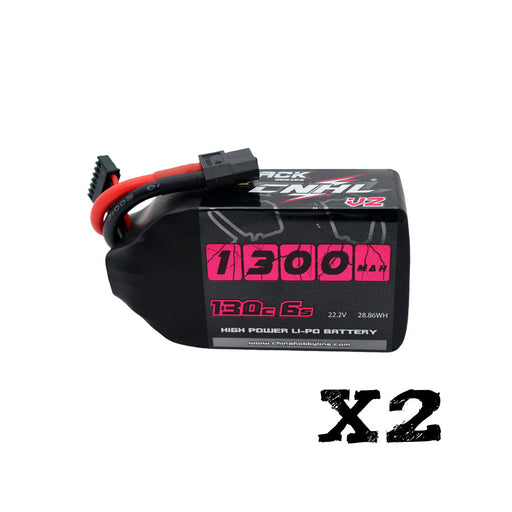
Nopea sovitustarkistus 2 Packs CNHL Black Series V2.0 1300mAh 22.2V 6S 130C LiPo-akku XT60-liittimellä sopii erinomaisesti FPV-lentäjille, jotka ha...
Näytä täydet tiedotVaraosat ja pitkäaikainen tuki Tiedämme, että RC-piloteille luotettava varaosatuki on tärkeä osa sitä, että lentokone pysyy lentokunnossa vuo...
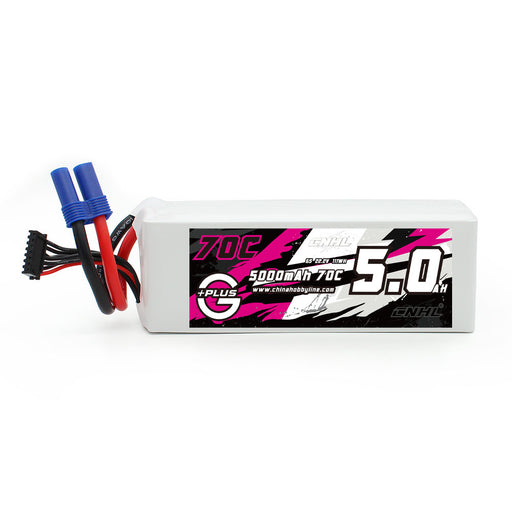
Näytä täydet tiedotTekniset tiedot: Varastonumero: 500706EC5 Kapasiteetti: 5000mAh Jännite: 22,2V / 6-kennoa / 6S1P Purkunopeus: 70C jatkuva / 140C hetkellinen Lata...
Näytä täydet tiedot
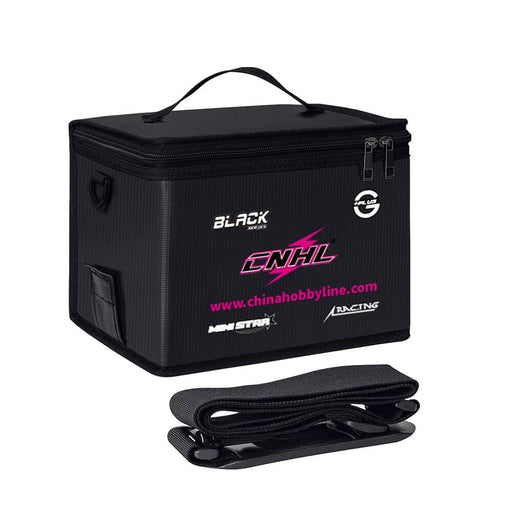
CNHL LiPo Battery Bag on suunniteltu turvallisempaan LiPo-lataukseen, kuljetukseen ja säilytykseen kotona tai kentällä. Se lisää käytännöllisen suo...
Näytä täydet tiedot

Nopea sovitustarkistus 2 paketin CNHL Speedy Pizza Series Pro 1350mAh 6S 150C LiPo -akku XT60-liittimellä on suunniteltu 5-tuuman FPV-piloteill...
Näytä täydet tiedot

Quick Fit Check The CNHL Speedy Pizza Series 2200mAh 22.2V 6S 120C LiPo Battery with XT60 Plug combines the familiar 2200mAh 6S format with a ligh...
Näytä täydet tiedot

Quick Fit Check The CNHL Speedy Pizza Series 2200mAh 14.8V 4S 120C LiPo Battery with XT60 Plug combines a widely used 2200mAh 4S format with a sli...
Näytä täydet tiedot

Quick Fit Check The CNHL Speedy Pizza Series 2200mAh 11.1V 3S 120C LiPo Battery with XT60 Plug takes the familiar 3S 2200mAh aircraft battery form...
Näytä täydet tiedot

The CNHL Long Range Series BAK 50D 5000mAh 21700 Li-ion battery cell is designed for custom high-energy battery packs that need a strong balance be...
Näytä täydet tiedot

The ISDT C4 EVO is a versatile smart battery charger built for AA, AAA and cylindrical rechargeable cells from compact 10440 batteries all the way ...
Näytä täydet tiedot


Jätä kommentti