

The Vought F4U Corsair has always had a presence that few other warbirds can match. The inverted gull wings, oversized propeller, muscular nose and distinctive landing gear make it instantly recognizable. Recreating that personality in a compact RC airplane, however, involves more than simply scaling down the original design.
The 2026 FMS 1100mm F4U-4 Corsair PNP revisits a familiar 1.1-meter warbird platform with a striking NAS Olathe-inspired paint scheme, a 4S brushless power system, upgraded metal shock-absorbing retracts and functional flaps. It offers the visual appeal of a scale naval fighter in a size that remains practical for transportation and regular trips to the flying field.
But its appeal goes beyond appearance. This Corsair combines generous power, responsive controls and surprisingly sophisticated landing gear with the handling characteristics of a genuine taildragger. It also makes a few compromises that scale enthusiasts will immediately notice.
So, what makes this version different, how should it be set up, and who will enjoy flying it most?
What's New About the 2026 FMS 1100mm F4U-4 Corsair?
This is best understood as a refreshed interpretation of an established small-scale Corsair platform rather than an entirely new aircraft concept. Its overall configuration shares much with earlier 1100mm Corsair offerings, but the updated equipment and presentation give the model a distinct identity.
The most meaningful features are:
- 4S brushless power: A 3536-750KV motor paired with a 40A Predator ESC.
- Shock-absorbing rotating retracts: Metal main landing gear struts with spring-loaded suspension.
- NAS Olathe-inspired livery: A distinctive grey, navy blue and white finish.
- Functional flaps: Factory-installed moving flap panels for improved low-speed handling.
- Scale four-blade propeller: A 10.5×8 propeller that complements the Corsair's powerful appearance.
- LED lighting: Navigation and landing lights that improve the aircraft's visual presence.
- Convenient assembly: A removable battery tray and a main wing secured by four screws.
These changes are especially attractive because they concentrate on what matters most in a small RC warbird: propulsion, ground handling, visibility and overall scale character.
The Story Behind the NAS Olathe Corsair Livery

Most people picture the Corsair wearing dark blue wartime colors. The F4U's story, however, continued beyond World War II. Corsairs also served during the Korean War and remained in American naval reserve aviation as the jet age gathered momentum.
That later period provides the inspiration for the FMS model's unusual appearance.
Naval Air Station Olathe, located in Kansas, played an important role in US Navy aviation training and reserve operations. Established during World War II, the base later supported naval reservists as American military aviation moved into the Cold War era.
The FMS Corsair's grey and navy blue scheme evokes this transitional chapter of naval aviation rather than the more familiar combat markings of the Pacific War. Its contrasting surfaces, prominent naval insignia and numbered fuselage give the model a historical identity beyond generic warbird styling.
The finish also works well visually. The contrast between the pale surfaces and darker wing sections makes the airplane easier to distinguish from certain viewing angles, while the bright markings and LED lights add character during low passes.
For collectors and scale enthusiasts, that is a meaningful part of the appeal. This Corsair is not simply another dark-blue F4U.
FMS F4U-4 Corsair 1100mm Specifications
| Model | FMS F4U-4 Corsair PNP |
|---|---|
| Wingspan | 1100mm / 43.3 in |
| Length | 880mm / 34.6 in |
| Flying Weight | Approximately 1300g |
| Construction | EPO foam |
| Motor | 3536-750KV brushless |
| ESC | 40A Predator |
| Propeller | 10.5×8 four-blade |
| Servos | Six 9g servos |
| Radio Requirement | At least 6 channels |
| Retracts / Flaps | Both included |
| Battery | 4S 2200–2700mAh LiPo, 25C+, XT60 |
| CG | 50–60mm behind wing leading edge at root |
| Skill Level | Intermediate |
The 4S Brushless Power System: More Than a Cosmetic Refresh

The original Corsair's identity was inseparable from its powerful radial engine and large propeller. In RC form, the combination of motor characteristics, battery voltage and propeller load is just as important to the aircraft's personality.
The 2026 FMS 1100mm Corsair uses a 3536-750KV brushless motor with a 40A Predator ESC and a 10.5×8 four-blade propeller. The factory-specified 4S configuration gives the aircraft strong acceleration and enough power for energetic sport flying without requiring a separate motor upgrade.
The model is capable of more than gentle scale circuits. Loops, rolls, inverted flight and other conventional warbird aerobatics are within its intended performance envelope when flown with adequate speed and altitude.
At the same time, full throttle is not required for every maneuver. Part of flying a warbird convincingly is using power progressively, allowing the airplane to carry momentum through turns and climbs rather than treating every pass like a speed run.
What Does the 750KV Motor Change?
An earlier Arrows Hobby 1100mm F4U-4 specification listed a 3536-850KV motor and 40A ESC, while the updated FMS version uses a 3536-750KV motor and specifies 4S power.
Motor KV describes approximate no-load RPM per volt, not motor power by itself. A lower KV motor operated at higher voltage can deliver a very different result from a higher KV motor using a lower-voltage battery.
Consequently, the newer 750KV designation should not be interpreted as reduced performance. The complete electrical system, including the four-blade propeller and 4S voltage, determines the aircraft's actual operating characteristics.
How Powerful Is the Stock Setup?
A documented watt-meter check on one example recorded approximately 39A and 600.8W with a 4S 2200mAh pack. This provides a useful indication of the power available from the stock configuration, although individual measurements will vary with battery condition, voltage, propeller and test conditions.
With the recorded current close to the factory ESC's 40A rating, there is little reason to assume that a larger or more aggressive propeller is automatically a worthwhile upgrade. Propeller changes can increase electrical and thermal loads substantially.
The standard equipment already provides an appealing balance of scale appearance and lively flight performance.
Metal Shock-Absorbing Retracts: A Major Upgrade for a Small Warbird

The landing gear is one of the features that genuinely separates this Corsair from many basic 1.1-meter warbirds.
The full-size F4U used an unusual landing gear arrangement linked to its inverted gull-wing design. The model captures this character with retractable main gear that rotates approximately 90 degrees during operation.
More importantly, the metal struts incorporate spring-loaded shock absorption. This gives the main gear a degree of compliance when the wheels meet the runway, helping reduce the severity of routine landing impacts.
Paired with the main tires, the suspension makes it easier to achieve a composed touchdown when the aircraft arrives with an appropriate descent rate.
Can the FMS Corsair Take Off From Grass?
Runway surface makes a considerable difference to a small taildragger.
Smooth asphalt, concrete and well-maintained short grass are more suitable than rough, clumpy or uneven ground. Taller grass increases rolling resistance and can cause the wheels to dig in, potentially producing a nose-over even when the landing gear itself is strong.
The shock-absorbing struts are useful, but they do not transform this 1100mm airplane into an all-terrain model.
For consistent operation, choose a smooth runway, check the main wheels and tailwheel before flight, and confirm that the gear retracts and extends without binding.
The Corsair's Four-Blade Propeller and Signature Gull Wings

The inverted gull wing was not simply an aesthetic choice on the original F4U. It helped accommodate the large propeller and landing gear arrangement while maintaining the aircraft's distinctive naval fighter configuration.
On the RC model, the shape remains central to its personality. From directly ahead, the wings form the characteristic downward-and-upward bend; in a banked turn, the aircraft presents an unmistakable silhouette.
The 10.5×8 four-blade propeller reinforces that visual impression. Compared with a simpler two-blade sport propeller, it better represents the appearance of the F4U-4, but it also places specific demands on the motor and ESC.
Before the maiden flight, inspect the propeller for damage, confirm correct assembly and check its balance. Even a new propeller can have manufacturing variation, and vibration is undesirable for bearings, the motor mount and the airframe.
Keep the factory-specified propeller configuration unless a replacement or modification has been properly evaluated.
Functional Flaps: Effective in Flight, but Not Fully Scale-Accurate

The Corsair's flap design is one area where function and scale authenticity do not completely overlap.
The full-size F4U is known for its distinctive multi-section flap arrangement. On this 1100mm model, the factory-installed moving flaps operate only across the designated middle wing panels; the other molded flap sections remain fixed.
For pilots who appreciate historically accurate mechanical detail, this is a noticeable simplification. A fully articulated flap system would create a more convincing appearance during takeoff and landing.
However, the existing system should not be dismissed as merely decorative.
Lowering the flaps changes the wing's lift and drag characteristics. With a suitable approach attitude and airspeed, they can help slow the aircraft and create a more manageable landing approach.
How Do the Flaps Affect Stall Behavior?
Like other compact warbirds, the Corsair needs adequate airspeed and coordinated control inputs, particularly when maneuvering near the stall.
With the flaps retracted, an excessive angle of attack may produce wing drop as the aircraft stalls. Reducing the angle of attack promptly is essential for recovery.
With landing flaps deployed, the aircraft may exhibit a more progressive low-speed response under some conditions, but this does not make it stall-proof. Flaps alter the flight envelope rather than removing its limits.
Flap deployment can also create a pitch change. Pilots should evaluate the response at a safe altitude and adjust elevator compensation only after confirming what their own airplane requires.
Should You Modify the Corsair to Have Full-Length Flaps?
Experienced builders may be interested in converting the fixed molded flap sections into functional surfaces. Such a modification would be aimed primarily at improving scale fidelity, although it could also alter aerodynamic behavior.
It is not a simple cosmetic change. Additional moving panels affect hinge loads, servo loading, geometry, travel and potentially the aircraft's pitch response.
For most pilots, the factory flap system offers a more straightforward solution. A full-section flap conversion is better treated as a separate advanced modification project, requiring careful ground testing and renewed flight setup.
FMS 1100mm Corsair Flight Performance: How Does It Actually Fly?
Compact warbirds have a reputation for being less forgiving than their larger counterparts. Their relatively low mass and smaller dimensions can make turbulence more noticeable, while sensitive control inputs may lead to abrupt changes in attitude.
The FMS Corsair nevertheless offers several characteristics that make it rewarding for an experienced pilot.
Smooth Scale Flying and Confident Power
The 4S power system provides enough thrust for ordinary scale flying without forcing the pilot to operate near full throttle continuously. This allows the Corsair to cruise through large, graceful turns and maintain speed through climbing maneuvers.
The model is also capable of lively sport aerobatics. Its ailerons provide responsive roll control, and the combination of motor power and available rudder authority supports a broad range of conventional maneuvers.
Nevertheless, the best visual presentation often comes from smooth flying rather than maximum control deflection. Wide circuits, steady low passes and deliberate maneuvering suit the Corsair's distinctive lines.
Why Can the Elevator Feel Sensitive?
One characteristic worth understanding is pitch response. A relatively compact airframe can feel eager to respond to elevator inputs, particularly with high control rates or a more rearward center of gravity.
Before reducing elevator travel, confirm that the CG falls within the recommended range and that the linkage operates smoothly without excessive play.
Once the aircraft is correctly balanced, suitable dual rates and exponential can make the controls feel more progressive around neutral while preserving enough authority for normal maneuvers.
Expo is a control-response adjustment, not a substitute for correct balance. A rearward CG should not be concealed by simply increasing expo.
Why Does the F4U Corsair Pull Left During Takeoff?
Ground handling is one of the most important skills for pilots moving from tricycle-gear trainers to taildragger warbirds.
A single-engine propeller aircraft can experience yaw during the takeoff roll due to several interacting forces. These may include propeller slipstream, asymmetric propeller loading, torque-related effects, gyroscopic effects and runway or landing gear conditions.
The precise contribution of each effect depends on propeller rotation, aircraft attitude, airspeed and throttle application.
On the FMS 1100mm Corsair, the powerful four-blade propeller and taildragger layout make directional control particularly important during acceleration.
Practical Corsair Takeoff Technique
- Start with an appropriate runway: Choose a smooth, open surface and avoid strong or gusty crosswinds during the maiden flight.
- Apply throttle progressively: Avoid sudden full-power acceleration before establishing directional control.
- Use rudder actively: Make timely, measured corrections to maintain the runway centerline.
- Manage the tailwheel: Use appropriate elevator input for the aircraft's ground attitude, avoiding excessive inputs that could produce a premature lift-off or nose-over.
- Allow adequate airspeed: Do not force the aircraft airborne before it is ready to fly.
Correct direction and adequate authority are more important than copying a particular control-horn hole or transmitter percentage from another aircraft.
After setup, verify that the rudder and steerable tailwheel move freely and provide sufficient directional control. Any changes to linkage geometry must be followed by a full mechanical check for binding and excessive servo load.
Landing the FMS Corsair: Speed, Flaps and Shock Absorption
Successful Corsair landings begin well before the wheels touch the runway.
Plan a stable approach, reduce speed progressively and use the flaps according to the conditions. Avoid abrupt elevator inputs or steep, slow turns near the ground, where there is little room to recover from a stall.
The retractable main gear and spring-loaded struts are helpful once the aircraft reaches the surface. They can reduce the tendency for a firm landing to turn into a harsh bounce, especially on a smooth runway.
However, suspension cannot compensate for an excessive descent rate, poor airspeed control or a badly aligned touchdown.
Depending on wind conditions and pilot preference, both appropriately controlled three-point landings and main-wheel-first approaches may be possible. The priority is to keep the aircraft aligned and under control throughout the rollout.
As the model slows, continued rudder input may be necessary to maintain direction. Keep the landing run smooth and avoid aggressive braking or abrupt steering corrections.
Assembly and Scale Details: What to Expect From the PNP Kit

One of the advantages of this Corsair is that it arrives as a PNP model with the primary power and control electronics already installed.
The horizontal stabilizer components require suitable foam-safe adhesive, while the main wing is secured to the fuselage using four screws. The propeller, scale accessories and control connections must also be completed according to the manual.
The overall parts count is manageable, but several small details deserve attention.
Key Assembly Checks
- Tailplane alignment: Dry-fit the horizontal stabilizers and confirm symmetrical positioning before applying adhesive.
- Adhesive preparation: Follow the adhesive manufacturer's guidance for EPO foam, including any required surface preparation and curing time.
- Wing wiring: Route the servo, retract and lighting cables without trapping them between the wing and fuselage.
- Control linkages: Center the servos, verify neutral positions and inspect clevis engagement.
- Propeller: Verify blade condition, balance, orientation and secure attachment.
- Landing gear: Cycle the retracts and check wheel alignment, clearance and suspension movement.
- Scale accessories: Handle antennas, the pitot tube and other small exterior fittings carefully.
The model's scale details include a pilot figure, cockpit instrument representation, removable underwing drop tanks, decorative naval markings and a tailhook representation.
These features add visual richness without demanding a lengthy traditional kit-building process. Some of the smaller exterior details are naturally vulnerable to transport damage, so careful storage is worthwhile.
Receiver, Radio Channels and Gyro Stabilization
The FMS F4U-4 Corsair PNP requires a compatible transmitter and receiver. The factory control functions include throttle, ailerons, elevator, rudder with steerable tailwheel, flaps and retractable landing gear.
That makes a minimum six-channel radio setup the appropriate starting point.
A stabilizing receiver can also be used, although a gyro is not included as a standard feature of the PNP configuration.
Does the FMS 1100mm Corsair Need AS3X or a Gyro?
A correctly assembled Corsair can be flown without an electronic stabilization system. A compatible gyro, however, may help reduce the visible effects of gusts and improve the feeling of stability, particularly in a compact model.
Spektrum AS3X-equipped receivers are one possible solution for pilots who already use compatible radio equipment. Other suitable stabilization systems may also be considered.
The important point is that stabilization complements good setup rather than replacing it.
Always verify receiver mounting orientation, control-surface directions and gyro correction directions. Incorrect stabilization direction can rapidly make an aircraft uncontrollable.
CG, Rates and Expo: A Sensible Starting Approach
FMS specifies a CG range of 50–60mm behind the wing leading edge at the root. A midpoint near 55mm is a reasonable initial target within that range, subject to the aircraft manual's measurement procedure.
Use the manufacturer's recommended control throws for the maiden flight, and consider a suitable lower-rate setting if the model feels excessively sensitive.
Elevator expo can make small stick movements less abrupt, but its appropriate value depends on the transmitter's expo convention, the linkage geometry and pilot preference. A single numerical setting should not be treated as universal.
Before flying, perform a complete range check, failsafe check, throttle-cut test and control-direction inspection with the aircraft safely restrained and the propeller area clear.
Battery, Center of Gravity and Flight-Time Planning
Although the FMS Corsair is supplied with its motor and ESC, the PNP package requires a separately purchased flight battery and suitable charger.
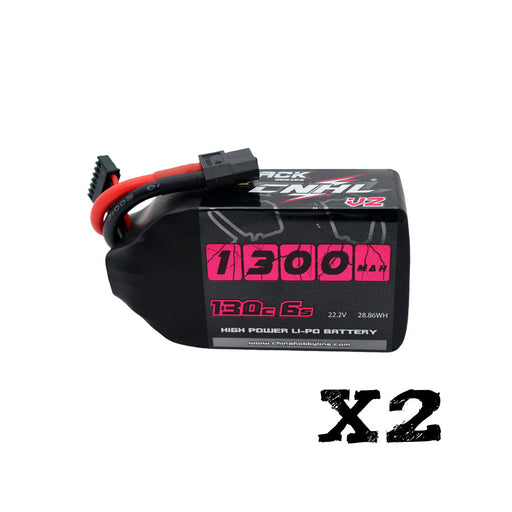
FMS recommends a 14.8V 4S 2200–2700mAh LiPo with an XT60 connector and at least a 25C discharge rating. A conventional 4S 2200mAh pack is a sensible starting choice for the stock aircraft.
Unlike some larger RC airplanes, this Corsair uses a removable sliding battery tray. That makes pack changes convenient, but the battery must be secured carefully and the tray must lock completely into place.
Two 2200mAh packs can differ in weight and dimensions even when their electrical specifications appear similar. Those differences can affect the CG and how the aircraft responds to elevator input.
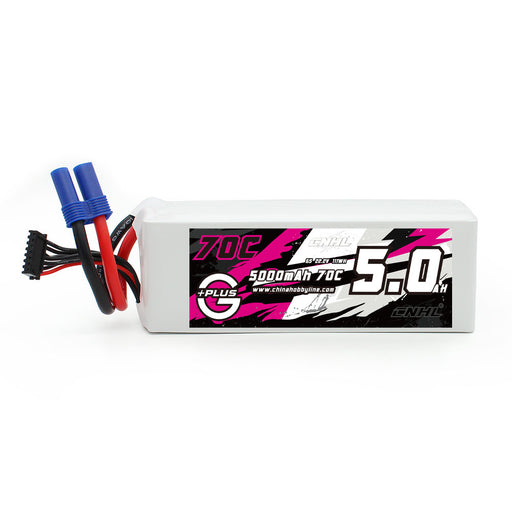
For a selection of suitable standard 4S battery options, explore the CNHL FMS 1100mm F4U-4 Corsair LiPo Battery Collection.
What About the Flight Time?
The manufacturer's approximate five-minute flight duration is a useful reference for initial flight planning, but the real result depends heavily on throttle use and flying conditions.
A pilot making smooth circuits at moderate power will often place different demands on the battery than one performing repeated vertical climbs and high-speed passes.
Begin with a conservative timer, land with an appropriate reserve and use post-flight cell-voltage and recharge measurements to refine future flights. The goal is consistent, safe landings rather than extracting every possible second from the pack.
Don't Overlook the Charger
A 4S LiPo balance charger is an essential part of the setup. Choose a charger that supports the battery chemistry, correct cell count and manufacturer-approved charging current.
For pilots using multiple packs, a dual-channel charger can simplify preparation between flying sessions. Explore CNHL's ISDT Charger Collection for compatible charging solutions.
A conventional 4S LiPo is fully charged at 16.8V. Do not assume that the higher maximum voltage of a LiHV pack is approved for the stock Corsair power system without checking the motor and ESC operating limits.
FMS 1100mm Corsair vs Arrows 1100mm and Larger Corsairs
The 2026 FMS model occupies an interesting position among RC Corsairs because earlier 1100mm models and larger 1.2m to 1.7m aircraft appeal to overlapping but different groups of pilots.
FMS 1100mm vs Older Arrows 1100mm F4U-4
The older Arrows 1100mm Corsair shares several recognizable design elements with the current FMS offering, including the four-blade propeller, retractable landing gear, functional flap concept and removable drop tanks.
The earlier Arrows specification used a 3536-850KV motor, whereas the new FMS configuration lists a 3536-750KV motor with a factory-recommended 4S battery.
The updated NAS Olathe-inspired appearance and shock-absorbing metal gear are especially notable aspects of the newer offering.
However, visual similarity does not establish complete parts interchangeability. Anyone considering transferring landing gear, wings or other components between versions should check exact dimensions, mounting points and part numbers first.
FMS 1100mm vs E-flite 1.2m Corsair
Moving from 1100mm to the 1.2m class brings a modest increase in wingspan, but differences in airframe design, mass, power system and available equipment may affect the overall flying experience more than the wingspan figure alone.
A larger Corsair may feel more settled in certain conditions and can offer additional scale detail, while the 1100mm FMS model emphasizes convenience, compact storage and an engaging 4S power system.
The right choice depends on runway availability, desired features, flying experience and current pricing rather than size alone.
Should You Consider a 1700mm Corsair Instead?
A 1700mm Corsair provides a much larger visual presence and a different scale-flying experience. It also demands substantially more transportation space, storage room and runway planning.
The 1100mm model is attractive precisely because it offers many of the defining Corsair features without the logistical commitment of a large warbird.
Who Is the FMS 1100mm F4U-4 Corsair Best For?
This aircraft is best suited to an intermediate RC pilot who is comfortable with basic aerobatics, coordinated turns, throttle management and controlled landing approaches.
Some prior taildragger experience is especially helpful. Pilots coming directly from a forgiving tricycle-gear trainer should be aware that the Corsair demands more attention during the takeoff roll and landing rollout.
The model makes particular sense for:
- Warbird enthusiasts seeking a compact, scale-looking aircraft.
- RC pilots who want the distinctive character of a four-blade Corsair.
- Flyers who appreciate functional retracts, spring-loaded landing gear and LED lighting.
- Owners with limited transportation or storage space.
- Intermediate pilots looking for a more engaging aircraft after mastering a trainer.
It is less suitable as a first RC airplane, for very rough flying fields or for pilots who expect a completely scale-accurate multi-section flap system without modification.
FMS 1100mm F4U-4 Corsair: Pros and Limitations
What Makes It Appealing
- Distinctive NAS Olathe grey-and-navy finish
- Strong factory 4S power system
- Metal shock-absorbing rotating retracts
- Functional landing flaps
- Scale four-blade propeller
- Bright navigation and landing lights
- Relatively straightforward assembly
- Convenient 1100mm size
What to Consider
- Flaps are not fully scale-accurate
- Taildragger takeoffs require attention
- Elevator response may need careful setup
- Small exterior scale details are vulnerable
- Rough grass can cause nose-overs
- Correct CG and battery retention are essential
- Transmitter, receiver, battery and charger are additional purchases
FMS 1100mm F4U-4 Corsair FAQ
Is the 2026 FMS 1100mm F4U-4 Corsair a completely new airplane?
It is better described as an updated Corsair offering built around a familiar 1100mm design concept. Its 4S power configuration, NAS Olathe-inspired livery and metal shock-absorbing landing gear are key points of distinction.
Is the FMS Corsair suitable for beginners?
FMS classifies the aircraft as intermediate. Pilots should already be comfortable flying and landing RC aircraft, ideally with some taildragger experience.
Does the FMS F4U-4 Corsair have functional retracts and flaps?
Yes. The main landing gear retracts with a 90-degree rotating action, and the aircraft has factory-installed functional flaps. The moving flap arrangement is simplified compared with the full-size Corsair.
Does the Corsair come with a gyro or receiver?
The standard PNP configuration does not include a receiver or gyro. Pilots can install a compatible receiver, including a suitable stabilization-equipped option if desired.
Why does the Corsair turn left during takeoff?
Propeller-related yaw effects, taildragger geometry, runway conditions and throttle technique can all contribute to directional-control challenges. Progressive throttle application and correct rudder control are essential.
Can the FMS 1100mm Corsair fly without AS3X?
Yes. A correctly configured aircraft can fly without AS3X. Stabilization may improve the experience in gusty conditions, but it is not a substitute for correct mechanical setup or adequate flying skill.
What battery does the FMS 1100mm F4U-4 Corsair use?
FMS recommends a 4S 2200–2700mAh LiPo battery rated at least 25C with an XT60 connector. The aircraft's CG should be checked after installing the chosen pack.
Can the Corsair operate from grass?
Short, smooth and well-maintained grass may be suitable. Tall or uneven grass increases rolling resistance and the risk of a nose-over, so paved or similarly smooth runways are preferable.
How long does the FMS Corsair fly?
FMS provides approximately five minutes as a reference. Actual flight time depends on throttle use, wind, battery condition and flying style. Use a conservative timer until actual consumption is established.
Final Verdict: A Compact Corsair With Real Warbird Character
The 2026 FMS 1100mm F4U-4 Corsair succeeds by focusing on the elements that make a small warbird enjoyable to own and fly.
The NAS Olathe-inspired paint scheme gives it a memorable appearance, while the four-blade propeller and inverted gull wings preserve the Corsair's unmistakable character. The 4S power system delivers lively performance, and the metal shock-absorbing retracts bring useful sophistication to the landing gear.
Its limitations are equally clear. The simplified flap arrangement leaves room for scale improvement, and the taildragger configuration requires more attention than a basic trainer. Correct balance, careful radio setup and disciplined runway handling remain important.
For intermediate pilots seeking a distinctive naval warbird without moving into a much larger airframe, the FMS 1100mm F4U-4 Corsair presents a compelling combination of appearance, performance and convenience.
Complete the PNP setup with a suitable receiver, properly matched 4S battery and balance charger, check every control before the maiden flight, and give the Corsair the runway space and airspeed it deserves.
Explore the CNHL 4S LiPo Battery Collection for the FMS 1100mm F4U-4 Corsair for battery options designed around the aircraft's recommended voltage and capacity range.









Jätä kommentti