

CNHL Lipo akut
CNHL pyrkii tarjoamaan korkealaatuisia Li-Po-akkuja ja RC-tuotteita kaikille harrastajille erinomaisella asiakaspalvelulla ja kilpailukykyisillä hinnoilla
To balance charge a LiPo battery, connect both the main power lead and the balance plug to a compatible charger, select the correct battery chemistry and series cell count, set an appropriate charging current, and choose LiPo Balance Charge. Before pressing Start, confirm that the charger’s detected S count matches the battery label.
Quick answer: Balance Charge should normally be the default full-charge program for conventional multi-cell RC LiPo batteries. The main lead carries most of the charging current, while the balance lead allows the charger to monitor and correct individual cell voltages. A standard LiPo normally finishes close to 4.20V per cell.
Do not begin charging if the pack is swollen, punctured, leaking, unusually hot, producing an abnormal smell, or showing damaged main or balance wires. Balance charging can correct limited voltage differences, but it cannot repair a physically damaged or failing cell.

| Battery Chemistry | Select standard LiPo only for a standard LiPo battery. Do not use LiHV, LiFe or Li-ion mode by mistake. |
| Cell Count | Match the S count printed on the battery: 2S, 3S, 4S, 6S and so on. |
| Charge Mode | Select LiPo Balance Charge for a conventional multi-cell LiPo pack. |
| Charge Current | Approximately 1C is a conservative general starting point unless the battery specifies another rate. |
| Main Lead | Carries most of the charging current between the charger and battery. |
| Balance Lead | Lets the charger read and correct individual cell-group voltages. |
| Full Voltage | A standard LiPo normally finishes close to 4.20V per cell. |
A multi-cell LiPo battery contains two or more cells connected in series. The charger must control the total pack voltage while also preventing any individual cell from exceeding its intended voltage limit.
Balance charging uses two electrical connections:
For example, a standard 4S LiPo has four series cell groups. When fully charged, the complete pack should be close to 16.8V, but the charger also needs to see that the individual cells are close to 4.20V rather than only relying on the total.
A total voltage of 16.8V could still hide an unsuitable distribution such as one cell being too high and another too low. That is why total pack voltage alone is not enough.
Cells in the same battery are similar, but they are not perfectly identical. Small differences develop from:
One cell may therefore reach the upper voltage limit before the others. A balance charger reduces current and uses its balancing circuit to control the leading cell while the lower cells continue to rise.
Limited imbalance can be normal. A cell that repeatedly drifts farther from the others may indicate battery aging, a weak cell or a balance-connection problem.
Do not use the charger as the first test of a visibly questionable pack. Inspect the battery before connecting it.
Do not balance charge a battery that is:
Also inspect the charger output lead, adapters and balance-board ports. A damaged balance connector can cause incorrect cell readings or repeated connection errors.
For the wider safety procedure, read How to Charge a LiPo Battery Safely.
Read the battery label carefully. A standard LiPo, LiHV, LiFe and Li-ion battery may use different charger programs and voltage limits.
| Battery Type | Typical Nominal Voltage | Typical Full Voltage |
|---|---|---|
| Standard LiPo | 3.7V per cell | Approximately 4.20V per cell |
| LiHV | Often marked 3.8V | Often up to approximately 4.35V per cell when specified |
| LiFe | Usually 3.2–3.3V per cell | Use the battery manufacturer’s LiFe specification |
| Li-ion | Varies by cell type | Use the specified Li-ion voltage profile |
This article focuses on conventional RC LiPo batteries. Select LiPo, not LiHV, even when the higher-voltage setting appears to offer more runtime.
The S rating tells you the number of cells connected in series. It determines the complete pack voltage.
| LiPo Pack | Nominal Voltage | Approx. Full Voltage |
|---|---|---|
| 2S | 7.4V | 8.40V |
| 3S | 11.1V | 12.60V |
| 4S | 14.8V | 16.80V |
| 5S | 18.5V | 21.00V |
| 6S | 22.2V | 25.20V |
Check the label first. A conventional balance connector normally has one more wire than the series cell count:
This wire count is a useful cross-check, not a substitute for the battery label. Proprietary smart systems may use a different arrangement.
Approximately 1C is a conservative general starting point when the battery does not specify another recommended limit.
Approximate 1C current in amps = battery capacity in mAh ÷ 1000
| Battery Capacity | Approx. 1C Current |
|---|---|
| 850mAh | 0.85A |
| 1300mAh | 1.3A |
| 2200mAh | 2.2A |
| 5000mAh | 5.0A |
| 6000mAh | 6.0A |
| 8000mAh | 8.0A |
A battery may permit 2C, 3C or another charge rate, but the charger, input power supply, connector and charge lead must all support the increased current and wattage.
For the full calculation, read LiPo Charging Rates Explained.
Follow the charger manufacturer’s connection procedure. Connect the correct charging lead to the charger output, then connect the battery’s main power connector.
The main lead may use:
Many programmable chargers use an XT60-style output, so a correctly wired charge lead or adapter may be required.
Before connecting:
For connector identification and adapter compatibility, visit the RC Battery Connector Guide.
Insert the battery’s balance connector into the charger’s correct balance port or balance board. The port must match the battery’s cell count and connector orientation.

Common conventional RC LiPo packs use JST-XH balance connectors, but layouts vary. Do not:
If the charger cannot read all cells, stop and inspect the plug, wires, balance board and charger port.
Open the charger task menu and select:
Do not confuse Balance Charge with:
For a complete comparison, read LiPo Charger Modes Explained.
Many chargers compare the manually selected S count with the voltage detected from the battery. The two values must agree.
Final pre-start check
If the charger reports a cell-count mismatch, do not repeatedly confirm through the warning. Investigate:
Once all settings are verified, begin the charging task and remain present.
The charger will normally:
Do not cover the charger’s cooling vents. Keep the battery and charger on a stable, non-flammable surface away from combustible material.
Watch more than the remaining time estimate. Monitor:
Stop charging immediately if:
A warm charger can be normal under load, but the battery and connectors should not show abnormal heating during a routine balance charge.
As charging progresses, the cell voltages should rise together. They do not need to display exactly the same number every second, but the difference should generally narrow near completion.
| Example Final Reading | General Interpretation | Recommended Action |
|---|---|---|
| 4.20 / 4.19 / 4.20 / 4.19V | Closely balanced | Normal post-charge inspection |
| 4.20 / 4.18 / 4.20 / 4.19V | One cell is slightly lower | Track whether the difference repeats or increases |
| 4.20 / 4.12 / 4.20 / 4.19V | Noticeable persistent outlier | Inspect battery condition and balance connection |
| One cell above the intended voltage limit | Incorrect mode, charger error or measurement problem | Stop and investigate immediately |
These examples are general illustrations rather than universal pass-or-fail thresholds. Charger resolution, battery temperature and measurement conditions can affect the displayed values.
Balance charging normally slows down near full voltage because the charger changes from the constant-current stage to the constant-voltage and balancing stages.
If one cell reaches the upper limit first, the charger must reduce the main current while the lower cells catch up. The process can become slow when:
Increasing the main charging current does not necessarily make balancing faster. The limiting factor may be the charger’s balance circuit rather than bulk charging power.
For troubleshooting, read Why Is My LiPo Battery Taking So Long to Balance Charge?
At approximately 1C, the theoretical capacity-replacement time is about one hour, but a complete balance charge often takes longer.
Actual time depends on:
A partially charged, closely balanced battery may finish sooner. A pack with noticeable cell drift may spend a long time near the end even when the main charging stage was fast.
| Battery | Charger Program | Approx. 1C Current | Approx. Full Voltage |
|---|---|---|---|
| 2S 850mAh | LiPo Balance, 2S | 0.85A | 8.40V |
| 3S 2200mAh | LiPo Balance, 3S | 2.2A | 12.60V |
| 4S 5000mAh | LiPo Balance, 4S | 5.0A | 16.80V |
| 6S 1300mAh | LiPo Balance, 6S | 1.3A | 25.20V |
| 6S 5000mAh | LiPo Balance, 6S | 5.0A | 25.20V |
The charger must also have enough wattage. A 6S 5000mAh battery at 1C requires approximately 126W near full voltage, while a 4S 5000mAh battery requires about 84W.
Yes, when all of the following are true:
Balance Charge does not mean the charger is limited to 1C. The charging mode and C rate are separate settings.
For example, a 5000mAh battery at 2C requires 10A. A 6S 5000mAh pack at that current requires approximately 252W near full voltage.
Balance Charge is normally the preferred everyday program because it gives the charger time to monitor and correct individual cell differences.
Fast Charge may reduce time by:
Fast Charge is not automatically unsafe, but it should not be used to hide a battery that consistently takes a long time to balance.
Read Balance Charging vs Fast Charging for the dedicated comparison.
Yes, when the batteries are correctly matched and connected through a suitable parallel charging board. Parallel Charging is a connection method, while Balance Charge remains the charger program.
Before parallel balance charging, confirm:
Read How to Parallel Charge LiPo Batteries Safely before building a parallel group.
When the charger reports completion:
Follow the charger manufacturer’s documented disconnection order where specified.
Do not leave the fully charged battery connected to the charger or balance board after the task has finished.
A fully charged LiPo should not remain at maximum voltage for extended periods. If plans change and the battery will not be used soon, use the charger’s Storage mode to move the pack toward a more suitable resting voltage.
Many chargers target approximately 3.8–3.85V per cell for a standard LiPo, although the exact programmed target may vary.
Storage mode may charge or discharge the battery depending on its starting voltage. Discharging can be slow because many chargers have much less internal discharge power than charging power.
A useful balance charger should provide:
Users charging multiple batteries may benefit from independent dual- or quad-channel chargers. Independent channels allow different batteries to use separate S counts, currents and modes without being electrically combined.
Browse the CNHL LiPo battery charger collection for balance chargers, dual-channel chargers and multi-channel systems.
For ToolkitRC chargers and charging equipment, visit the ToolkitRC collection.
Balance Charge should normally be the default for conventional multi-cell LiPo batteries because it allows the charger to monitor individual cells throughout the charging process.
For most conventional multi-cell LiPo batteries, yes. The main lead carries the charging current, while the balance lead provides individual cell-voltage access.
Most conventional chargers require both connections because the balance lead is not intended to carry the complete charging current. Some specialized low-power systems operate differently, so follow the charger instructions.
A conventional multi-cell LiPo cannot be properly balance charged without individual cell access. Do not bypass a damaged balance lead simply to complete the charge.
No. A 1S battery has only one cell, so there are no cells to balance against one another. It still needs the correct charging mode, current and final voltage.
A standard LiPo normally finishes close to 4.20V per cell. A 4S pack therefore finishes near 16.8V total.
Healthy cells should normally finish reasonably close to one another. Small differences can occur because of charger resolution and battery temperature. A persistent or increasing outlier should be investigated.
The charger enters the constant-voltage and balancing stages. It lowers current to prevent cells from exceeding the intended voltage limit while lower cells catch up.
The pack may be significantly imbalanced, the charger may have low balance current, or a cell or balance connection may be abnormal. Check the individual readings rather than simply increasing current.
It can correct limited voltage differences during charging. It cannot repair a weak cell, physical damage or permanently increased internal resistance.
Yes, when the battery explicitly permits 2C and the charger, power source, leads and connectors support the required current and wattage.
A dual-channel charger may charge two different batteries independently. Batteries combined on one parallel board must meet the stricter parallel-charging compatibility requirements.
Balance Charge provides more complete individual-cell monitoring and is normally the preferred everyday program. Safe charging still depends on battery condition, settings, connections and supervision.
Balance charging is the normal way to prepare a conventional multi-cell LiPo battery for use because it controls both total pack voltage and individual cell behavior. The process becomes straightforward once the same verification sequence is followed every time: chemistry, S count, current, main connection, balance connection, detected cells and final voltage.
For the wider charging system—including charger selection, charging rates, Fast Charge, Storage and parallel charging—visit the CNHL LiPo Battery Charging Guide.
CNHL pyrkii tarjoamaan korkealaatuisia Li-Po-akkuja ja RC-tuotteita kaikille harrastajille erinomaisella asiakaspalvelulla ja kilpailukykyisillä hinnoilla
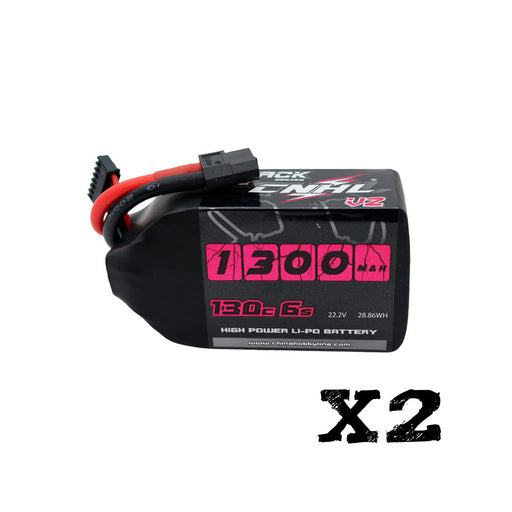
Nopea sovitustarkistus 2 Packs CNHL Black Series V2.0 1300mAh 22.2V 6S 130C LiPo-akku XT60-liittimellä sopii erinomaisesti FPV-lentäjille, jotka ha...
Näytä täydet tiedotVaraosat ja pitkäaikainen tuki Tiedämme, että RC-piloteille luotettava varaosatuki on tärkeä osa sitä, että lentokone pysyy lentokunnossa vuo...
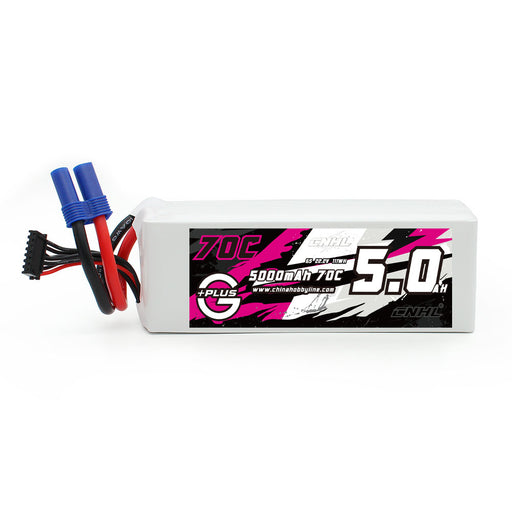
Näytä täydet tiedotTekniset tiedot: Varastonumero: 500706EC5 Kapasiteetti: 5000mAh Jännite: 22,2V / 6-kennoa / 6S1P Purkunopeus: 70C jatkuva / 140C hetkellinen Lata...
Näytä täydet tiedot
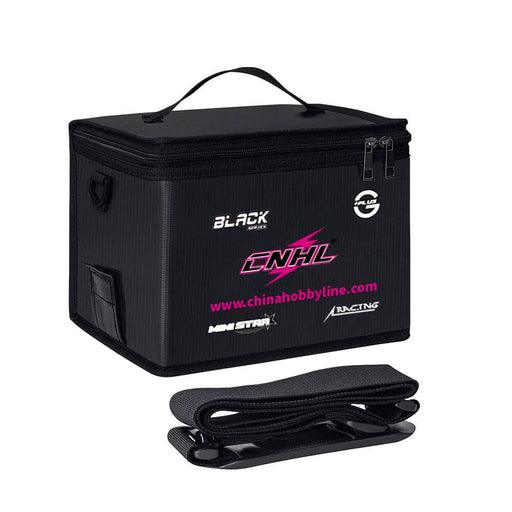
CNHL LiPo Battery Bag on suunniteltu turvallisempaan LiPo-lataukseen, kuljetukseen ja säilytykseen kotona tai kentällä. Se lisää käytännöllisen suo...
Näytä täydet tiedot

Nopea sovitustarkistus 2 paketin CNHL Speedy Pizza Series Pro 1350mAh 6S 150C LiPo -akku XT60-liittimellä on suunniteltu 5-tuuman FPV-piloteill...
Näytä täydet tiedot

Quick Fit Check The CNHL Speedy Pizza Series 2200mAh 22.2V 6S 120C LiPo Battery with XT60 Plug combines the familiar 2200mAh 6S format with a ligh...
Näytä täydet tiedot

Quick Fit Check The CNHL Speedy Pizza Series 2200mAh 14.8V 4S 120C LiPo Battery with XT60 Plug combines a widely used 2200mAh 4S format with a sli...
Näytä täydet tiedot

Quick Fit Check The CNHL Speedy Pizza Series 2200mAh 11.1V 3S 120C LiPo Battery with XT60 Plug takes the familiar 3S 2200mAh aircraft battery form...
Näytä täydet tiedot

The CNHL Long Range Series BAK 50D 5000mAh 21700 Li-ion battery cell is designed for custom high-energy battery packs that need a strong balance be...
Näytä täydet tiedot

The ISDT C4 EVO is a versatile smart battery charger built for AA, AAA and cylindrical rechargeable cells from compact 10440 batteries all the way ...
Näytä täydet tiedot


Jätä kommentti