
CNHL Lipo Batteries
CNHL aim at providing high-quality Li-Po batteries and RC products to all hobby enthusiasts with excellent customer services and competitive prices
A great long-range FPV drone doesn't necessarily need to be large, heavy, or exceptionally fast. Sometimes the most enjoyable aircraft is one that can cruise quietly over open scenery, capture clean footage, and still respond confidently when you decide to have a little fun.
That's the appeal of the GEPRC Tern40 LR V2 O4 Pro. This compact 4-inch quad combines a lightweight Deadcat frame, DJI O4 Pro digital video, 1404 motors, GPS, and a redesigned camera mounting system. Rather than concentrating entirely on maximum speed or extreme endurance, it aims to deliver a more versatile flying experience.
But the 4-inch long-range category has become increasingly competitive. With alternatives such as the Flywoo Explorer LR4 V2, DeepSpace ROC4, and FlyfishRC Atlas 4 attracting attention, simply having GPS and efficient propellers is no longer enough to stand out.
So what makes the Tern40 LR V2 interesting? How much does the redesigned camera mount matter? Can it really combine long-range efficiency with enjoyable handling? And perhaps most importantly, which battery configuration makes the most sense?

Small FPV drones are often associated with tight spaces, quick direction changes, and aggressive flying. Larger long-range aircraft, on the other hand, generally have more room for substantial batteries and are better suited to carrying the additional weight needed for extended missions.
Four-inch long-range quads occupy an interesting middle ground. They are compact enough to travel with easily, but their larger propeller discs can provide efficient thrust for relaxed cruising. With the right motor, propeller, and battery combination, a 4-inch aircraft can travel smoothly without constantly demanding high throttle.
The Tern40 LR V2 follows this philosophy. Its 1404 3000KV motors drive HQProp T4X2.5 bi-blade propellers, prioritizing an efficient cruising setup while retaining enough responsiveness for climbing, turning, and occasional acrobatic maneuvers.
This makes the aircraft particularly appealing to pilots who want one portable quad for scenic FPV exploration, general recreational flying, and occasional freestyle rather than carrying separate drones for every purpose.
The original Tern40 LR established the concept of a lightweight 4-inch long-range quad within GEPRC's lineup. The V2 continues that approach but presents a more integrated airframe, with particular attention to the camera assembly, component packaging, and practical details that matter during regular flying.
The first noticeable characteristic is the Deadcat frame geometry. By positioning the front motors farther away from the camera's forward field of view, the Tern40 helps keep spinning propellers out of footage. This is especially useful when flying over landscapes, following trails, or recording long forward-facing passes.
The carbon-fiber structure combines 4mm arms with a 1.5mm top plate, 2mm middle plate, and 1.5mm bottom plate. Those dimensions reflect the familiar engineering compromise of lightweight FPV frames: sufficient structural rigidity without unnecessarily increasing the aircraft's mass.
The revised body also incorporates protective side plates with ventilation openings. They help organize the electronics within a relatively slim body while allowing airflow through the frame. The result is a cleaner overall layout rather than a collection of exposed components attached wherever space happens to be available.

Several practical features deserve attention beyond the aircraft's appearance:
Individually, these aren't revolutionary features. Together, they make the Tern40 LR V2 a more practical aircraft for pilots who regularly change batteries, travel with their FPV equipment, and want fewer inconveniences at the flying field.
The most important improvement for aerial filming may not be the motors or the frame. It is the way the front camera is isolated from vibration.
On FPV drones, vibration can originate from propeller imbalance, motor harmonics, frame resonance, or damaged components. When that vibration reaches the camera and its motion sensors, it can create visible distortion, commonly called jello, or interfere with electronic stabilization.
This is particularly important with modern digital FPV systems. High-resolution footage can reveal subtle vibration artifacts that might be less noticeable in a lower-resolution video feed.
GEPRC addresses this with a four-point suspended damping arrangement for the DJI O4 Pro camera. Instead of transmitting every small frame vibration directly into the camera assembly, the mount uses compliant damping components to help isolate it from high-frequency movement.

A good stabilization system begins with clean mechanical input. Electronic correction is useful for smoothing the finished video, but it cannot always compensate for vibrations that distort the image at the sensor or contaminate the motion data used for stabilization.
The Tern40's suspension is designed to reduce that problem at its source. That is especially valuable during steady cruising, where the goal is often a clean, floating camera movement rather than dramatic freestyle footage.
There are still limits. Damping materials change their behavior with temperature, and worn propellers, loose components, or a poorly tuned aircraft can introduce vibration that no camera mount can completely eliminate. Good propeller condition and mechanical maintenance remain essential.
The advantage is that the Tern40 LR V2 treats image stability as a central part of the aircraft's design rather than something left entirely to post-processing software.
A 4-inch long-range drone should feel different from a dedicated freestyle quad. Its priorities are smoother throttle management, economical cruising, and predictable behavior over longer periods rather than maximum acceleration.
The Tern40 LR V2 nevertheless avoids feeling like an aircraft with only one purpose. The 1404 3000KV motors provide useful responsiveness, and the relatively light airframe allows the quad to change direction or climb without requiring an overly aggressive setup.
At modest speeds, the efficiency-oriented bi-blade propellers allow the aircraft to maintain flight without excessive power demand. The resulting flight character is composed and relatively quiet, making it particularly suitable for open landscapes, gradual turns, and cinematic flying lines.
There is also something enjoyable about a quad that doesn't constantly encourage aggressive throttle use. A smooth path through an open field or along a landscape can be just as engaging as a fast technical maneuver, especially when the aircraft produces stable footage along the way.
The Tern40 can also accommodate rolls, dives, reversals, and other basic freestyle movements. The aircraft has enough control authority to make these maneuvers enjoyable, although its efficiency-oriented propeller configuration is not intended to replicate the immediate punch and grip of a specialized freestyle build.
Compared with a more aggressive 3-inch or 3.5-inch freestyle quad, the Tern40's personality is more relaxed. This is not necessarily a disadvantage. For pilots who enjoy both cinematic cruising and recreational acrobatics, the ability to handle both reasonably well can be more useful than optimizing entirely for one.
Battery choice further shapes that behavior. A lighter pack helps preserve a nimble response, while a heavier pack increases the load during climbs, braking, and recovery from rapid changes in direction. That difference becomes especially noticeable on small aircraft.

Long-range flying introduces considerations that are less important during short flights around a familiar field. Position awareness, remaining battery energy, wind conditions, and the ability to navigate back toward the launch area all become increasingly relevant.
The Tern40 LR V2 includes a GEP-M10nano GPS, providing information that can be used for GPS-assisted functions and on-screen telemetry. GPS-based rescue features can also be configured through the flight controller.

This distinction is particularly important for pilots transitioning from consumer camera drones to Betaflight-based FPV aircraft.
On a conventional GPS camera drone, Return-to-Home may include automated navigation, descent, and landing. Betaflight GPS Rescue is primarily a recovery feature intended to help the aircraft navigate back toward a home position under appropriate conditions. Its behavior depends on configuration, GPS information, flight-controller settings, and available power.
Before relying on it, confirm the GPS fix, rescue altitude, climb behavior, return direction, failsafe settings, and ability to regain control. Testing should be conducted in a suitable open area with sufficient altitude and battery reserve.
GPS does not eliminate the need for responsible flight planning. Even a capable recovery system cannot compensate for every combination of wind, low battery, obstacles, or incorrect setup. Always follow applicable airspace and visual-line-of-sight requirements.
GEPRC lists a flight time of 12 minutes using a 720mAh 4S LiHV battery, with landing at 3.6V per cell. That provides a useful reference point, but flight time cannot be separated from the conditions under which the aircraft is operated.
During steady, low-throttle cruising, a relatively lightweight quad can use surprisingly little energy. Increase speed, climb repeatedly, or perform sustained freestyle maneuvers, and consumption rises quickly.
Wind introduces another variable. An outbound flight with a tailwind can appear efficient while leaving the drone facing much greater power demand on the return journey. Temperature, battery age, propeller condition, and aircraft weight also affect the amount of useful energy available.
A battery with a higher mAh rating can store more energy, but its weight increases the power required to keep the aircraft airborne. The additional capacity may improve endurance, yet the improvement is rarely proportional to capacity alone.
For meaningful long-range efficiency comparisons, monitoring current draw, consumed mAh, and energy use per kilometer provides a stronger basis than comparing flight times from unrelated flying sessions. Correct current-sensor calibration is essential when using those measurements.
One of the biggest attractions of the Tern40 LR V2 is its potential as a lightweight FPV platform. However, the manufacturer's aircraft weight is not the same as its ready-to-fly weight.
GEPRC specifies 178g ±5g for the O4 Pro PNP version without a battery. Using the nominal 178g figure, a battery would need to weigh less than 72g to keep the simple combined weight under 250g. Receiver variations and other fitted equipment can reduce that margin further.
This makes battery weight a decisive factor rather than a minor specification. Two batteries with similar capacities can differ substantially in construction, dimensions, and weight. Selecting a pack based on capacity alone may result in a much heavier aircraft than expected.
| Battery | Pack Weight | Estimated Total | Main Consideration |
|---|---|---|---|
| CNHL 550mAh 4S LiHV | 58g | 236g | Lightweight build candidate |
| CNHL 750mAh 4S LiHV | 79g | 257g | Capacity and power balance |
| CNHL 850mAh 4S LiPo | 110g | 288g | Higher nominal capacity |
Estimates use the manufacturer's nominal 178g O4 Pro PNP weight plus one battery. They are not measured takeoff weights and exclude possible receiver or accessory differences. Battery weights are approximate. Always weigh the complete flight-ready aircraft.
A sub-250g target may be important to some pilots, but it should not come at the expense of a safe battery installation or adequate energy reserve. The final decision should account for both flight performance and the regulations applicable to the location.
The Tern40 LR V2 uses a 4S battery system with an XT30 connector. GEPRC recommends 660–850mAh LiPo packs and also lists a 3000mAh 18650 Li-ion alternative. The ideal choice depends on whether low weight, balanced handling, or greater energy capacity is your priority.
Three CNHL 4S XT30-compatible options illustrate these different approaches.
The CNHL MiniStar HV 550mAh 4S 70C with XT30U weighs approximately 58g per pack. For pilots trying to preserve the Tern40's lightweight character, that makes it an appealing alternative.
Lower battery mass can help the aircraft feel more responsive during turns, climbs, and quick corrections. It also leaves a possible margin below 250g when combined with the O4 Pro PNP configuration, although the complete build must be weighed.
The trade-off is capacity. At 550mAh, it falls below GEPRC's published LiPo recommendation and offers less stored energy than larger packs. It is therefore better considered a lightweight option for shorter flights, subject to verifying current capability, fit, and actual performance.
The CNHL Lightning LiHV 750mAh 4S 120C with XT30 sits within GEPRC's recommended capacity range and weighs approximately 79g.
Its combination of moderate capacity and high advertised discharge capability makes it attractive for pilots who want relaxed cruising without sacrificing the ability to accelerate or climb confidently. The battery's actual response will depend on its condition and the aircraft's power demands, not the C rating alone.
One important limitation is weight: the nominal aircraft and battery total is approximately 257g before additional equipment. This is a suitable capacity class to investigate, but not a sub-250g combination with this specific pack.
For pilots more interested in carrying additional battery energy, the CNHL MiniStar 850mAh 4S 70C with XT30U reaches the upper end of GEPRC's recommended LiPo capacity range.
Each pack weighs approximately 110g. That is a substantial increase over the 550mAh and 750mAh options, so pilots should expect a different weight balance and may notice slower responses during aggressive maneuvers.
More capacity can be valuable for controlled cruising, but there is no guaranteed flight-time improvement without testing. Confirm the battery's physical mounting, center of gravity, and performance before choosing it for regular use.
For all three batteries, the electrical specifications are only the first step. Check dimensions, strap positioning, cable clearance, and final aircraft balance. The featured 550mAh and 850mAh products are sold as multi-pack listings, but the aircraft uses one flight battery at a time.
Find the right battery for your build: Explore the CNHL GEPRC Tern40 LR V2 battery collection to compare 4S XT30 LiPo and LiHV options by capacity, weight, and flying priorities.
For the Tern40 LR V2, LiPo and Li-ion batteries represent two different approaches to flying rather than a simple upgrade path.
A suitable high-discharge LiPo generally offers better current delivery for rapid throttle changes, making it a natural choice for mixed cruising and recreational maneuvering. LiHV packs provide another option, with a higher maximum charge voltage when the complete system supports it.
Li-ion packs can offer greater energy capacity for their weight in the right configuration, which makes them attractive for sustained, low-current flight. GEPRC lists a 3000mAh 18650 option, but the total pack weight, cell discharge capability, and physical installation still determine whether it is appropriate.
A larger Li-ion battery should not be expected to preserve the agility or sub-250g weight of a small LiPo configuration. Nor should it be used for repeated high-current maneuvers without confirming that the cells can safely handle those demands.
Long-range capability also involves more than battery energy. Video transmission, receiver link quality, antennas, terrain, interference, wind, and available return-flight reserve all impose practical limits. The maximum advertised range of a video system should never be confused with the aircraft's safe round-trip distance.
Competition in the 4-inch long-range category is increasingly focused on more than flight time. Buyers now have good reasons to compare camera isolation, GPS configuration, propeller efficiency, battery flexibility, spare-parts availability, and overall handling.
The Flywoo Explorer LR4 V2 is another well-known lightweight long-range platform. DeepSpace's ROC4 also targets the combination of compact FPV flying and HD recording. FlyfishRC's Atlas 4 and the RÄTE L40 Pro add further choices for pilots considering a portable 4-inch aircraft.
Rather than treating every quad as a direct substitute, it helps to compare the aspects that actually affect how you intend to fly.
| Drone | What to Consider |
|---|---|
| GEPRC Tern40 LR V2 | Four-point O4 camera damping, built-in GPS, compact Deadcat frame, 4S XT30 battery flexibility. |
| Flywoo Explorer LR4 V2 | Compare camera mounting, all-up weight, cruising efficiency, and the exact version's configuration. |
| DeepSpace ROC4 | Consider mechanical vibration control, flight tuning, and compatibility with your preferred battery weight. |
| FlyfishRC Atlas 4 | Evaluate overall weight, powertrain efficiency, video-system options, and intended cruising style. |
| RÄTE L40 Pro | Compare the supplied GPS configuration, camera isolation, service parts, and flight characteristics. |
The Tern40 LR V2's strongest argument is how its features work together. The frame is shaped around clean camera coverage, the camera is mounted with vibration reduction in mind, GPS is integrated, and the powertrain offers a balance of efficiency and recreational responsiveness.
That combination makes it a serious option for pilots who value smooth footage and versatile flying more than simply chasing the highest advertised speed or flight-time figure.
A compact FPV drone can be an excellent travel companion, but even the most carefully flown aircraft will eventually need maintenance. Propellers, camera damping components, frame hardware, and exposed protective parts are all worth checking regularly.
GEPRC includes useful replacement components with the Tern40 LR V2. Along with two propeller sets, the package contains additional battery straps, anti-slip pads, replacement side plates, camera-mount parts, silicone damping balls, screws, and a screwdriver.
This is useful for a lightweight aircraft with a relatively specialized frame. Having replacement damping components and protective parts on hand can simplify routine repairs and reduce the need to improvise after minor damage.
For longer-term ownership, confirm the availability of replacement arms, complete frame kits, motors, and camera hardware through GEPRC or authorized retailers. Included spares help with initial maintenance, but they are not a guarantee that every replacement part will remain available indefinitely.
Before each flight, inspect propellers for chips and distortion, check that camera-damping parts remain seated correctly, and verify battery-strap tension. Small mechanical problems can quickly turn into poor footage or unstable flight, particularly on lightweight quads.
The Tern40 LR V2 makes the most sense for pilots who want a compact FPV aircraft that performs several roles without becoming overly specialized.
On the other hand, pilots looking primarily for maximum freestyle performance may prefer a more aggressive quad with a different motor and propeller combination. Those planning exceptionally long flights with large batteries should also evaluate whether a bigger long-range platform would better suit their requirements.
The Tern40's appeal lies in its balance: it is small enough to be convenient, efficient enough to enjoy long cruising sessions under suitable conditions, and responsive enough to remain engaging beyond simple straight-line flying.
It is designed for efficient 4-inch cruising and HD FPV filming, with GPS and a camera-damping system. Its suitability for a particular long-range flight depends on battery endurance, radio and video links, terrain, weather, and legal operating limits.
The V2 has a more integrated frame presentation and a four-point suspended camera mounting arrangement intended to improve footage stability. For an exact upgrade comparison, check the hardware specification of the particular original Tern40 version you own.
Yes. The O4 Pro version includes a GEP-M10nano GPS. GPS Rescue requires appropriate Betaflight configuration and should be tested carefully rather than assumed to work like automated camera-drone Return-to-Home.
It uses a 4S battery with an XT30 power connector. GEPRC recommends 660–850mAh LiPo packs and lists an 18650 3000mAh Li-ion alternative. Physical fit, discharge capability, and aircraft weight must be checked for each pack.
A sub-250g setup may be possible with a sufficiently light battery and suitable equipment. The O4 Pro PNP version weighs approximately 178g without a battery, so the actual battery weight and receiver configuration are critical. Always confirm the complete takeoff weight.
It can handle recreational freestyle maneuvers, but its lightweight long-range design and bi-blade propellers are primarily oriented toward efficient cruising. It should not be expected to behave exactly like a purpose-built freestyle quad.
GEPRC specifies 12 minutes with a 720mAh 4S LiHV battery when landing at 3.6V per cell. Real endurance varies with battery condition, flying style, speed, wind, temperature, and aircraft weight.
The four-point damping system is intended to reduce vibration reaching the camera, but it cannot guarantee artifact-free footage in every condition. Propeller balance, frame condition, camera installation, temperature, and flight tuning still matter.
GEPRC's published flight-time reference uses a 4S LiHV pack. When charging LiHV batteries, use an appropriate charger and verify that your specific aircraft electronics support the chosen voltage. Standard LiPo and LiHV charging profiles are not interchangeable at their maximum charge voltage.
The GEPRC Tern40 LR V2 O4 Pro makes a convincing case for the modern 4-inch long-range category. It combines a practical lightweight frame, efficient bi-blade propulsion, DJI O4 Pro video, integrated GPS, and a more carefully considered camera mounting arrangement.
Its greatest strength is not one spectacular specification. It is the combination of smooth cruising, relatively quiet operation, capable handling, and the flexibility to adapt the aircraft to different flying priorities through battery selection.
It still has the limitations of a compact aircraft. Larger batteries affect its handling, GPS Rescue requires proper setup, and advertised flight-time figures cannot replace real energy management. Those compromises are worth understanding before choosing a battery or planning an ambitious flight.
For pilots who value clean HD footage, portability, and a balance between exploration and recreational flying, the Tern40 LR V2 deserves serious consideration.
If you're preparing your own setup, explore 4S LiPo batteries for the GEPRC Tern40 LR V2, compare different CNHL LiHV FPV batteries, and choose a suitable charger from our LiPo battery charger collection.
CNHL aim at providing high-quality Li-Po batteries and RC products to all hobby enthusiasts with excellent customer services and competitive prices
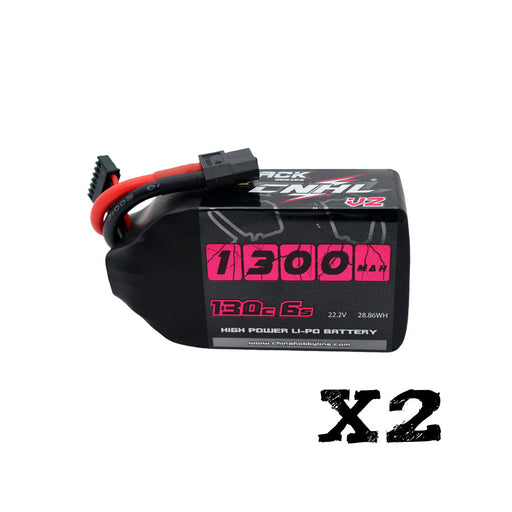
Quick Fit Check The 2 Packs CNHL Black Series V2.0 1300mAh 22.2V 6S 130C LiPo Battery with XT60 Plug is a strong fit for FPV pilots who want a prov...
View full detailsSpare Parts & Long-Term Support We know that for RC pilots, reliable spare parts support is an important part of keeping an aircraft fl...
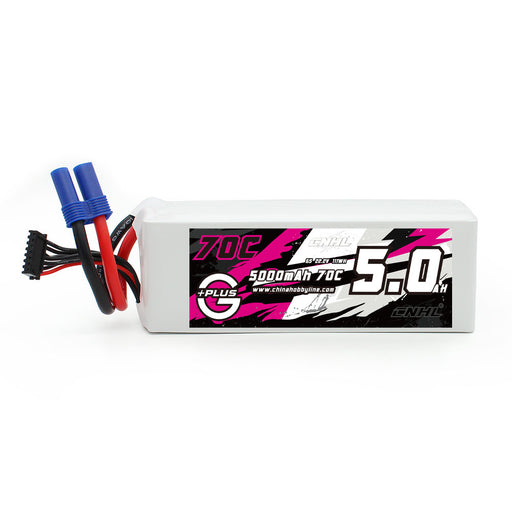
View full detailsSpecifications: Stock Number: 500706EC5 Capacity: 5000mAh Voltage: 22.2V / 6-Cell / 6S1P Discharge Rate: 70C Continual / 140C Burst Charge Rate: ...
View full details
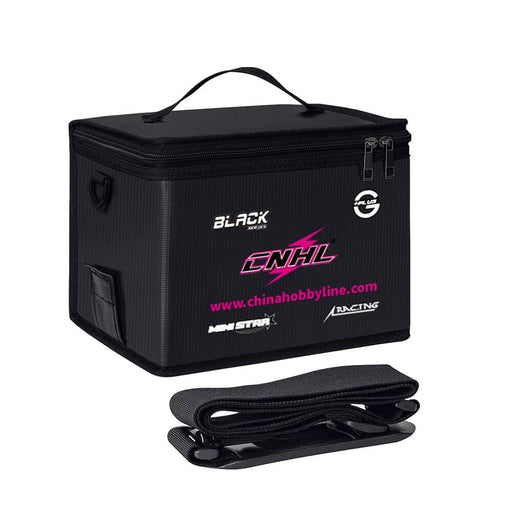
The CNHL LiPo Battery Bag is designed for safer LiPo charging, transport, and storage at home or at the field. It adds a practical layer of protect...
View full detailsQuick Fit Check The 2 Packs CNHL Speedy Pizza Series Pro 1350mAh 6S 150C LiPo Battery with XT60 Plug is built for 5-inch FPV pilots who want a ...
View full details

The CNHL 2 Packs XT60 to IC2 Battery Adapter Cable provides a convenient way to connect compatible XT60 LiPo batteries to IC2-equipped RC model...
View full details

IMPORTANT SAFETY NOTICE – MOTOR REPLACEMENT REQUIRED (LIMITED TO THE FIRST BATCH OF SUPER TUCANO V2's ONLY) ⚠️WARNING: PLEASE DO NOT FLY THE SUPE...
View full details

The ISDT X16 is a professional high-power dual-channel AC LiPo charger built for large RC battery systems that go well beyond the capability of a ...
View full details

The ISDT PD60 is a compact 60W USB-C LiPo balance charger designed for RC users who want a simple, portable charging solution without carr...
View full details

Quick Fit Check The CNHL Speedy Pizza Series 2200mAh 22.2V 6S 120C LiPo Battery with XT60 Plug combines the familiar 2200mAh 6S format with a ligh...
View full details




Leave a comment