
CNHL Lipo akut
CNHL pyrkii tarjoamaan korkealaatuisia Li-Po-akkuja ja RC-tuotteita kaikille harrastajille erinomaisella asiakaspalvelulla ja kilpailukykyisillä hinnoilla
The Team Associated RC10 Custom Race Car 6x6 is not a conventional Formula RC car with two extra wheels added for visual effect. Under its long, low Formula-inspired body is a genuine three-axle 6WD drivetrain with six driven wheels, three sealed gear differentials, fully independent suspension and a purpose-built 6x6 chassis.
The part that immediately starts conversations is the wheel arrangement. Instead of the famous four-front, two-rear layout associated with the Tyrrell P34, the RC10 6x6 places two wheels at the front and four at the rear. That gives it a very different mechanical character and connects it more closely, at least conceptually, with another branch of six-wheel Formula experimentation.
Quick Answer: The Team Associated RC10 Custom Race Car 6x6 #30146 is a 1/10 on-road, Formula-inspired kit with true 6WD. It uses one front axle and two rear axles, three sealed differentials and independent suspension at all six wheels. It is not a Tyrrell P34 replica, although both cars use six wheels.

The RC10 6x6 combines a Formula-inspired body with a genuine three-axle chassis and four closely spaced rear wheels.
Team Associated classifies the #30146 RC10 Custom Race Car 6x6 as a 1/10 electric on-road kit with an F1-style body. At 465mm long and 190mm wide, it has the long, narrow proportions expected from a Formula-inspired car, but underneath the body the architecture is unlike a normal 1/10 Formula chassis.
The front carries a conventional pair of steering wheels. Behind them are two complete driven rear axles, producing a six-wheel layout with four rear tires putting power to the surface. The drivetrain uses three sealed differentials, heavy-duty driveshafts and full ball bearings, while each axle receives its own independent suspension assembly.
| Model | Team Associated RC10 Custom Race Car 6x6 #30146 |
| Scale | 1/10 |
| Terrain | On-Road |
| Body Style | F1 / Formula-Inspired |
| Drive | 6WD |
| Wheel Layout | 2 front + 4 rear |
| Differentials | 3 sealed gear differentials |
| Suspension | Fully independent |
| Length | 465mm / 18.31in |
| Width | 190mm / 7.48in |
| Internal Gear Ratio | 2.6:1 |
This is the question that makes the RC10 6x6 especially interesting. When most people picture a six-wheel Formula car, the first shape that comes to mind is four wheels at the front. The RC10 does the opposite: one steering axle at the front and two driven axles behind the driver.

The side profile makes the layout clear: one front axle, two rear axles and four driven rear wheels.
Mechanically, the rear-four arrangement gives the car four rear contact patches through which the drivetrain can deliver power. Team Associated's own driving demonstration emphasizes straight launches, strong on-power traction and a stable feeling from the six-wheel chassis. The layout also makes the vehicle visually unmistakable: from almost any side or rear angle, the closely spaced rear wheels immediately identify it as something different from a normal Formula RC car.
That does not mean four rear tires automatically make the car faster or better around every corner. Tire compound, surface, differential setup, alignment, spring and damping choices, motor power and weight distribution still matter. The significance of the six-wheel layout is that it creates a different set of mechanical possibilities rather than guaranteeing one particular handling result.
The Tyrrell P34 is the unavoidable historical comparison, but the two layouts should not be confused. Tyrrell's famous 1970s Formula 1 car used four small front wheels and two conventional rear wheels. The RC10 6x6 uses two front wheels and four rear wheels.

The Tamiya Tyrrell P34 model clearly shows the opposite six-wheel philosophy: four small front wheels and two larger rear wheels.
The real P34 was developed around a very different engineering objective. Its four small front wheels were intended to reduce the aerodynamic penalty created by normal-size front tires while retaining front-end grip and braking performance. The concept was more than a showpiece: Jody Scheckter won the 1976 Swedish Grand Prix in a P34, making it Formula 1's only Grand Prix-winning six-wheeler.
So although the RC10 6x6 can remind people of the Tyrrell visually, calling it a P34 replica would be misleading. Team Associated itself describes the body as Formula inspired, not as a scale recreation of one specific historical car.
Yes. The Tyrrell was the six-wheeler that actually raced in Formula 1, but it was not the only six-wheel experiment.
March, Ferrari and Williams also explored six-wheel prototypes, and those later concepts moved the additional wheels to the rear. The Williams FW08B is particularly relevant when looking at the RC10 because Williams experimented with a two-front, four-rear configuration in the early 1980s. Those four rear wheels were part of the driven end of the car, creating a fundamentally different approach from Tyrrell's four-wheel front arrangement.
This does not make the RC10 6x6 a Williams replica either. The useful comparison is the layout concept: six-wheel Formula cars have historically been explored in more than one configuration, and a two-front/four-rear arrangement has genuine motorsport precedent.
Important distinction: “Six-wheeler” and “6WD” do not mean the same thing. A vehicle can have six wheels without driving all six. The Team Associated RC10 Custom Race Car 6x6 is specifically listed as 6WD.
Remove the body and the RC10 6x6 becomes even more interesting. The chassis carries three complete axle positions — front, middle and rear — with a sealed gear differential at each one. Power is distributed through the extended drivetrain so all six tires participate in propulsion.

With the body removed, the three axle positions, transverse Shorty battery, motor and electronics layout are easy to see.
The three differential assemblies are important because an on-road car cannot simply force the left and right tires on each axle to rotate at exactly the same speed through every turn. The inside tire travels a shorter path than the outside tire. Differential action allows those speed differences while still transmitting power.
The rest of the chassis is equally unconventional. Team Associated uses a dedicated blue anodized aluminum 6x6 chassis plate, a blue aluminum motor plate, heavy-duty driveshafts, full ball bearings and fully independent suspension. Front and rear toe are adjustable, giving builders useful alignment options rather than treating the model as a static novelty.

The rear end integrates the second driven axle, independent suspension and a dedicated 6x6 diffuser beneath the rear wing.
It is a reasonable question. Four driven rear tires create a large rear contact area, and the additional axle also changes the way the chassis responds when it rotates into a corner. But the wheel count alone is not enough to say that the RC10 6x6 will simply “push” or understeer everywhere.
The actual balance depends on the complete setup: front and rear tire grip, weight distribution, differential fluids, toe settings, camber, spring rate, shock damping, ride height and the amount of power being applied. Surface conditions matter as well. A rough parking-lot course and a high-grip prepared RC track can make the same chassis feel very different.
The six-wheel layout gives the RC10 6x6 a strong emphasis on straight-line stability and rear traction, especially when power is applied through a corner. With four driven rear tires sharing the load, the chassis has plenty of mechanical grip to work with, but that does not eliminate the possibility of understeer. The final balance still depends on tires, differential setup, alignment, suspension tuning, weight distribution and track surface.
What makes the RC10 6x6 interesting is precisely that builders have an unusual chassis to tune. The extra rear axle changes the problem; it does not remove the normal RC setup variables.
The RC10 Custom Race Car 6x6 arrives as an unassembled kit. Team Associated supplies the chassis, drivetrain, suspension, wheels, tires and clear polycarbonate body system, but the electronics and power system are selected by the builder.

The body can be removed as a complete Formula-style shell, exposing the electronics and three-axle chassis underneath.
To complete the car, you will need:
This matters when discussing batteries and connectors because there is no single factory ESC plug that every RC10 6x6 must use. Your battery connector needs to match the ESC and wiring chosen for your individual build.
A 2S Shorty LiPo is the most practical starting point for the RC10 Custom Race Car 6x6. The compact hardcase format fits naturally into the chassis layout without taking up the space of a full-length stick pack, while still offering plenty of capacity and discharge capability for this six-wheel drivetrain.
The battery sits transversely in the center section of the chassis and is held in place by two hook-and-loop straps. Because there is no rigid upper battery brace, both standard-height Shorty packs and LP (Low Profile) Shorty batteries are practical choices. A higher-capacity standard Shorty favors runtime, while an LP pack reduces battery height and weight.

The transverse battery tray uses two hook-and-loop straps, making both standard and low-profile Shorty packs easy to accommodate.
For voltage, 2S 7.4V is the straightforward baseline for the build. Although 3S is also referenced in the vehicle's required-to-complete information, the final voltage limit depends on the ESC and motor selected for the kit. Builders planning a 3S setup should therefore confirm that the complete power system is rated for it rather than treating 3S as the default choice.
You can compare standard, high-capacity and low-profile options in the Team Associated RC10 6x6 battery collection.
| Battery | Dimensions | Weight | Setup Direction |
| CNHL 6400mAh 7.6V 2S 130C Shorty | 96 × 46 × 24mm | Approx. 218g | Higher capacity / longer-session priority |
| CNHL 4600mAh 7.6V 2S 130C LP Shorty | 96 × 46 × 18mm | Approx. 167.5g | Ultra-thin / lighter battery setup |
| CNHL 4900mAh 7.4V 2S 120C Shorty | 96 × 46 × 25mm | Approx. 183g | Standard-voltage 2S setup |
The differences are useful because there is no single ideal Shorty battery for every build. A 6400mAh pack prioritizes capacity while remaining within a compact Shorty footprint. The 4600mAh LP pack is only about 18mm thick and roughly 50g lighter, giving builders more freedom when battery height and chassis mass matter. The 4900mAh 7.4V pack stays with conventional 2S LiPo nominal voltage.
With a LiHV battery, always confirm the voltage capability of the ESC and motor you install. A 2S LiHV pack can reach 8.70V when charged fully in LiHV mode, whereas a conventional 2S LiPo reaches 8.40V. Do not assume that every component described simply as “2S compatible” automatically supports the higher LiHV charge voltage.
No. Because #30146 is a kit and the ESC is not included, there is no universal factory battery connector for this model.
That means XT60, T/Dean, EC3 or another suitable connector can all make sense depending on the electronics installed. Choose the power system first, then make sure the battery, lead and ESC use a compatible connection with suitable current capacity.
The RC10 6x6 makes more sense when it is viewed as an unusual enthusiast kit rather than as an attempt to replace a conventional competition Formula chassis.
It offers something for builders who enjoy mechanical layouts that are visibly different, Team Associated collectors, Formula-style RC fans and drivers who simply want to arrive at a parking-lot course or local track with a car that does not look like everything else in the pits.
There is also genuine mechanical interest beneath the visual novelty. Three differentials, six driven wheels, three independent suspension assemblies and a long three-axle chassis create tuning questions that do not exist on a normal 2WD or 4WD on-road car.
That combination is probably the best way to understand the RC10 Custom Race Car 6x6: part conversation starter, part engineering experiment and part build-it-yourself RC platform.
Six wheels alone do not explain the Team Associated RC10 6x6. What makes #30146 unusual is how thoroughly the layout is incorporated into the vehicle: a purpose-built 6x6 chassis, three sealed differentials, six-wheel drive, fully independent suspension, dedicated Formula-inspired bodywork and a rear diffuser designed around the twin rear axles.
Its wheel arrangement also makes it more interesting than a simple Tyrrell tribute. The famous P34 put four wheels at the front; the RC10 puts four at the rear, a configuration with its own historical precedent in experimental Formula engineering.
If you are planning a build, the most practical place to start is the power system. The instruction manual points to a 2S 7.4V LiPo, and the chassis layout works naturally with compact Shorty hardcase batteries. Compare standard-height, high-capacity and LP options in the CNHL Team Associated RC10 6x6 battery collection, or browse the wider CNHL RC car battery range.
Yes. Team Associated specifies the RC10 Custom Race Car 6x6 as 6WD. The chassis uses three axle positions and three sealed gear differentials so all six wheels are part of the driven drivetrain.
It should not be described as a Tyrrell P34 replica. The P34 used four small front wheels and two rear wheels, while the RC10 uses two front wheels and four rear wheels. Team Associated describes its body as Formula inspired.
Yes. Several Formula 1 teams experimented with six-wheel prototypes after the Tyrrell P34. Williams' FW08B is one of the best-known examples of a two-front, four-rear arrangement, although these concepts did not go on to race in Formula 1 as the Tyrrell did.
The layout alone is not enough to determine whether the car will understeer. Handling balance also depends on tires, differential setup, alignment, suspension settings, weight distribution, power delivery and the driving surface. Team Associated's demonstration emphasizes stability and on-power traction rather than claiming the car has one fixed handling characteristic.
The #30146 instruction manual specifies a 2S 7.4V LiPo battery. The chassis uses a strap-secured battery tray that works naturally with Shorty-format hardcase packs. Team Associated's separate product page also mentions 2S/3S LiPo, so builders considering anything beyond the manual's 2S recommendation should verify the limits of the ESC and motor they install.
Yes, a low-profile Shorty is a practical option with the open hook-and-loop battery retention system. LP means Low Profile, referring primarily to the reduced battery case height.
There is no single factory battery connector because the RC10 6x6 does not include an ESC. The correct connector depends on the electronics selected for your build.
CNHL pyrkii tarjoamaan korkealaatuisia Li-Po-akkuja ja RC-tuotteita kaikille harrastajille erinomaisella asiakaspalvelulla ja kilpailukykyisillä hinnoilla

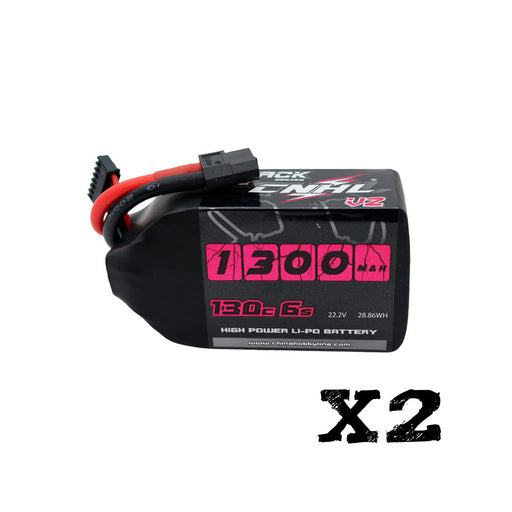
Nopea sovitustarkistus 2 Packs CNHL Black Series V2.0 1300mAh 22.2V 6S 130C LiPo-akku XT60-liittimellä sopii erinomaisesti FPV-lentäjille, jotka ha...
Näytä täydet tiedotVaraosat ja pitkäaikainen tuki Tiedämme, että RC-piloteille luotettava varaosatuki on tärkeä osa sitä, että lentokone pysyy lentokunnossa vuo...
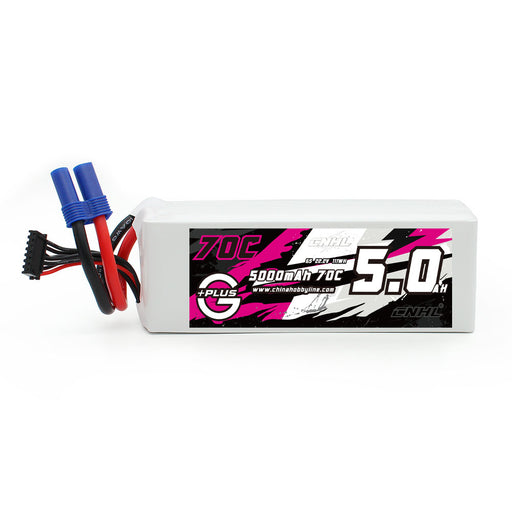
Näytä täydet tiedotTekniset tiedot: Varastonumero: 500706EC5 Kapasiteetti: 5000mAh Jännite: 22,2V / 6-kennoa / 6S1P Purkunopeus: 70C jatkuva / 140C hetkellinen Lata...
Näytä täydet tiedot
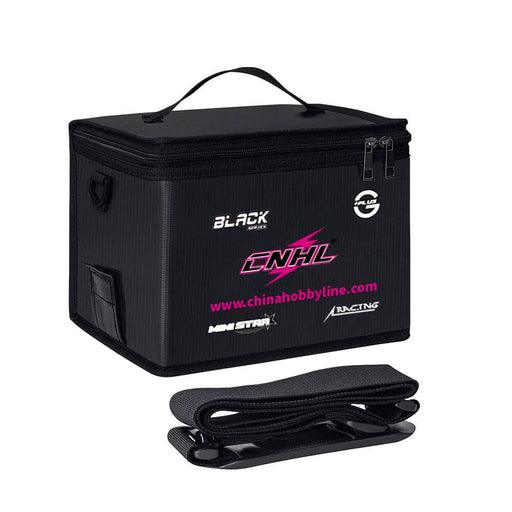
CNHL LiPo Battery Bag on suunniteltu turvallisempaan LiPo-lataukseen, kuljetukseen ja säilytykseen kotona tai kentällä. Se lisää käytännöllisen suo...
Näytä täydet tiedot

Nopea sovitustarkistus 2 paketin CNHL Speedy Pizza Series Pro 1350mAh 6S 150C LiPo -akku XT60-liittimellä on suunniteltu 5-tuuman FPV-piloteill...
Näytä täydet tiedot

Quick Fit Check The CNHL Speedy Pizza Series 2200mAh 22.2V 6S 120C LiPo Battery with XT60 Plug combines the familiar 2200mAh 6S format with a ligh...
Näytä täydet tiedot

Quick Fit Check The CNHL Speedy Pizza Series 2200mAh 14.8V 4S 120C LiPo Battery with XT60 Plug combines a widely used 2200mAh 4S format with a sli...
Näytä täydet tiedot

Quick Fit Check The CNHL Speedy Pizza Series 2200mAh 11.1V 3S 120C LiPo Battery with XT60 Plug takes the familiar 3S 2200mAh aircraft battery form...
Näytä täydet tiedot

The CNHL Long Range Series BAK 50D 5000mAh 21700 Li-ion battery cell is designed for custom high-energy battery packs that need a strong balance be...
Näytä täydet tiedot

The ISDT C4 EVO is a versatile smart battery charger built for AA, AAA and cylindrical rechargeable cells from compact 10440 batteries all the way ...
Näytä täydet tiedot


Jätä kommentti