
CNHL Lipo akut
CNHL pyrkii tarjoamaan korkealaatuisia Li-Po-akkuja ja RC-tuotteita kaikille harrastajille erinomaisella asiakaspalvelulla ja kilpailukykyisillä hinnoilla
Balance Charge is normally the better everyday choice for conventional multi-cell LiPo batteries. It monitors individual cell voltages and gives the charger time to correct differences before the cycle finishes. Fast Charge can reduce turnaround time, but it may shorten the final constant-voltage or balancing stage depending on the charger.
Quick answer: Use Balance Charge for routine charging, batteries with noticeable cell drift, packs that have been stored, and batteries whose condition you want to monitor closely. Use Fast Charge only when the charger manual explains how the mode works, the battery is healthy and already well balanced, and slightly reduced final capacity or balancing accuracy is acceptable.
Fast Charge is not the same as charging at 2C or 5C. The selected current determines the charging C rate, while Balance Charge and Fast Charge describe how the charger manages the charging cycle and its final stage.

| Comparison | Balance Charge | Fast Charge |
|---|---|---|
| Main Purpose | Complete a normal charge while monitoring and correcting individual cells | Reduce turnaround time by shortening or altering the final charging stage |
| Individual Cell Monitoring | Normally central to the program | Depends on charger design and connection method |
| Final Cell Balance | Usually the more complete result | May be less complete on some chargers |
| Final Capacity | Normally closer to a full completed charge | May finish with slightly less capacity |
| Charging Time | Can take longer when balancing is required | Can finish sooner, especially near the end |
| Best Use | Routine charging and battery-condition monitoring | Occasional quick turnaround with a healthy, well-balanced pack |
| Recommended Default | Yes, for conventional multi-cell LiPo batteries | No, not as the universal everyday default |
Balance Charge is a charging program designed for multi-cell lithium batteries. The charger uses the main power lead to deliver most of the charging current and the balance connection to measure the voltage of each cell group.
For a standard LiPo battery, each cell normally approaches approximately 4.20V at full charge. The charger does not only look at total pack voltage. It also checks whether one cell is reaching the upper voltage limit before the others.
For example, a 4S pack could show a total voltage close to 16.8V while the individual cells are not evenly distributed. Balance Charge gives the charger access to readings such as:
If one cell leads the others, the charger can reduce the main charging current and use its balance circuit to limit the higher cell while lower cells continue catching up.

For a complete operating procedure, read How to Balance Charge a LiPo Battery.
Fast Charge is a charger program intended to reduce the time required to reach a usable state of charge. It normally saves time near the end of the cycle rather than changing the basic lithium charging chemistry.
Depending on charger design, Fast Charge may:
The exact behavior varies by charger. The words “Fast Charge” do not represent one universal algorithm across every brand and model.
Some chargers still use the balance connection in Fast Charge mode, while others prioritize total pack completion and spend less time on final balancing. Always check the charger manual before assuming how the program behaves.
This is the most important distinction in the comparison.
C rate determines charging current relative to battery capacity.
Charger mode determines how the charging program manages and completes the cycle.
A 5000mAh battery charged at:
Those current settings can potentially be used with different charger programs where the battery and charger permit them.
For example:
Therefore, selecting Fast Charge does not automatically increase the charge current. It may save time even when the amp setting remains unchanged.
For current, wattage and time calculations, read LiPo Charging Rates Explained: 1C, 2C, 5C, Amps, Watts, and Charge Time.
A LiPo charge normally includes a constant-current stage followed by a constant-voltage stage.
The charger attempts to deliver the selected current while pack voltage rises. This is usually the faster part of the cycle.
As the battery reaches its voltage limit, the charger holds the final voltage and gradually reduces current. The last portion of capacity enters the battery more slowly.
If one cell reaches the upper limit first, the charger may further reduce current while correcting the difference. The process can take longer when:
Fast Charge may shorten part of this final process. That is why the time difference can be more noticeable near completion than during the initial bulk-charging stage.
There is no universal answer. The saving depends on:
A closely balanced pack may show only a modest time difference because the final balancing stage was already short. A pack with noticeable cell drift may show a larger difference, but using Fast Charge in that situation can conceal the reason charging is taking longer.
Do not judge Fast Charge only by the number of minutes saved. Compare:
It can. If the charger ends the constant-voltage stage sooner or uses a higher termination-current threshold, the battery may finish with slightly less energy than after a complete Balance Charge.
This does not necessarily mean the battery is undercharged in a dangerous way. It may simply mean the final portion of capacity was not added.
The practical effect can be:
The amount varies by charger and battery. Review the final cell readings instead of assuming both modes produce the same result.
Fast Charge can be used within the charger and battery specifications, but the mode itself does not override normal LiPo charging requirements.
Before using Fast Charge, confirm:
Stop immediately if the battery:
For the full charging process, follow How to Charge a LiPo Battery Safely.
Use Balance Charge when:
Balance Charge is especially useful because the charging result provides information. Repeatedly slow balancing or one persistent outlier can reveal a developing battery or connection problem.
Fast Charge may be reasonable when:
Fast Charge should be treated as a situational tool rather than the permanent default for every battery.
Avoid Fast Charge when:
Fast Charge is not a repair method. It should not be used to bypass a battery-condition warning or avoid investigating slow balancing.
| Use Case | Recommended Starting Point | Reason |
|---|---|---|
| Daily RC car charging | Balance Charge | Routine full charging and cell monitoring |
| Race-day quick turnaround | Fast Charge may be considered | Reduced final-stage time where the pack is healthy and well balanced |
| Large 6S EDF battery | Balance Charge | High-value pack with substantial power demand |
| FPV field session | Depends on battery condition and charger | Fast turnaround may matter, but cell balance still needs periodic verification |
| Battery with slow balancing | Balance Charge and diagnose | Fast Charge may conceal the underlying issue |
| Battery coming out of storage | Balance Charge | Provides individual-cell checks before use |
| Questionable or crash-damaged pack | Do not use either mode until assessed | Charging mode cannot make physical damage safe |
Battery life is affected by multiple factors rather than the mode name alone:
A Fast Charge program that finishes slightly earlier may spend less time holding the battery near full voltage. However, repeatedly accepting poor cell balance, excessive heat or high charge current can still accelerate battery wear.
The better question is not whether every Fast Charge cycle automatically reduces life, but whether the complete charging process keeps the battery within its specifications and allows abnormal cell behavior to be identified.
An unusually long Balance Charge can be caused by:
Do not automatically switch to Fast Charge to avoid the delay. First check individual cell voltage, battery temperature and connector condition.
For a structured diagnosis, read Why Is My LiPo Battery Taking So Long to Balance Charge?
Balance Charge and Fast Charge also remain charger-program choices when several compatible batteries are connected through a parallel board. Parallel Charging itself is a connection method, not a separate battery chemistry mode.
After correctly matching and connecting a parallel group, Balance Charge is normally the preferred program for conventional multi-cell LiPo packs.
Using Fast Charge does not remove the need to:
Read How to Parallel Charge LiPo Batteries Safely before using a parallel board.
Because charger behavior varies, a controlled comparison can help you understand the actual difference.
Do not perform repeated test cycles solely for curiosity. Each charge and discharge contributes to battery use. The goal is to understand the charger, not to create unnecessary cycling.
A charger should not be selected only by maximum amps or headline watts. Balance-related specifications and display quality also matter.
Check:
Browse the CNHL LiPo battery charger collection for balance chargers, dual-channel chargers and multi-channel charging options.
For ToolkitRC chargers and compatible charging equipment, visit the ToolkitRC collection.
For a complete selection process, read How to Choose the Right LiPo Battery Charger for Your RC Batteries.
Use Balance Charge as the normal default for a conventional multi-cell LiPo. Fast Charge is better treated as an occasional quicker-turnaround option when the battery is healthy and closely balanced.
Not automatically. It should be used within the battery and charger specifications. The exact trade-off depends on how the charger shortens the final stage and how well balanced the battery is.
No. Fast Charge is a charger program. The C rate is determined by the selected current relative to battery capacity.
It may finish near full voltage, but some chargers end earlier or spend less time balancing. The pack may contain slightly less usable capacity than after a complete Balance Charge.
The charger may need additional time in the constant-voltage and balancing stages to bring individual cells closer together.
It is better to use Balance Charge initially so you can observe individual cell behavior and confirm that the new pack finishes normally.
No. A persistent low cell should be investigated. Fast Charge may reduce the final balancing stage and make the underlying problem less visible.
It may be possible on a compatible healthy battery, but Balance Charge remains the better everyday default because it provides more complete individual-cell monitoring and balancing.
No cell-to-cell balancing is needed because a 1S pack has only one cell. It still requires the correct battery chemistry, current and final voltage.
Only when every battery, the parallel board and the charger support the complete setup. Balance Charge is normally the preferred program because the charger must monitor the combined cell groups.
No. It can correct limited cell-voltage differences during charging, but it cannot reverse physical damage, high internal resistance or a weak cell.
The program may use an earlier termination condition or may display voltage after the pack has rested slightly. Check the charger manual and compare individual cell readings.
Balance Charge should normally remain the default for multi-cell LiPo batteries because it provides the clearest picture of individual cell behavior and the most complete normal charging result.
Fast Charge can be useful when time matters and the battery is healthy, closely balanced and operated within its specifications. It should not be confused with a higher C rate, used to bypass a charger warning or relied on to hide slow balancing.
For the wider explanation of Balance, Fast, Storage, Discharge and Parallel Charging, read LiPo Charger Modes Explained. For the complete Charger / Charging topic cluster, visit the CNHL LiPo Battery Charging Guide.
CNHL pyrkii tarjoamaan korkealaatuisia Li-Po-akkuja ja RC-tuotteita kaikille harrastajille erinomaisella asiakaspalvelulla ja kilpailukykyisillä hinnoilla
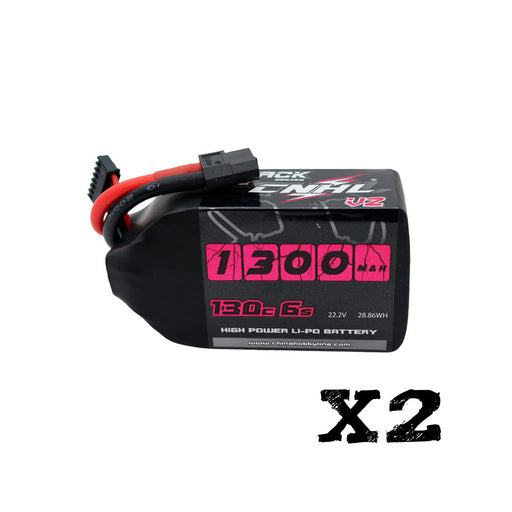
Nopea sovitustarkistus 2 Packs CNHL Black Series V2.0 1300mAh 22.2V 6S 130C LiPo-akku XT60-liittimellä sopii erinomaisesti FPV-lentäjille, jotka ha...
Näytä täydet tiedotVaraosat ja pitkäaikainen tuki Tiedämme, että RC-piloteille luotettava varaosatuki on tärkeä osa sitä, että lentokone pysyy lentokunnossa vuo...
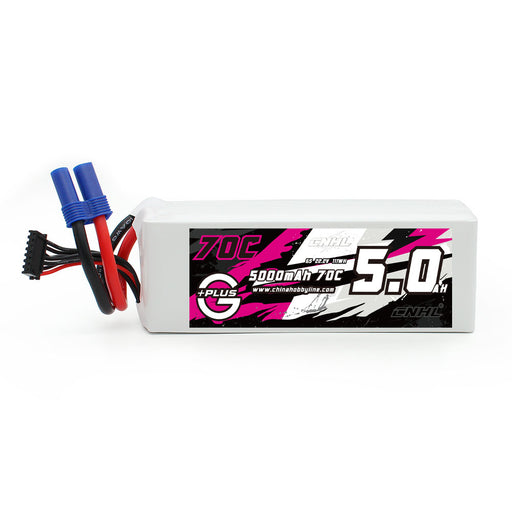
Näytä täydet tiedotTekniset tiedot: Varastonumero: 500706EC5 Kapasiteetti: 5000mAh Jännite: 22,2V / 6-kennoa / 6S1P Purkunopeus: 70C jatkuva / 140C hetkellinen Lata...
Näytä täydet tiedot
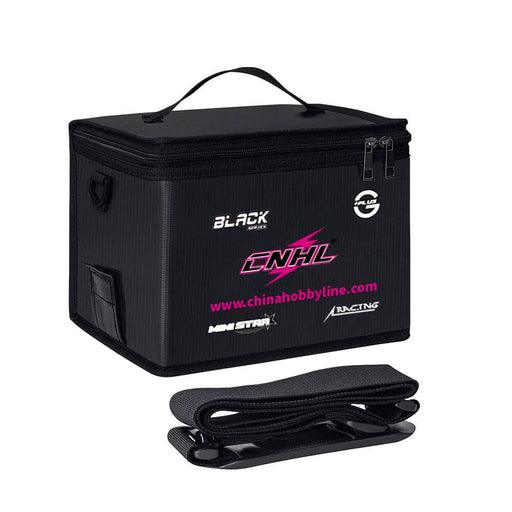
CNHL LiPo Battery Bag on suunniteltu turvallisempaan LiPo-lataukseen, kuljetukseen ja säilytykseen kotona tai kentällä. Se lisää käytännöllisen suo...
Näytä täydet tiedot

Nopea sovitustarkistus 2 paketin CNHL Speedy Pizza Series Pro 1350mAh 6S 150C LiPo -akku XT60-liittimellä on suunniteltu 5-tuuman FPV-piloteill...
Näytä täydet tiedot

Quick Fit Check The CNHL Speedy Pizza Series 2200mAh 22.2V 6S 120C LiPo Battery with XT60 Plug combines the familiar 2200mAh 6S format with a ligh...
Näytä täydet tiedot

Quick Fit Check The CNHL Speedy Pizza Series 2200mAh 14.8V 4S 120C LiPo Battery with XT60 Plug combines a widely used 2200mAh 4S format with a sli...
Näytä täydet tiedot

Quick Fit Check The CNHL Speedy Pizza Series 2200mAh 11.1V 3S 120C LiPo Battery with XT60 Plug takes the familiar 3S 2200mAh aircraft battery form...
Näytä täydet tiedot

The CNHL Long Range Series BAK 50D 5000mAh 21700 Li-ion battery cell is designed for custom high-energy battery packs that need a strong balance be...
Näytä täydet tiedot

The ISDT C4 EVO is a versatile smart battery charger built for AA, AAA and cylindrical rechargeable cells from compact 10440 batteries all the way ...
Näytä täydet tiedot


Jätä kommentti